
Livraison le jour même ou le lendemain

Qualité garantie

Débloquez vos offres de bienvenue: Livraison GRATUITE | Jusqu'à -80 % | 30 jours d'essai gratuits à JoyPlus
Téléchargez l'application
The promise of solar lighting is alluring: no more messy cables, a lower electricity bill, and a small gesture for the planet. Yet, the reality is often less brilliant. A light that gives up at the first downpour, laughable battery life as soon as autumn arrives, a glow so dim it's useless… These scenarios are likely all too familiar.
As Head of Product Selections at Joybuy, my mission is to help you see things more clearly. Let's break down the most common pitfalls and the technical criteria to inspect so you can make a truly informed choice, far from the siren song of marketing.
outdoor decorative light doesn't have the same requirements as a solar wall light intended to secure a pathway. Buying blindly often leads to disappointment: lighting that is either too dim to be useful or too harsh for a soft, ambient feel.To avoid making a mistake, focus on the technical specifications that matter, not the marketing slogans.
This rating consists of two digits. The first relates to protection against solids (dust), and the second against liquids (rain).
wireless solar light or a solar spotlight on the front line against the elements.The battery life of your solar garden light depends on this inseparable duo: its ability to capture energy and store it.
solar string light, solar torch), a few dozen lumens may be enough. To effectively light a pathway or an entrance, you'll need to aim for several hundred lumens.Rather than an endless list, we've selected models that meet specific needs, in line with our criteria for performance and durability.
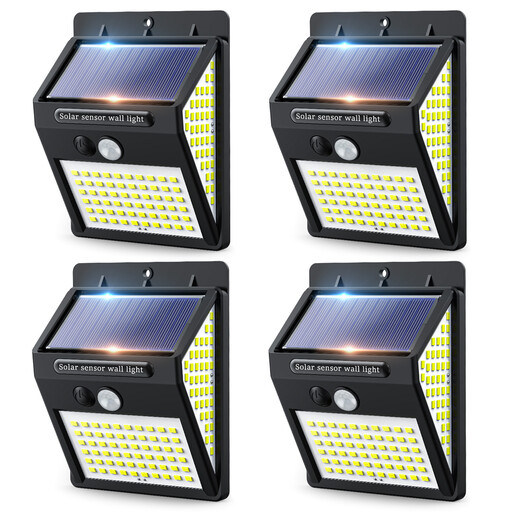
Why this choice? Ideal for those who prioritise efficiency and security. This pack allows you to equip several strategic points (entrance, garage, dark corner of the garden) with powerful, deterrent lighting, all without any complex installation.
The wall-mounted format, designed for a fixed installation, immediately inspires more confidence against the elements than a simple stake light. The high number of LEDs (140) guarantees a genuinely functional light output, a far cry from decorative night lights.
The four-pack offers excellent value for securing an entire property uniformly. The automatic dusk-to-dawn activation is a convenient everyday comfort.
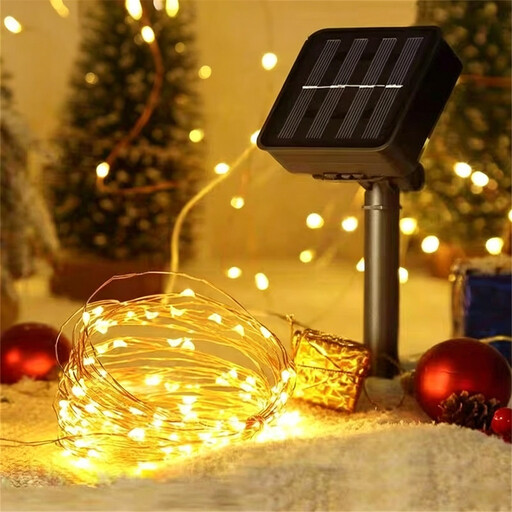
Why this choice? Perfect for dressing up a balcony, pergola, or garden trees for an evening or for the entire season. The flexibility of the copper wire allows for all kinds of creative fantasies.
The spec sheet highlights enlarged solar panels for more efficient charging and a reinforced waterproof design—two points that directly address concerns about battery life and durability. The memory function that retains the last used mode is a real bonus.
With two strings of nearly 15 metres each, the coverage area is impressive. The 8 lighting modes allow you to switch between ambiences, from a festive twinkle to a softer, steady light.
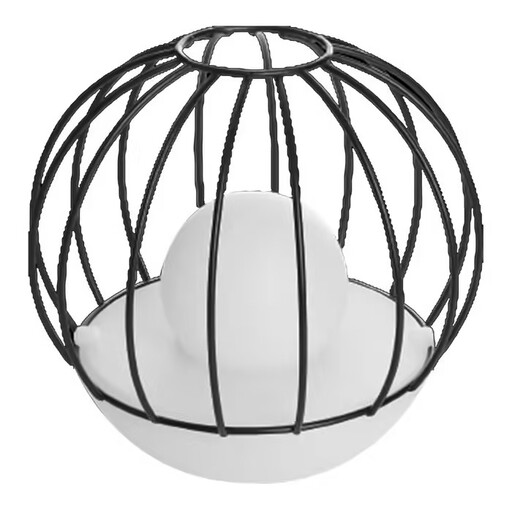
Why this choice? For those who see lighting as a decorative object in its own right. Here, the goal isn't to illuminate but to enhance. Placed on a garden coffee table or in the heart of a flowerbed, it becomes a true visual signature.
Its positioning is honest: it's a purely decorative object. There are no false promises of high brightness. Its "weather-resistant" design and self-supporting structure make it a simple and reliable product for its intended decorative use.
Its unique cage-like design and simple installation (just place it down, that's it) make it an immediate point of aesthetic interest. Zero wires, zero fuss.
We have curated a complete and up-to-date selection of products that meet our demanding selection criteria and current safety standards.
It depends on two key components: the battery and the LEDs. The LEDs themselves have a very long lifespan, often exceeding 20,000 hours. The rechargeable battery is the main component that wears out. Generally, a good quality model will perform optimally for 2 to 3 years before its battery life noticeably decreases. On some lights, the battery is replaceable, which is a plus for durability.
Yes, but with reduced performance. A modern solar panel can charge even on grey days, but the charging will be slower and the nightly runtime will inevitably be shorter. Don't expect the same results in December as you would in the middle of July. For reliable winter use, prioritise models with large solar panels and high-capacity batteries.
It's very simple. Ensure the solar panel is well-positioned, ideally facing south, and that no obstacles (trees, walls, etc.) cast a shadow on it during the day. Also, remember to clean its surface from time to time with a damp cloth to remove dust, pollen, or bird droppings that can reduce its efficiency.