
Livraison le jour même ou le lendemain

Qualité garantie

Débloquez vos offres de bienvenue: Livraison GRATUITE | Jusqu'à -80 % | 30 jours d'essai gratuits à JoyPlus
Téléchargez l'application
With the arrival of warmer weather, the desire to enjoy your garden, patio, or balcony late into the night grows stronger. The only catch: lighting. Between digging trenches, running cables, and watching the electricity bill soar, the project can quickly turn into a nightmare. Fortunately, there's a simple, cost-effective, and eco-friendly solution: outdoor solar lighting.
To help you see things more clearly, we've broken down the essential criteria to consider before you buy. Follow our guide to find the perfect fixture, whether you want to create a soft ambiance, safely mark a pathway, or highlight your most beautiful plants.
You don't need to be an expert to make the right choice. Here are the key points to check to avoid making a mistake, without getting lost in incomprehensible technical jargon.
For equipment designed to live outdoors, weather resistance isn't an option: it's the number one criterion. For this, there's only one thing to do: check the IP (Ingress Protection) rating. It consists of two numbers:
For peace of mind, aim for a minimum rating of IP65. This guarantees a product that is completely dust-tight and can withstand heavy rain. Some models even go up to IP66 for even more robust protection.
The atmosphere of your summer evenings will largely depend on the type of light you choose.
String lights, spots, markers... there's a format for every need. The world of wireless solar lights is vast enough to satisfy every desire:
To help you bring your project to life, we have selected three products that meet distinct needs while combining performance and simplicity.

Its key feature? Versatility.
This solar string light stands out for its incredible flexibility. Its 12-metre copper wire, both thin and malleable, bends to all your creative desires. With its warm white light and 8 lighting modes, it's the perfect tool for sculpting a custom ambiance.
Highlights
Who is it for? For anyone dreaming of a chic bistro vibe on their balcony, looking to dress up an arbour for long summer evenings, or preparing magical decorations for an event.
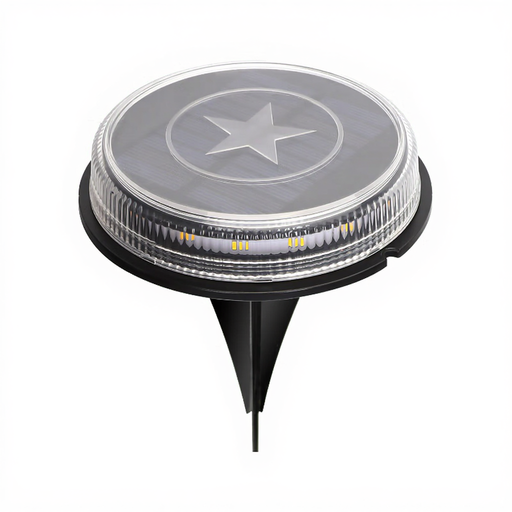
The focus here is on discretion and durability.
This outdoor solar marker light impresses with its flat design and heavy-duty construction. Designed to be placed on or recessed into the ground, it's so sturdy it can withstand the weight of a car. Its IP66 rating ensures first-class resistance to dust and powerful water jets.
Highlights
Who is it for? For those seeking a durable and discreet solution to secure and mark a driveway, a garden path, or the edges of a patio.
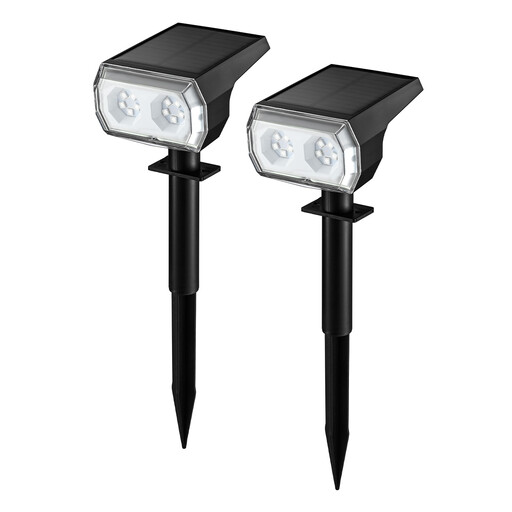
Make way for colour and modularity!
This RGB solar spot is a true chameleon. Thanks to its changing colours and dual installation options, it adapts to any scenario. Stake it in the ground to light up a flowerbed or mount it on a wall to animate a facade. A genuine solar LED floodlight to bring your garden to life.
Highlights
Who is it for? For creative individuals who want to add dynamic touches of colour to their garden, highlight a tree or wall, and create a unique atmosphere for their evenings.
These three models cover the most common needs, but the world of solar lighting doesn't end here. Is your project unique and you're searching for the perfect fit? Explore our complete collection to find the light that's right for you.
? Discover our full range of Battery-Operated Accent Lights
It all depends on the quality of the battery and the LEDs. The LEDs themselves are virtually eternal (over 20,000 hours). It's the rechargeable battery that will wear out first, typically after 2 or 3 years depending on use. The good news? On many models, it's easily replaceable. A quick wipe of the solar panel from time to time will maximise its lifespan.
Yes, but with a little less power! A solar panel captures daylight, not necessarily direct sunlight. So, it will work even on a grey day. Logically, the charge will be less efficient than on a bright, sunny day in the middle of August. Therefore, expect reduced battery life in winter, when days are shorter and the sky is often overcast.
That's the magic of solar: simplicity! For a marker or a spot, you just stake it into the ground in a sunny spot. For a wall light, a few screws will do the trick. There's no need to call an electrician or bring out heavy tools—it's something anyone can do.