
Livraison le jour même ou le lendemain

Qualité garantie

Débloquez vos offres de bienvenue: Livraison GRATUITE | Jusqu'à -80 % | 30 jours d'essai gratuits à JoyPlus
Téléchargez l'application
The idea of outdoor solar lighting is appealing: no cables to run, no increase in your electricity bill, and an eco-friendly choice. Yet, disappointment is often just around the corner. A light that doesn't survive the first winter, a candle-like glow, or a battery life that lasts only a few hours… These pitfalls are common.
As the Head of Product Recommendations at Joybuy, I test dozens of models every year. My role? To help you see things more clearly. Let's move past the marketing hype and focus on the criteria that truly make a difference. Here’s how to avoid the three most common traps and choose solar lighting that will actually deliver on its promises.
To make the right choice, you need to focus on a few technical specifications. These are the true hallmarks of quality and durability for your solar garden lighting.
These two values determine the use and ambiance of your lighting.
Battery life directly depends on the battery's capacity (expressed in milliampere-hours, mAh) and the solar panel's efficiency.
The IP rating consists of two digits. For outdoor use in the UK, an IP65 rating is an excellent benchmark.
To put theory into practice, here are a few models that meet specific needs.
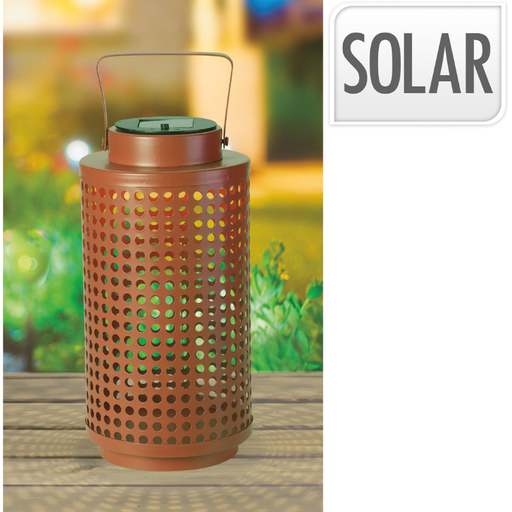
Why we chose it: Ideal for creating a soft, welcoming atmosphere on a balcony, patio, or in a corner of the garden. Its elegant design and warm light are perfect for summer evenings.
Its warm white LED casts a pleasant ambient light, a far cry from the cold, impersonal lighting of some models. The focus is on aesthetics rather than raw power, which is unnecessary for this purpose.
The sturdy metal body and integrated solar panel ensure good durability and simple, installation-free use.
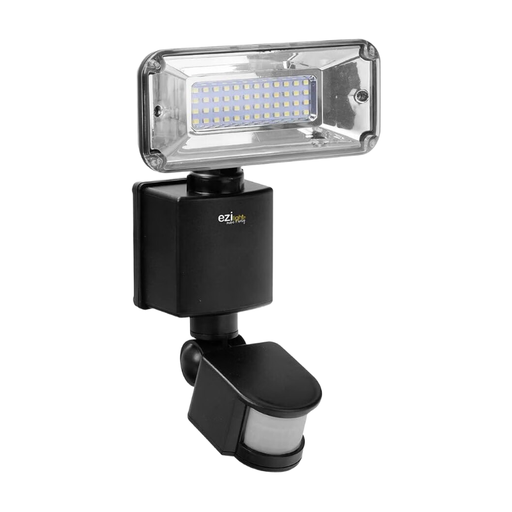
Why we chose it: Perfect for lighting an entrance, a garage, or a high-traffic area. This spotlight is designed for visibility and deterrence, activating only when needed.
The integrated motion sensor optimises battery life. The light only turns on at full power when motion is detected, which prevents draining the battery unnecessarily throughout the night.
Its powerful LED spotlight and adjustable head allow you to target the area to be lit with precision. It's an effective, wireless security solution.
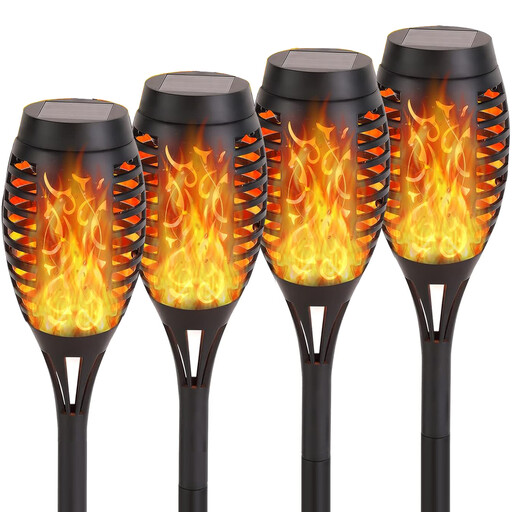
Why we chose it: To mark a pathway, a flowerbed, or the edge of a patio with a touch of originality. The dancing flame effect creates a luminous path that is both aesthetic and functional.
With an IP65 rating, these torches are designed to withstand the elements all year round, avoiding the trap of lights that stop working after a few rain showers.
The flame-effect solar torch offers a unique visual appeal that stands out from simple points of light and adds character to your outdoor space.
We have curated a complete range of products that meet our quality criteria and current safety standards.
The lifespan depends on two main components: the LED and the battery. LEDs have a very long life (often over 20,000 hours). The rechargeable battery is the element that will wear out the fastest. Generally, a good quality battery will maintain good performance for 2 to 3 years before its capacity begins to decline.
Yes, but with reduced efficiency. Modern solar panels can charge even in overcast weather, but they will accumulate less energy. The nightly runtime will therefore be shorter. This is why it's important to choose a model with a high-capacity battery and an efficient solar panel to maximise charging on less sunny days.
Installation is usually very simple: just push the stake into the ground or fix the bracket to the wall. Maintenance is just as easy. The best practice is to regularly clean the surface of the solar panel with a damp cloth to remove dust, pollen, or leaves. A clean panel captures light better and ensures a more effective charge.