
Livraison le jour même ou le lendemain

Qualité garantie

Débloquez vos offres de bienvenue: Livraison GRATUITE | Jusqu'à -80 % | 30 jours d'essai gratuits à JoyPlus
Téléchargez l'application
Outdoor solar lighting lets you illuminate a patio, pathway or balcony without running a single electrical cable. But be wary of the promises on product pages: battery life measured in ideal conditions, an IP rating that’s easily misunderstood, or power that’s too low for the job you have in mind.
Before you order, focus on three things: how much direct sunlight the panel actually gets, the level of water protection, and the function you need. A decorative lamp has very different requirements to a floodlight meant to light up a walkway. Similarly, a portable solar panel should be chosen based on the devices you want to charge.
A lighting duration of several hours usually assumes direct sunlight, a clean panel and a properly charged battery. Here in the UK, results can vary enormously between a bright summer’s day and a cloudy winter week.
For a garden solar light, position the panel away from walls, trees and railings that could cast shade. A solar string light might run all evening after a sunny day, but its battery life can drop significantly after several days of poor weather.
Outdoor solar lighting typically comes with an IP rating. The first number shows the level of dust protection, while the second relates to water. IP65 means the product resists water jets and splashes, but not immersion. IP66 offers stronger protection against powerful jets, but still doesn’t allow for prolonged submersion.
Location is key: avoid spots where water can pool, and always follow the manufacturer’s guidelines.
A decorative lamp with just a few lumens is fine for marking a border or creating a soft glow. It won’t replace an outdoor solar spotlight designed to highlight a tree, wall or entrance. When comparing two products, look at the light output (where stated), but also consider the orientation, installation height and beam angle.
A panel built into the light fitting makes installation easy, but can limit how you angle it. A separate panel lets you place the lamp in the shade while positioning the solar cell in the best spot – in full sun. Either way, make sure the area is clear and clean the surface regularly with a soft cloth.
Battery capacity, measured in mAh, gives you a rough idea of how much energy can be stored. But you need to consider it alongside the number of LEDs and the lighting mode you’re using. A solar LED lamp with multiple brightness levels or colour options won’t draw the same power on every setting.
When a product page mentions a charging time, treat it as a guide: it depends directly on the weather and the panel’s orientation.
ABS plastic, stainless steel and glass all offer a different look and level of impact resistance. Also check the fixing system: ground stake, wall mount or freestanding. The lack of wiring is convenient, but the light needs to stay stable in wind and when knocked.
For products with a rechargeable battery, follow the safety instructions and your local regulations for disposing of electrical and electronic equipment at the end of its life.
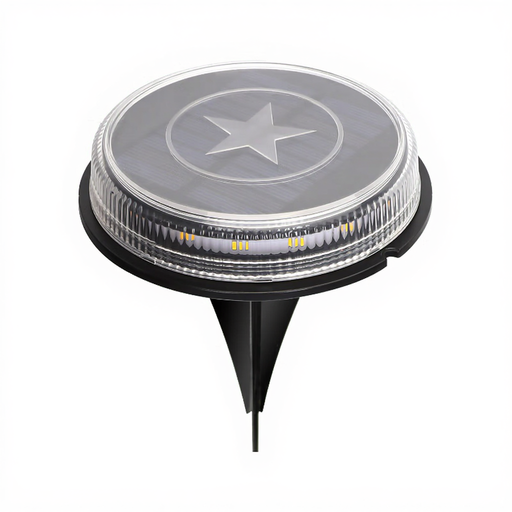
Why this suits this profile: Its round design and wireless installation make it ideal for a first setup along a path, patio or garden border.
The listing states an IP66 rating and cable-free installation. You’ll still need to place the panel in full sun and avoid submerging the light.
Warm light at 3,200 K, 0.6W panel, 500 mAh lithium battery and 360° illumination according to the specifications provided.
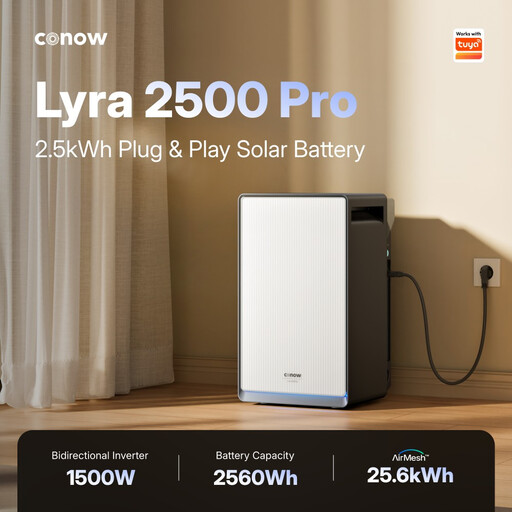
Why this suits this profile: This system is for those who want to combine solar generation and storage on a balcony, with an installation that’s far more comprehensive than a simple light fitting.
This isn’t a simple decorative lamp: check compatibility with your setup, connection requirements and the regulations for equipment installed on a balcony.
All-in-one system advertised with 1.5 kW power and 2.5 kWh storage capacity, according to the product name.
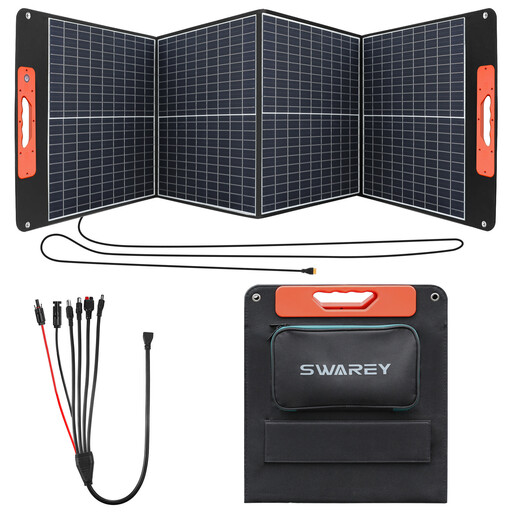
Why this suits this profile: Campers, travellers and power station users will appreciate this portable solar panel that can be set up in a clear, open spot.
The adjustable kickstands and orientation guide make positioning easier. The stated power output still depends on sunlight and the connected device.
Folds into four sections, 100 W nominal power, USB-C PD output up to 60 W and adapter cables included.
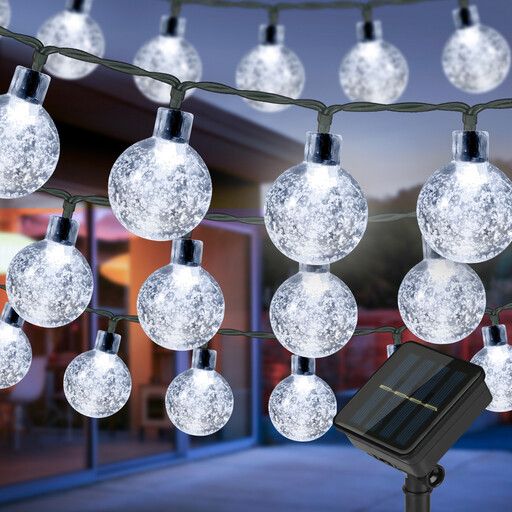
Why this suits this profile: This solar string light will easily find a home on a balcony, fence, tree or around a dining area, creating a warm atmosphere without needing a plug socket.
The stated battery life of 8 to 14 hours is based on a 6 to 8 hour charge in full sun. In practice, it will vary with the weather.
7-metre cable, 50 LEDs, IP65 rating and eight lighting modes as stated by the manufacturer.
Choose a spot that gets several hours of direct sunlight, then push in or fix the light on a stable surface. Let the battery charge fully before first use. If the product turns on automatically at dusk, leave the switch set to “ON”.
The light runs on energy captured by its panel and doesn’t need to be connected to the mains. Its running cost mainly comes down to the purchase price, maintenance and eventual battery replacement. Performance can drop as components wear out or if the panel is regularly left in the shade.
Some models are designed to stay outdoors and carry an IP65 or IP66 rating. That doesn’t make them immune to frost, impact or immersion. In particularly harsh conditions, protect the panel, avoid flood-prone areas and store the product away if the instructions recommend it.