
Livraison le jour même ou le lendemain

Qualité garantie

Débloquez vos offres de bienvenue: Livraison GRATUITE | Jusqu'à -80 % | 30 jours d'essai gratuits à JoyPlus
Téléchargez l'application
Outdoor solar lighting lets you illuminate a garden, entrance or balcony without running a single electrical cable. But not all solar lamps are created equal, and they don't all serve the same purpose. A decorative string light will never replace a security floodlight, while a very powerful spotlight can lack charm around a patio.
To avoid a disappointing purchase, focus on three key points: the panel's location, the waterproofing level and the stated battery life. Here are the criteria to consider before choosing your solar garden lights.
A lamp advertised to run for several hours depends first and foremost on how much sunlight it receives during the day. In autumn and winter, a panel installed in the shade, facing north or covered in dust will recharge its battery less effectively.
A solar string light can therefore offer very different battery life depending on the weather, the orientation of your balcony or the presence of a nearby tree. The figures quoted by manufacturers should be taken as estimates, linked to usage conditions.
IP65 and IP66 ratings indicate the level of protection against dust and water. They do not, however, mean the lamp can be submerged. An IP65 model resists splashes and running water jets, while IP66 offers enhanced protection against powerful water jets.
The solar panel and housing should still be installed away from puddles, any risk of immersion and repeated impacts.
The number of LEDs alone is not enough to judge a lamp's brightness. A string light made up of many small LEDs is generally used for garden decoration or ambient lighting. For an entrance, garage door or path, also look at the power, beam direction and whether it has a motion sensor.
The panel needs several hours of direct light every day. For an outdoor solar lamp fixed to a wall, make sure the façade isn't constantly in the shadow of an awning. For spotlights or path lights, choose a clear, stable area.
The lack of wiring makes installation easy on a patio, balcony or along a path. However, the panel must be positioned carefully. Some models have an on/off switch that needs to be activated before the first charge.
A warm white LED, around 2,700 to 3,200 K, gives off a soft, cosy light, ideal for a patio, garden border or outdoor table. A cool white LED produces a sharper, brighter effect, better suited to a façade, walkway or contemporary décor.
Multicolour models are more at home at parties, weddings, birthdays or in seasonal decorations than for functional lighting.
The built-in rechargeable battery stores the energy captured during the day. Depending on the model, battery life can reach several hours in favourable conditions. Fixed, flashing, scrolling or fading modes let you adjust the atmosphere to suit the occasion.
Clean the panel regularly with a soft, dry or slightly damp cloth. Avoid abrasive products and never attempt to dismantle a lithium battery. At the end of its life, the lamp should be disposed of through the appropriate electrical and electronic equipment recycling scheme.

Why this choice suits this profile: its round shape and cable-free installation make it a simple solution for a first lighting setup around a garden, patio or walkway.
The IP66 rating is clearly stated and the 0.6W panel is paired with a 500mAh lithium battery. However, make sure you choose a sufficiently sunny spot.
A warm light at 3,200 K, 360° illumination and a compact housing 121.4 mm in diameter.
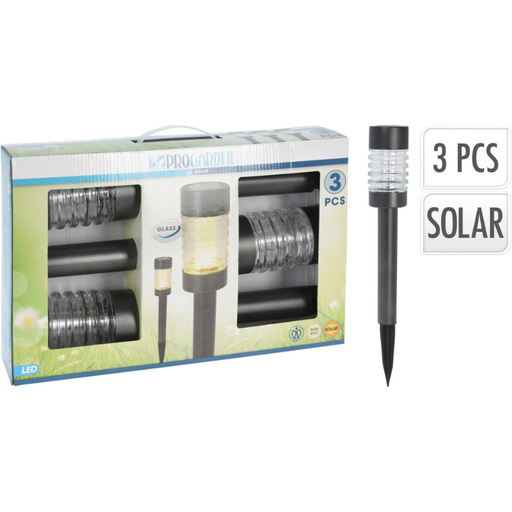
Why this choice suits this profile: its stainless steel frame and clear glass blend elegantly into an entrance, border or outdoor space with refined finishes.
The product page details the materials, colour temperature and luminous flux, rather than just stating a number of LEDs.
A set of three lamps, warm white LEDs from 2,700 to 3,000 K, a brightness of 5 lumens and a total height of 540 mm including the stake.
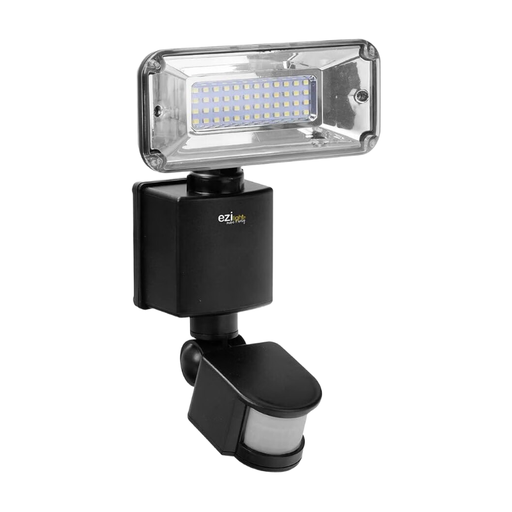
Why this choice suits this profile: its motion sensor and adjustable head are particularly well suited to an entrance, garage, path or façade.
It doesn't rely on constant lighting: the sensor turns the lamp on when movement is detected, which is better suited to occasional security use.
A solar LED floodlight with an adjustable head, wireless installation and automatic photovoltaic charging.
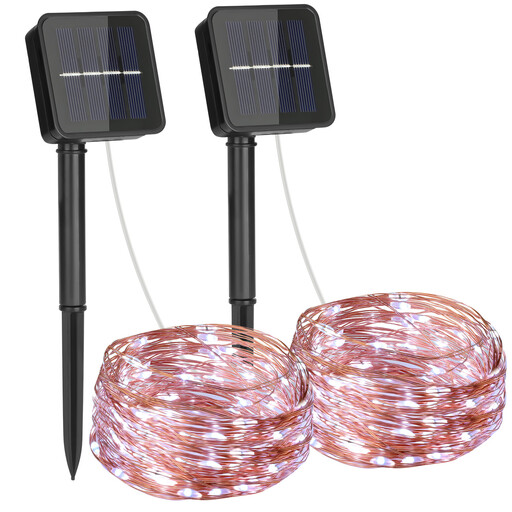
Why this choice suits this profile: its two long string lights will easily dress up a pergola, fence, balcony or outdoor party setting.
The length, number of LEDs, IP65 rating and charging conditions are all clearly detailed. However, the panel should not be submerged.
120 multicolour LEDs per cable, eight modes with memory function and a stated battery life of 8 to 14 hours depending on conditions.
We've put together a comprehensive, real-time updated selection of products that meet these exacting criteria, while also taking European safety regulations into account.
It all depends on the battery capacity, panel size and weather. Many models claim a full charge in 6 to 8 hours of direct sunlight. Install the panel in a clear area and clean it regularly to minimise charging losses.
A model with an IP65 or IP66 rating is designed to withstand outdoor use, but not immersion. Also check the stability of the stake or mount, protect the lamp from impacts and consult the manufacturer's recommendations before leaving it exposed to frost or extreme weather conditions for long periods.
Solar models don't need to be connected to the mains, which means you don't have to power them constantly from a socket. Their running cost then depends on the battery's lifespan, maintenance and available sunlight. For creating ambient lighting, a solar string light will generally be more suitable than a powerful floodlight left on all night.