
Livraison le jour même ou le lendemain

Qualité garantie

Débloquez vos offres de bienvenue: Livraison GRATUITE | Jusqu'à -80 % | 30 jours d'essai gratuits à JoyPlus
Téléchargez l'application
An outdoor solar light lets you illuminate a space without running any electrical cables, while also cutting down on your lighting costs. Yet some purchases can prove disappointing after just a few weeks: battery life that’s too short, a panel installed in the shade, or water resistance that’s not quite what you expected.
Before you choose a solar string light, a path lamp or a floodlight, it’s worth keeping three common pitfalls in mind.
For decorative use, choose a light that matches the atmosphere you want to create. Cool white light highlights the outlines of a façade or a flowerbed, while warm light suits a patio, an outdoor dining table or a garden border better.
The IP rating tells you how well a device is protected against dust and water. The first digit refers to solid particles, the second to moisture.
Look closely at the charging time, the lighting duration and the conditions under which these figures were measured. Some models claim a recharge in 6 to 8 hours and a battery life of 8 to 14 hours, but these numbers are heavily dependent on the weather and actual sunlight.
For a solar patio light, a panel facing the brightest part of your garden will often perform better than a unit chosen purely for its looks. Remember to wipe the panel surface with a soft cloth from time to time, so dust doesn’t reduce how much light it can capture.
A solar path light should primarily provide clear guidance without dazzling. For an entrance or a garage, a solar light with a motion sensor stops you from leaving a lamp on all the time. An outdoor solar floodlight with an adjustable head lets you direct the light towards a gate, a wall or a staircase.
For decoration, check the cable length, the number of LEDs, the different modes available and whether there’s a memory function. A multicolour solar string light is perfect for parties and birthdays, while a cool white string light fits more easily into everyday use.
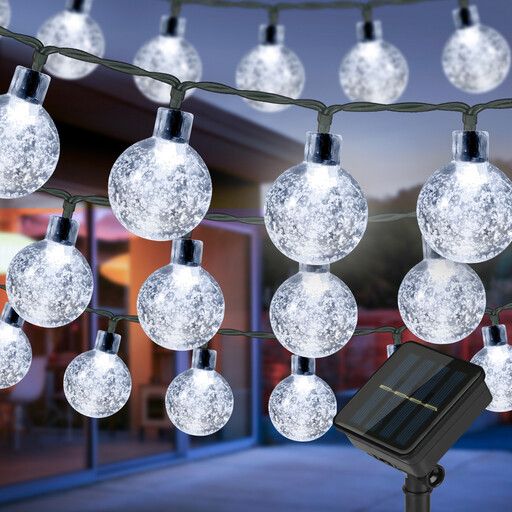
Why this choice suits this profile: This 4.88 m string light with 30 LEDs is ideal for a first decorative project on a balcony, small patio or flowerbed, with no extra wiring needed.
The panel must be placed in direct sunlight, and the string light turns on automatically. The stated protection is suitable for splashes, without promising immersion.
30 cool white LED globes, 8 lighting modes and automatic solar operation. The stated battery life is 8 to 14 hours depending on conditions.
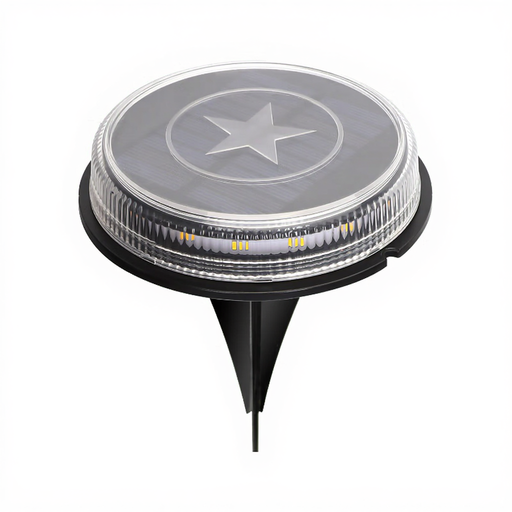
Why this choice suits this profile: Its discreet design and warm light blend beautifully into a carefully styled patio, border or pathway.
The IP66 rating is clearly stated. However, it’s still essential to install the light on a stable surface and not deliberately subject it to crushing.
Warm light at 3,200 K, 0.6 W solar panel, 500 mAh lithium battery and a round design measuring 121.4 mm.
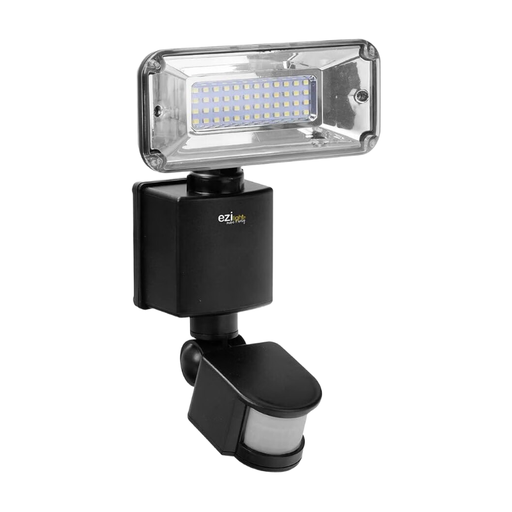
Why this choice suits this profile: This outdoor solar floodlight is built for entrances, garages, pathways and areas that need lighting triggered by movement.
The motion sensor limits unnecessary activations. You still need to choose a spot with plenty of sunlight and keep the sensor completely unobstructed.
Adjustable head, wide-coverage LED floodlight, wireless installation and automatic activation via motion detection.
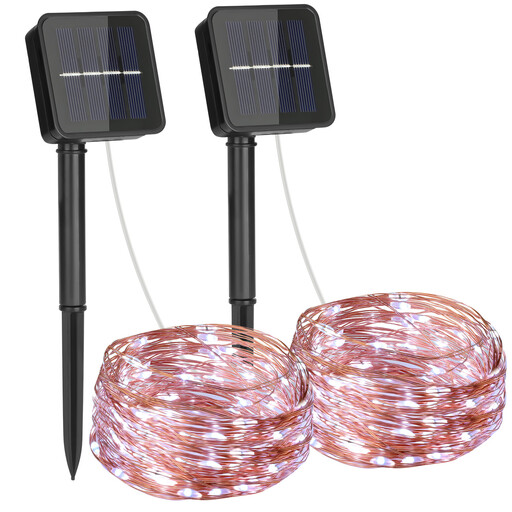
Why this choice suits this profile: The two 12 m string lights are ideal for weddings, parties, trees, balconies and large patios.
The length and number of LEDs are clearly stated, as is the IP65 protection. The panel must remain exposed to sunlight and away from standing water.
120 multicolour LEDs per string light, 8 modes with memory function and flexible copper wire for tool-free installation.
We’ve put together a comprehensive, real-time selection of products that meet these demanding criteria and European safety standards.
A solar light stores the energy it captures during the day and doesn’t need to be connected to the mains to work. Its running cost is therefore very low. You should, however, budget for a possible battery replacement after several charge cycles. The overall lifespan depends on the quality of the components, the amount of sunlight it gets and how well you maintain it.
Place the panel in an open area, facing the brightest part of the sky. Clean it regularly, make sure the switch is turned on, and avoid branches or objects casting shade over it. In winter, a shorter battery life is normal: the days are shorter and sunlight is more variable.
It depends on its IP rating and the manufacturer’s recommendations. An IP65 model is designed to withstand splashes and rain, but it should not be submerged. To protect the battery and connections, bring the light indoors during exceptionally severe weather and store it in a dry place when the instructions advise you to.