
Livraison le jour même ou le lendemain

Qualité garantie

Débloquez vos offres de bienvenue: Livraison GRATUITE | Jusqu'à -80 % | 30 jours d'essai gratuits à JoyPlus
Téléchargez l'application
An outdoor solar light can transform a pathway, balcony or patio without the need for any electrical work. However, not all models are created equal. A solar garden light designed to create ambience won't have the same features as a solar wall light installed near an entrance.
Before comparing styles, it's worth knowing the most common pitfalls.
Manufacturers typically quote battery life measured after a full charge and under sufficient sunlight. In the UK, the weather, the panel's orientation and shade cast by a wall or tree can significantly reduce the lighting duration.
A product advertised to run for several hours may therefore switch off earlier after a cloudy day. To minimise this risk, install the panel in an open spot and clean it regularly.
A decorative solar lantern can look lovely, but its light is often soft and not ideal for an entrance or pathway. Conversely, a solar garden stake light designed to mark a path won't necessarily create the warm atmosphere you're after on a patio.
Start by defining the main purpose: path marking, accent lighting, decoration or illumination near a door.
The rating IP65 generally means the housing is protected against water jets from any direction, under the conditions set by the standard. It does not mean the light can be submerged or exposed to significant standing water.
So, avoid locations where water is likely to pool. Also follow the manufacturer's instructions and do not open the housing to modify the battery or components.
A solar LED light combines a photovoltaic panel, a rechargeable battery and a light source. Three details deserve your attention:
Products with automatic activation usually switch on at dusk thanks to a light sensor. To enjoy a truly functional wireless light, make sure the switch is turned on during the first installation.
For outdoor use, choose a housing designed to withstand moisture and temperature changes. An IP65 rating can be suitable for a garden, patio or pathway, provided the installation is appropriate.
ABS plastic, treated metal and protected surfaces all age differently. Also check the stability of the stake, the strength of the base and the joints between the panel and the light body.
A warm white light offers a softer look, particularly suited to decorative outdoor lighting. A cooler tone can make a path easier to see, but the choice also depends on the surroundings and the spacing between lights.
Measure the area you want to light up. Lights placed too close together can visually clutter a flowerbed, while too much space between them will leave dark patches on a path.
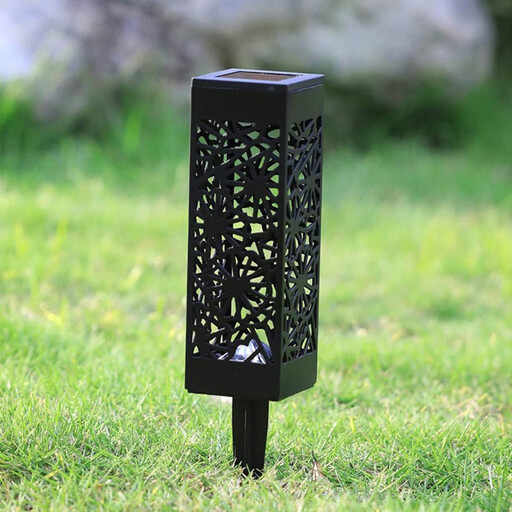
Why this choice suits this profile: This pack of six lights is perfect for a first installation along a path, in a flowerbed or around a patio. The stake pushes directly into the ground, with no wiring or tools needed.
The listing mentions an IP65 construction, an estimated charging time of 4 to 6 hours in sunlight and a stated battery life of 5 to 8 hours. This data lets you compare the manufacturer's promises with your real exposure conditions.
Six pieces, warm white LED, floral patterns projected on the ground and a corrosion-resistant ABS housing according to the product listing.
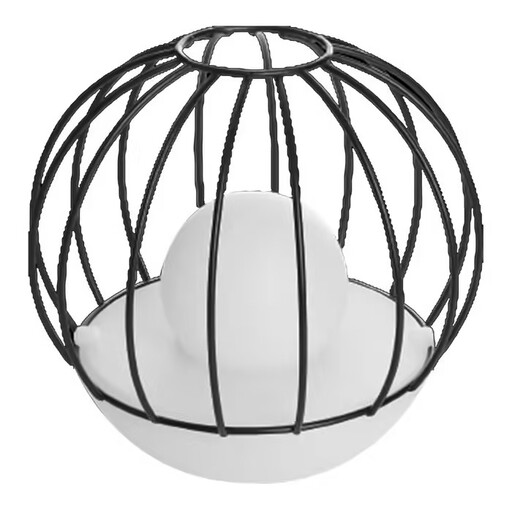
Why this choice suits this profile: Its metal cage and central glowing ball bring a real decorative presence to a patio, terrace or balcony. It sits on a flat surface and can be moved around easily.
The listing states that the product must be placed away from submersion and receive direct sunlight. So don't treat it as a fully waterproof light.
Integrated solar panel, automatic activation and a self-contained design combining metal, ABS, polycrystalline silicon and LED.
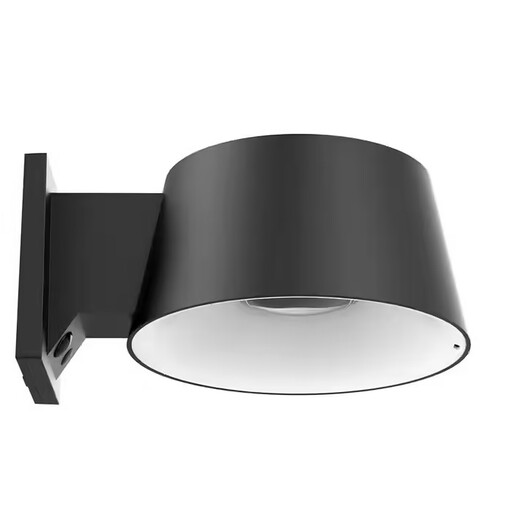
Why this choice suits this profile: This solar wall light is ideal for an entrance, passageway or facade where a downward-directed beam is more useful than diffused light.
The wall mount keeps the light in place and reduces accidental movement. However, choose a wall that gets enough sun and use the supplied fixings.
Integrated solar panel, focused LED beam, automatic operation and materials stated as weather-resistant.
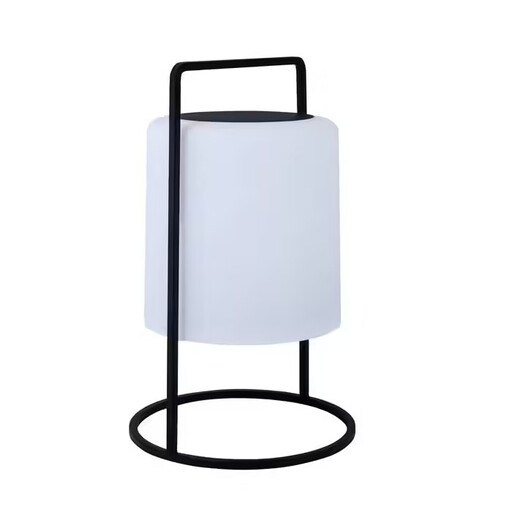
Why this choice suits this profile: Its handle lets you move the lantern between a table, balcony and relaxation area. It's ideal for anyone who likes to rearrange their solar lighting on the patio regularly.
The panel and light source are integrated into a single unit, with no cable. However, the listing recommends a flat surface, direct sunlight and no submersion.
Medium size, carry handle, opal diffuser and warm LED light for a soft, subtle ambience.
We've put together a comprehensive, real-time selection of products that meet these demanding criteria and European safety standards.
To ensure reliable operation, follow these simple steps:
A solar garden stake light should be installed without blocking the way. For a wall light, check the wall material and the strength of the fixing. Outdoor products should not be modified or taken apart.
The time varies depending on the panel, battery and sunlight. The listing for the Huacan model states 4 to 6 hours of charging in sunlight. This figure should be taken as a guide under favourable conditions, not as a guarantee for every day.
Yes, but its battery life may decrease when the days are shorter, the sky is overcast or the panel receives less light. Point it towards an open area and remove any dirt regularly. A solar lantern with a longer battery life will be better suited to ambience lighting, while discreet path marking will generally use less power.
A light powered by its own solar panel does not need to be connected to the mains for normal use. So it can save you from installing a cable or socket for certain decorative needs. However, the total cost depends on the purchase price, the battery's lifespan and any eventual replacement of components. Always check the maintenance conditions and compliance information supplied with the product.