
Livraison le jour même ou le lendemain

Qualité garantie

Débloquez vos offres de bienvenue: Livraison GRATUITE | Jusqu'à -80 % | 30 jours d'essai gratuits à JoyPlus
Téléchargez l'application
There's nothing quite like extending those long summer evenings on your patio or in your garden. However, installing a traditional system often turns into a nightmare: digging trenches, running cables, and a climbing electricity bill... This is where outdoor solar lighting truly shines as a simple, cost-effective, and eco-friendly solution.
Faced with a plethora of choices, it can be difficult to know where to start. Our guide is here to break down the key criteria and help you find the perfect product for your needs, whether you want to create a soft, ambient glow, mark a pathway, or secure the area around your home.
By the Joybuy Team, your product experts.
Before we get to our top picks, let's review the key points to help you make an... enlightened choice.
Waterproof solar lighting is essential to withstand the elements. This resistance is measured by the Ingress Protection (IP) rating, which is followed by two numbers.
For outdoor use in the UK, an IP44 rating is the bare minimum (protection against water splashes). For more direct exposure to rain or for products placed on the ground, an IP65 rating or higher ensures optimal protection and better longevity.
How you plan to use the lights will determine the best type of product for you.
The battery life of a solar garden light depends on its battery's capacity and the efficiency of its solar panel. Check the advertised battery life (often between 6 and 12 hours) and the charging time. A wireless solar light with a remote solar panel can be a smart option if the area you want to light is in the shade, giving you the freedom to place the panel in direct sunlight.
We have selected three models that meet distinct needs, chosen for their effectiveness and ease of use.

What makes this model stand out?
Their main advantage is unbeatable flexibility. The thin, malleable copper wire allows you to easily wrap them around branches and railings or place them in a vase for an instant decorative effect. They emit a very pleasant warm white light, creating an intimate and magical atmosphere. The set of two, each with 12 metres of wire, offers more than enough length to decorate large spaces.
Key features:
Who is it for?
For anyone who wants to add a touch of magic to their outdoor space, whether for summer evenings, holiday festivities, or simply for visual pleasure.

What makes this model stand out?
The strength of the ezilight Solar MultiSpot lies in its modular design. A single solar panel powers several spotlights that you can aim independently. This versatility allows you to sculpt a truly bespoke lighting landscape: highlight a tree, a stone wall, and the start of a path all at the same time.
Key features:
Who is it for?
For the inner landscape designer who wants to stage their outdoor space by highlighting architectural or plant features, all with a single installation.
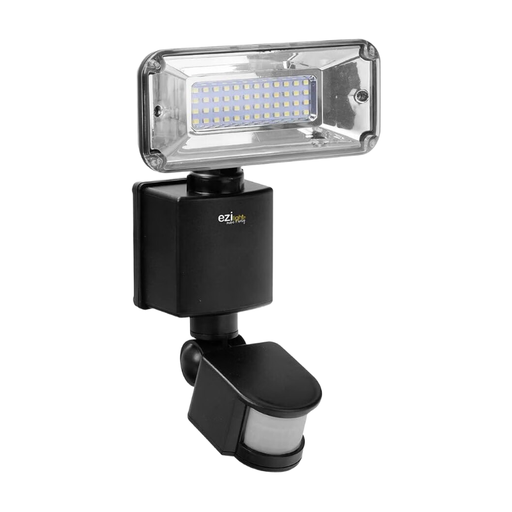
What makes this model stand out?
Here, it's all about efficiency and security. Its integrated motion sensor triggers a powerful LED light at the slightest presence. It's ideal for securing a garage entrance, a back door, or a dark pathway. The bonus: energy is only consumed when needed, guaranteeing maximum battery life.
Key features:
Who is it for?
For those who prioritise function over form and are looking for a simple, standalone solution to secure and light the areas around their home.
Our selection covers three common uses, but the world of solar lighting is much vaster. Wall lights, designer bollards, other styles of string lights... To explore further, feel free to browse our complete collection.
? Discover our full range of solar garden and pergola lighting
1. Do solar lights work in winter or on cloudy days?
Absolutely. A modern solar panel captures light even on an overcast day, although its output will logically be lower than on a sunny day. In winter, shorter days and less sunlight will naturally reduce your light's battery life. The trick to optimising the charge is to ensure the panel is always well-positioned and clear of debris (leaves, snow, etc.).
2. What is the lifespan of a solar garden light?
The longevity of your light depends on two components. On one hand, the LEDs are almost indestructible, with lifespans often exceeding 20,000 hours. On the other hand, the rechargeable battery is the main component that wears out. You can expect an average of 1 to 3 years of reliable service, depending on the quality and usage. The good news is that on many models, the battery is easily replaceable, which extends the life of your setup.
3. Do wireless solar lights require any special maintenance?
This is one of their greatest advantages: they are virtually maintenance-free. Simply remember to occasionally clean the surface of the solar panel with a soft, damp cloth to remove dust, pollen, or bird droppings. A clean panel guarantees an optimal charge.