
当日/次日达

品质保障

开启新人专享福利: 全场免邮 | 低至 2 折 | 免费试用 30 天 JoyPlus 会员
下载 Joybuy
Outdoor solar lighting has it all: it illuminates your garden, patio, or balcony in a way that's economical, eco-friendly, and incredibly easy to install. It's an appealing promise for effortlessly transforming your outdoor spaces. But be warned—the market is flooded with products that, despite catchy marketing, don't survive the first rainy season. To help you see things more clearly and make a lasting investment, here are the pitfalls to avoid and the criteria that truly matter.
Before you fall for a sleek design, keep a close eye on the technical details. Often overlooked, these are what separate a short-lived gadget from a durable investment.
solar garden light.powerful solar light intended for security (entrances, pathways) must provide at least 300 lumens to be effective.To make a truly informed choice, rely only on these three criteria. They are the true measure of your future lighting's performance and durability.
This rating consists of two digits: the first for resistance to solids (dust), the second for resistance to liquids (water).
solar balcony light.solar bollard light or an outdoor solar spot light on the front lines against the elements.Your light's autonomy depends on this inseparable duo: the battery's capacity to store energy and the panel's efficiency in converting it.
Your intended use will naturally dictate the type of light to choose.
solar string light or a solar lantern is perfect for a cosy atmosphere. Here, brightness takes a backseat to aesthetics and lighting effects.Solar bollard lights and stake spotlights are perfect for outlining a path or highlighting a flowerbed. They combine soft light with precise orientation.solar wall light, often paired with a motion detector, delivers a powerful and deterrent beam. It's essential for securing an entrance, garage, or high-traffic area.Here are a few options that meet specific needs, taking into account performance and durability criteria.
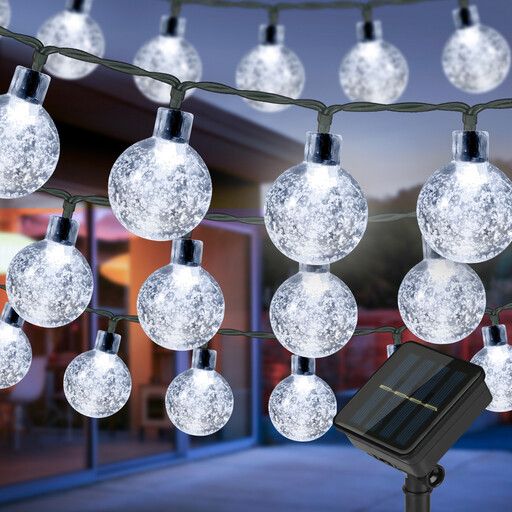
The Ideal Use Case: Perfect for decorating a pergola, livening up a balcony, or getting the garden ready for long summer evenings. Its 11-meter length covers a large area and, being wireless, it offers complete installation freedom for a special event or daily use.
Certified IP65, it's designed to withstand downpours without flinching, where entry-level models would fail. Its battery life (8-14h) is realistic for a 6-8h charge, thanks to a well-sized solar panel.
It offers 8 lighting modes (steady, flashing, fade...) and a convenient memory function to recall your favourite setting. The "crystal bubble" design diffuses a particularly elegant light.
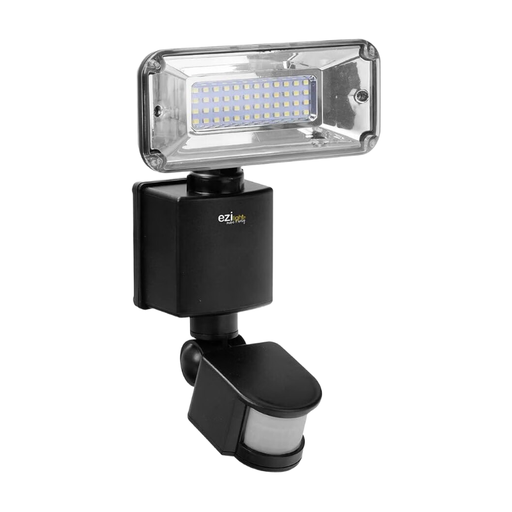
The Ideal Use Case: For those seeking powerful, deterrent lighting to secure an entrance, garage, or driveway. Motion-activated lighting is a double win: enhanced security and preserved battery life.
This product isn't just "bright"; it's a true LED spotlight designed for security. Its robust construction and waterproofing ensure rock-solid reliability, 365 days a year.
Its motion detector and adjustable head allow you to target the area to be lit with precision. Smart lighting that only activates when needed, thus optimising battery life.

The Ideal Use Case: Perfect for marking a pathway, a wooden deck, or the area around a pool with maximum discretion. Its flat, ultra-durable design allows it to be recessed or placed on the ground without ever obstructing passage.
With its IP66 rating, this spotlight is built to withstand the harshest conditions, including strong water jets. Its shell is so robust it can even support the weight of a car—a true testament to its durability.
Its 360° illumination casts a warm light (3200K), creating a soft and welcoming ambiance. The wireless installation is done in a flash, for a flawless and modern look.
Explore our complete selection of products that meet our quality criteria and European safety standards.
The lifespan depends on two key components: the LEDs and the battery. The LEDs are virtually eternal, with a lifespan often exceeding 25,000 hours. The weakest link is the rechargeable battery. Expect a lifespan of 2 to 4 years, after which its performance will decline. Fortunately, on the best models, it is replaceable.
Yes, but with reduced performance. Modern solar panels can capture diffuse light even on grey days, but charging is much less efficient than in direct sunlight. The nightly runtime will therefore be shorter. This is why it's crucial to choose a model with a high-capacity battery (high mAh) and a quality panel to optimise charging on overcast days.
Maintenance is minimal but essential. Simply clean the surface of the solar panel with a soft, damp cloth every two to three months. Dust, pollen, or dead leaves can form a film that reduces its efficiency and thus the charging time. In winter, remember to clear away any snow as well.