
当日/次日达

品质保障

开启新人专享福利: 全场免邮 | 低至 2 折 | 免费试用 30 天 JoyPlus 会员
下载 Joybuy
Lighting up your garden, patio, or balcony without running a single cable or increasing your electricity bill: it’s an attractive promise. That's the whole appeal of outdoor solar lighting. The problem: the market is flooded with products offering wildly inconsistent, and often disappointing, performance. To help you see things more clearly, our guide breaks down the mistakes to avoid and the essential criteria to check before you buy.
Our mission: to give you the tools to separate the wheat from the chaff and invest in a reliable solution rather than a short-lived gadget.
A beautiful package and a tempting spec sheet can sometimes hide deal-breaking flaws that will render your purchase useless in a matter of months. Here are the points to watch closely.
To make the right choice, forget the marketing claims for a moment and focus on these few objective technical specifications.
This rating consists of two digits. For a product intended to stay outdoors, it's imperative to know how to read it:
Real-world battery life depends on an inseparable duo: the battery's capacity and the solar panel's efficiency.
How you plan to use your light dictates everything else: its brightness and light colour.
Here are a few products that meet specific needs and check all the boxes for durability and performance.
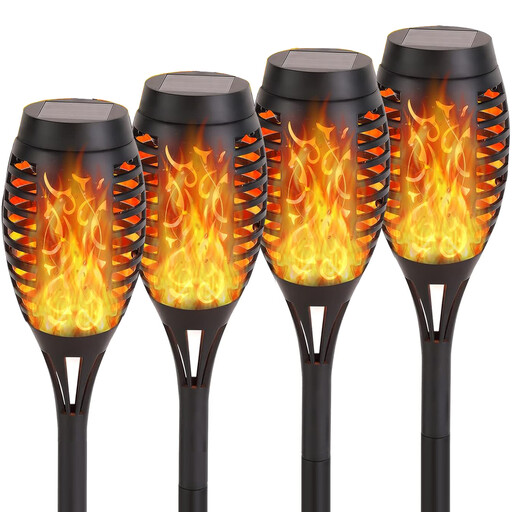
Why we love it: Perfect for those who want a warm, almost tropical atmosphere without the risks of a real flame. Ideal for marking a pathway or decorating the edges of a patio for an evening.
Its purpose is purely decorative, which avoids any confusion with security lighting. Its IP65 rating ensures excellent weather resistance, a non-negotiable feature for a product staked directly into the ground.
The dancing flame effect is surprisingly realistic and creates instant ambience. Installation is child's play: just stake them into the ground, and you're done.
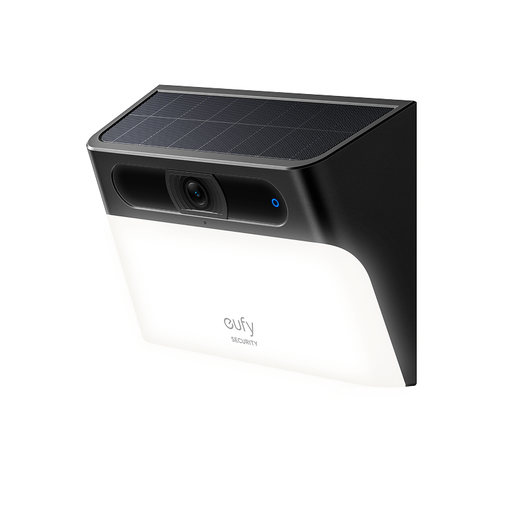
Why we love it: The ultimate all-in-one solution for securing an entrance, garage, or driveway. It combines a security camera, a powerful motion-activated light, and a 100% self-sufficient solar power supply.
Here, there are no compromises: you get a truly powerful solar light (300 lumens) that is functional. The solar panel is sized to ensure a reliable power supply, avoiding the pitfall of unrealistic battery life claims.
The 2K camera and smart motion detection (managed via the mobile app) offer a level of security that is incomparable to a simple lamp. The local storage is a real bonus: no hidden subscription fees.
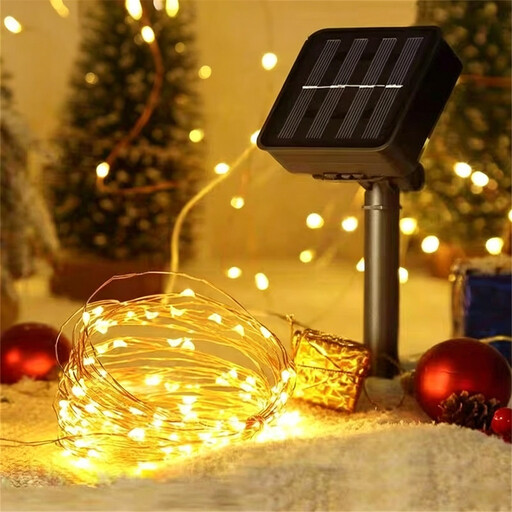
Why we love it: This set is the perfect solution for dressing up a large garden, a long fence, or a pergola. With nearly 30 metres in total and an ultra-flexible copper wire, the creative possibilities are endless.
No more dealing with string lights that are too short! This set doubles down with a generous length. The mention of " enlarged " solar panels is a good indicator that they can properly power the 75 LEDs on each string.
The copper wire, nearly invisible by day, can be shaped at will. The convenient memory function saves your favourite of the 8 available lighting modes, so you don't have to reconfigure it every night.
Explore our complete selection of products, hand-picked for their performance, durability, and compliance with safety standards.
The lifespan of a solar light is primarily determined by its battery. Expect 2 to 4 years for a good quality battery. The LEDs themselves are virtually indestructible (often rated for over 20,000 hours). The real bonus? Models with replaceable batteries, which significantly extend the product's lifespan.
Yes, but expect reduced performance. Modern solar panels can capture light even on grey days, but the runtime in the evening will logically be shorter than in the middle of summer. Pro tip: to optimise charging, point the panel due south, away from the shade of a tree or wall.
The only reliable benchmark is the brightness expressed in lumens (lm). To put it simply:
solar string light, solar torch): 10 to 150 lm.solar bollard light): 100 to 200 lm.wall light with sensor): 400 lm and up.