
当日/次日达

品质保障

开启新人专享福利: 全场免邮 | 低至 2 折 | 免费试用 30 天 JoyPlus 会员
下载 Joybuy
Eco-friendly, cost-effective, and requiring no complex installation, solar lighting has it all. It promises to effortlessly illuminate our gardens, patios, and balconies. The only catch: the market is a veritable jungle, flooded with products of wildly varying performance. To avoid disappointment and buyer's remorse, it's crucial to know how to sidestep the most common marketing traps.
Who hasn't been let down by solar string lights that die after the first downpour, or an outdoor solar spotlight whose battery life melts away? Here are the key points to watch out for to make a truly informed choice.
The 3 Traps to Avoid When Buying Solar Lighting:
To make the right choice, forget the marketing slogans and focus on objective technical specifications. Here are the three key points to scrutinise.
The Ingress Protection (IP) rating is an international standard that classifies a device's resistance to dust and water. For a product designed to stay outdoors, it's a non-negotiable criterion.
Your solar lamp's runtime depends on an inseparable duo: its ability to capture energy and its capacity to store it.
The intended use for your lighting will determine the type of light you should choose.
To help you see things more clearly, here's how these criteria translate into practice with a few products suited for different needs.
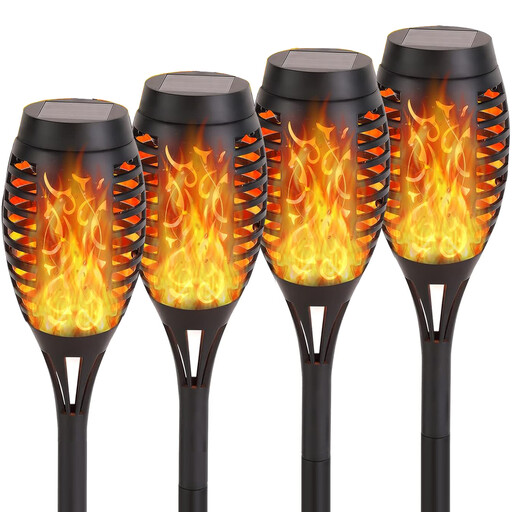
Why we chose it: Perfect for creating a unique and warm atmosphere on summer evenings. The flickering flame effect of this solar torch adds a touch of originality and conviviality to light up a patio or pathway.
With their IP65 waterproof certification, these torches are built to withstand the elements, saving them from the fate of gadgets that fail at the first sign of rain. The lighting is designed for ambience, not raw power, so brightness expectations are managed perfectly.
The highly realistic, dancing flame effect creates instant atmosphere. The stake-based installation is a breeze and requires no tools.
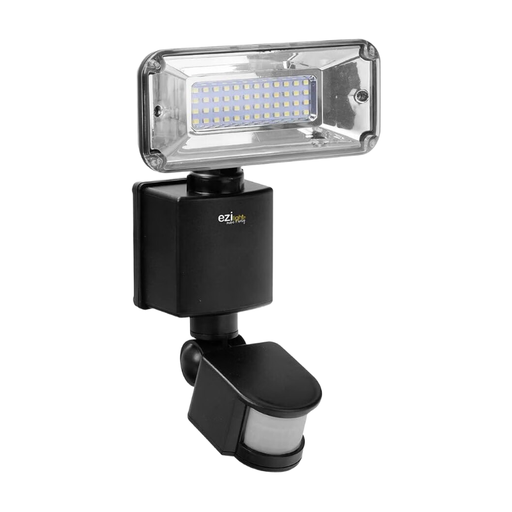
Why we chose it: Essential for securing an entrance, garage, or driveway. This outdoor solar spotlight delivers powerful light only when needed, combining security with energy savings.
The motion sensor is the perfect counter to the battery life trap. By activating only when presence is detected, it preserves the battery and guarantees reliable light all night long, whereas a continuously-on model would run out of power in a few hours.
Its adjustable head allows you to direct the light beam with high precision. Its robust design is built to last.
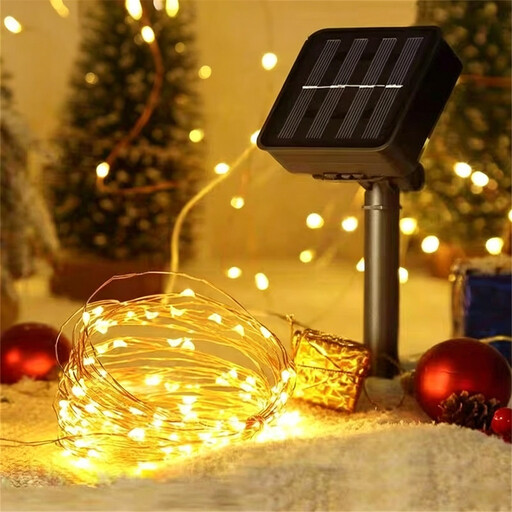
Why we chose it: For creative souls looking for an ultra-flexible solar garden decoration solution. The thin, malleable copper wire of this solar string light wraps with incredible ease around branches, railings, or pergolas for a guaranteed "starry sky" effect.
This model advertises a realistic runtime (8 to 14 hours) on a full charge (6 to 8 hours), a far cry from unrealistic promises. Its warm white LED light is clearly geared towards ambience, which prevents any disappointment regarding brightness.
Sold as a two-pack, it offers excellent value for the length. Its 8 lighting modes, complete with a memory function, allow you to change up the look without having to reconfigure everything each night.
Discover our complete and updated selection of products that meet our selection criteria and current safety standards.
The lifespan of a solar light depends on its two key components: the battery and the LEDs. The LEDs have a very long lifespan (often over 20,000 hours). Therefore, the rechargeable battery is the weakest link. Generally, a good quality battery (Ni-MH or Li-ion) will last between 2 and 4 years before showing signs of degradation. The good news: on many models, it is replaceable, which extends the product's lifespan accordingly.
Yes, but with reduced efficiency. Modern solar panels can capture light even on overcast days, but charging is obviously slower and less complete than in direct sunlight. In winter, with shorter days and weaker sunlight, the runtime will naturally be shorter. For winter use, it is therefore crucial to invest in a model with a high-performance solar panel and a high-capacity battery.
Maintenance is minimal but essential for ensuring optimal performance. The key step is to regularly clean the surface of the solar panel with a soft, damp cloth. Dust, pollen, or dead leaves can form a thin layer that reduces its ability to capture light. Also, remember to check that the panel has not become shaded by a plant that has grown or an object that has been moved.