
Livraison le jour même ou le lendemain

Qualité garantie

Débloquez vos offres de bienvenue: Livraison GRATUITE | Jusqu'à -80 % | 30 jours d'essai gratuits à JoyPlus
Téléchargez l'application
The idea of illuminating your garden, patio, or balcony without running up your electricity bill is certainly appealing. Outdoor solar lighting promises a simple installation, respectable battery life, and an eco-friendly choice. The problem? The market is flooded with products that make tempting promises but often prove disappointing after just a few weeks. To avoid letdowns, it's best to know how to sidestep the common pitfalls.
As a product expert for Joybuy, my mission is to help you see things more clearly. Let's cut through the marketing jargon and focus on the facts. Here are the three most common mistakes and how to avoid them:
To avoid falling into these traps, a few technical checks are essential. They make all the difference between a short-lived gadget and a long-lasting investment for your garden decor.
The Ingress Protection (IP) rating is an international standard that classifies a device's level of protection against solids (dust) and liquids (water). For reliable outdoor use in the UK, aim for a minimum of an IP65 waterproof rating.
An IP65 product will therefore easily withstand driving rain, unlike lower ratings like IP44, which only protect against splashes.
The runtime of your lighting depends on two elements: the battery capacity (expressed in milliampere-hours, mAh) and the quality of the solar panel. A battery of at least 600-800 mAh, paired with a well-sized solar panel, is a good starting point to ensure 6 to 8 hours of light after a day's charge. The highest-performing models can even reach 12 hours of runtime.
The type of light sets the entire atmosphere of your space.
Every outdoor space has its own unique requirements. Here are a few recommended options, chosen for their durability and suitability for different uses.
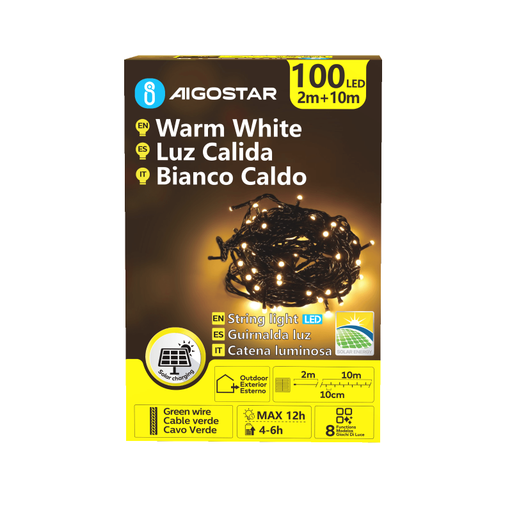
Ideal for decorating a balcony railing or a small patio. Its 10-metre length and warm white light create a welcoming atmosphere without taking up much space. Installation is a breeze, with no wires to manage.
With its IP65 rating, this string light is designed to withstand the elements, avoiding the trap of products that fail after the first rain. Its 800 mAh battery ensures good runtime.
Offers 8 modes of lighting to vary the ambiance. The runtime can reach up to 12 hours after a full charge, which is noteworthy for this price range.
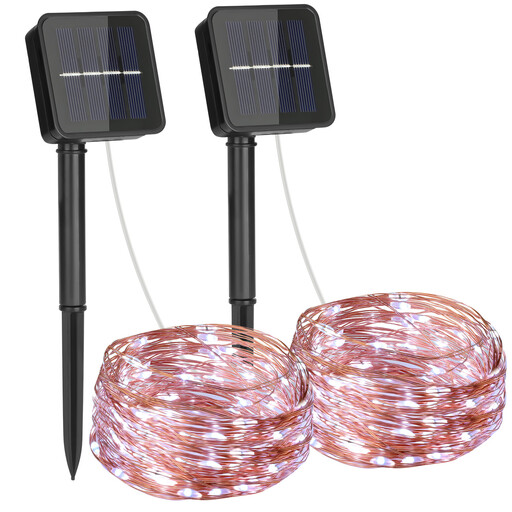
Perfect for those who host parties or outdoor events. This set of two 12-metre strings provides extensive coverage. The flexible copper wire makes it easy to decorate trees, pergolas, or fences, and the multi-colour option adds an instant festive touch.
The IP65 certification and the reinforced waterproof design of the solar panel ensure reliable use even in rainy weather. The generously sized solar panel ensures efficient charging for a long lighting duration.
The 8 modes of lighting with a memory function are a real plus: the lights remember the last selected mode, so you don't have to reconfigure them every evening.
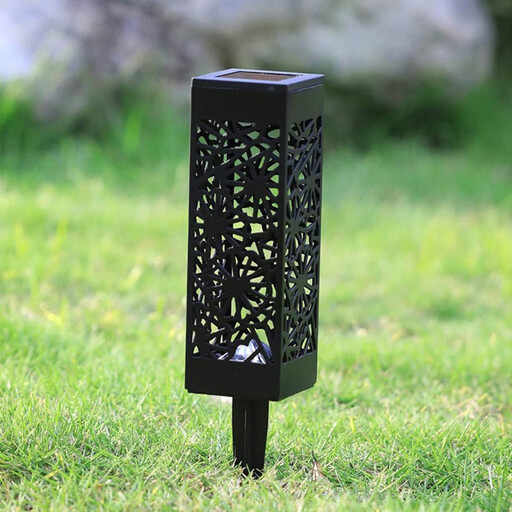
For those looking to mark out a driveway, a flowerbed, or a garden path. This set of 6 solar garden stakes is a practical and attractive solution. Simply plant them in the ground for bright and secure pathway lighting.
Made from corrosion-resistant ABS plastic and certified IP65, these stakes are built to withstand outdoor conditions all year round, avoiding the problem of materials that degrade quickly.
The hollow-carved design of the lampshade projects an elegant floral pattern onto the ground, adding a unique decorative touch that goes beyond simple functional lighting.
We have compiled a complete list of products that meet our quality and safety criteria.
The lifespan mainly depends on two components: the LEDs and the battery. LEDs have an excellent lifespan, often exceeding 10,000 hours. The rechargeable battery (usually Ni-MH) is the main component that wears out. Expect the battery to last between 1 and 3 years, depending on the product's quality and frequency of use. Good to know: on many models, it can be replaced.
Yes, but with reduced performance. Modern solar panels can charge even in overcast weather, but they will store less energy than on a sunny day. Consequently, the nightly illumination time will be shorter in winter or after several days of bad weather.
Maintenance is minimal but essential. Simply clean the surface of the solar panel regularly with a soft, damp cloth. Dust, pollen, or leaves can reduce its charging efficiency. Also, ensure the panel is always placed in a location that receives maximum direct sunlight, away from shadows cast by trees or buildings.