
Livraison le jour même ou le lendemain

Qualité garantie

Débloquez vos offres de bienvenue: Livraison GRATUITE | Jusqu'à -80 % | 30 jours d'essai gratuits à JoyPlus
Téléchargez l'application
An outdoor solar light can illuminate a pathway, create a warm atmosphere on a patio, or come in handy during an evening outdoors – all without any electrical connection. However, not every model is suited to the same purpose. A small decorative marker won't replace a camping lantern, while a powerful light would be overkill for a balcony.
Before you buy, three common pitfalls keep cropping up:
Lumens indicate the amount of light produced. A decorative light or a solar lantern placed on a table can get by with a soft glow. For a pathway, entrance or walkway, you need to choose a power level suited to the visibility you're after.
Colour temperature also affects the look:
A rechargeable solar light with adjustable brightness usually lets you tailor power consumption to each situation.
The battery plays a central role in the performance of a solar garden light. Check its technology, capacity and the conditions under which the stated battery life was achieved. A 1,200 mAh lithium-ion battery, for example, won't deliver the same running time depending on the power level selected.
Models that combine a solar panel with USB-C charging are particularly useful when sunshine is scarce. For portable use, also consider the charging time, weight and whether the battery can be replaced – if the manufacturer allows it.
Actual battery life depends on several factors:
For a waterproof solar light, the IP rating provides far more useful information than a vague marketing promise. The first digit relates to protection against solid objects and dust, while the second indicates the level of protection against water. A product rated IP66 is protected against dust and powerful water jets, but that doesn't mean it can be submerged.
Also examine the materials and installation method:
The panel must remain unobstructed. Regular cleaning with a soft cloth will help maintain charging efficiency.
The following models cater to different requirements. The features shown are those stated for each product; actual performance may vary depending on the environment and sun exposure.
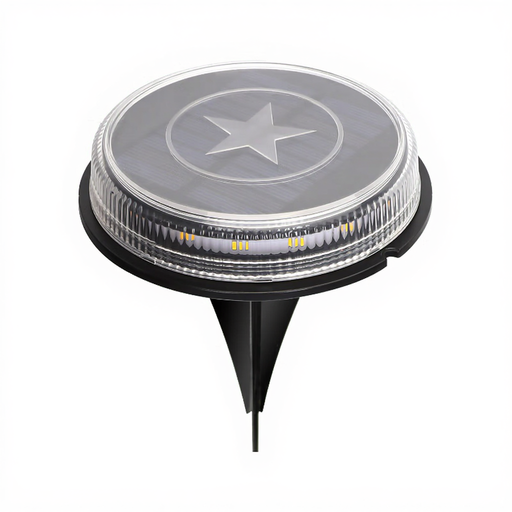
Why this choice suits this profile: Its round, flat design lends itself to wire-free installation on a patio, border or any outdoor area where you want to avoid building work.
The IP66 rating is clearly stated. This makes it possible to compare the stated resistance with that of other outdoor solar lights, rather than relying on a vague claim.
Warm light at 3,200 K, 0.6 W solar panel, 360° illumination and cable-free design.
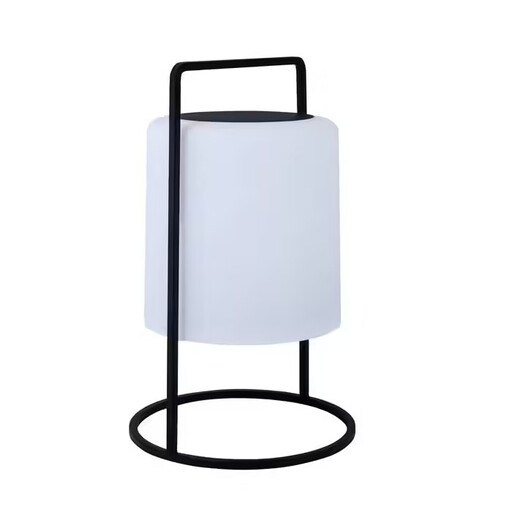
Why this choice suits this profile: This lantern focuses on a decorative silhouette, a metal handle and a soft glow – perfect for outdoor meals or relaxing moments.
Its handle makes it easy to move and reposition the lantern to make the most of the sunlight, rather than leaving it in a shady spot.
Integrated solar panel, opal lampshade, warm LED and automatic operation at dusk.
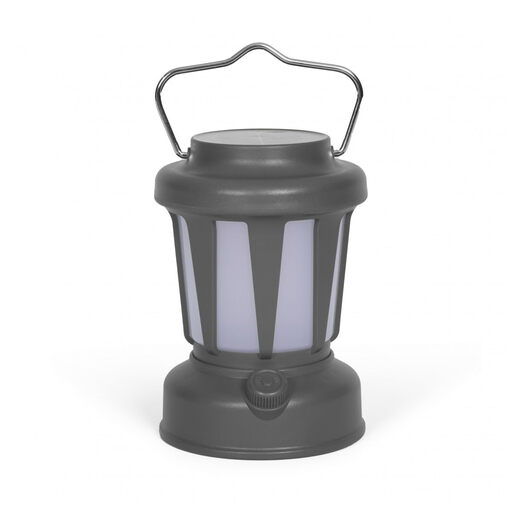
Why this choice suits this profile: Its easy-to-carry format is ideal for camping, garden evenings and situations where mains charging can take over from solar power.
USB-C charging serves as a backup when the sun is scarce. The three modes and dimmer also help to limit power consumption.
100 lumens, 1,200 mAh lithium-ion battery, up to 22 hours of stated battery life depending on the setting, metal handle and three light modes.
We've put together a comprehensive, real-time updated list of products that fully meet these demanding selection criteria and European safety regulations.
To ensure reliable operation, install the panel in an area that receives several hours of direct sunlight. Avoid proximity to streetlights and neighbouring lights if the product has a dusk sensor: artificial light sources can interfere with automatic switching.
Before first use:
With a solar light equipped with a dusk sensor, test the switching at nightfall and leave the switch in the recommended position. Products with a lithium-ion battery must not be opened or disposed of with household waste. In the UK, their end-of-life should be handled through the appropriate schemes for electrical equipment and batteries.
Yes, but its battery life may decrease when days are shorter, the sky remains overcast or the panel is exposed at a less favourable angle. A model with USB charging can be more practical for maintaining light during periods of low sunshine.
Its day-to-day operation requires no connection to the mains electricity supply, as the battery recharges via the solar panel. However, you should budget for the possible replacement of the battery – if the manufacturer allows it – as well as maintenance and recycling of the product.
A solar lantern is generally portable and designed for a table, patio or camping. A solar marker light is pushed into the ground and is mainly used to mark out a pathway, border or walkway. To make your choice, compare the height, number of lumens, battery life and installation method.