
Livraison le jour même ou le lendemain

Qualité garantie

Débloquez vos offres de bienvenue: Livraison GRATUITE | Jusqu'à -80 % | 30 jours d'essai gratuits à JoyPlus
Téléchargez l'application
Autonomous, cost-effective, and easy-to-install outdoor lighting? The promise is alluring. However, buying an outdoor solar light can quickly lead to disappointment if you only trust the flashy packaging. Between battery life that melts away and barely-there brightness, many products fail to deliver on their promises. As a product expert at Joybuy, my mission is to help you decipher technical specs to make a truly informed choice and, most importantly, to avoid the most common marketing traps.
Before you fall for an attractive design, keep an eye on these three weak points that make many solar lights destined for the bin after just a few months.
To ensure your solar patio light or solar garden post light lives up to its promises, focus on these few technical specifications.
The Ingress Protection (IP) rating is an international standard that defines a device's resistance to dust (first digit) and water (second digit). For outdoor use, here’s what you need to know:
The runtime of a wireless light depends on two inseparable factors: its battery capacity and the efficiency of its solar panel.
Don't overlook this point. The power and hue of the light are crucial for your lamp's intended use.
To help you see things more clearly, here's how these criteria translate into concrete products, tailored to specific needs.
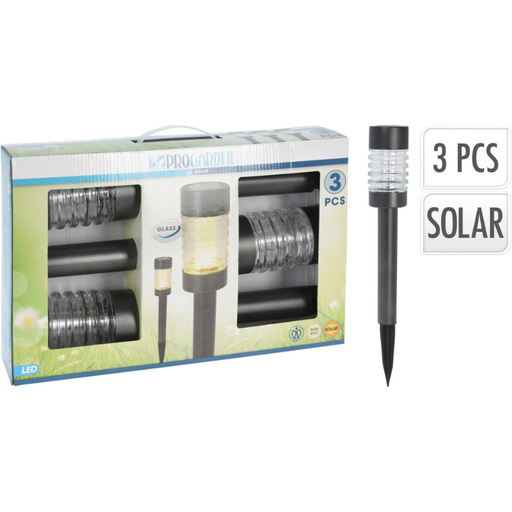
Why we chose it: Perfect for marking a pathway or adding a few discreet points of light in a garden. Sold as a set, it allows you to create a harmonious path without breaking the bank.
At 5 lumens, its purpose is clearly decorative, so there are no unpleasant surprises about its power. Its materials (stainless steel and glass) ensure much better longevity than entry-level plastic.
Its elegant design and robust materials. The warm white light (2700-3000 K) creates a welcoming atmosphere.
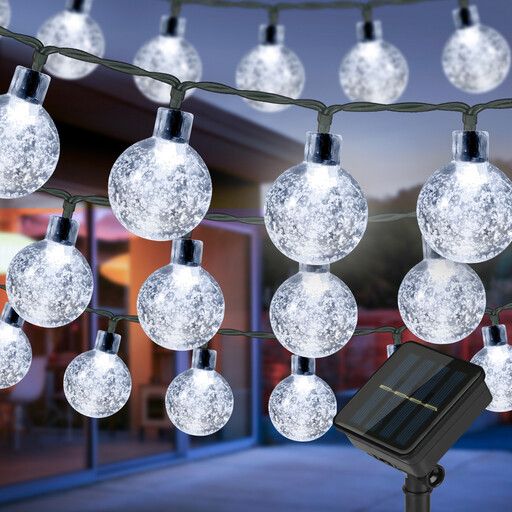
Why we chose it: Essential for decorating a patio, balcony, or garden for an evening party or for the end-of-year holidays. Highly flexible, it can be wrapped around a railing, a plant, or hung up in a flash.
This model is certified to withstand bad weather, even in winter. Its 8 lighting modes allow you to vary the mood and avoid the "gimmicky" effect of a single static light.
Its 8 lighting modes (with memory function) and ultra-simple installation. The "crystal bubble" design offers a very original visual effect.
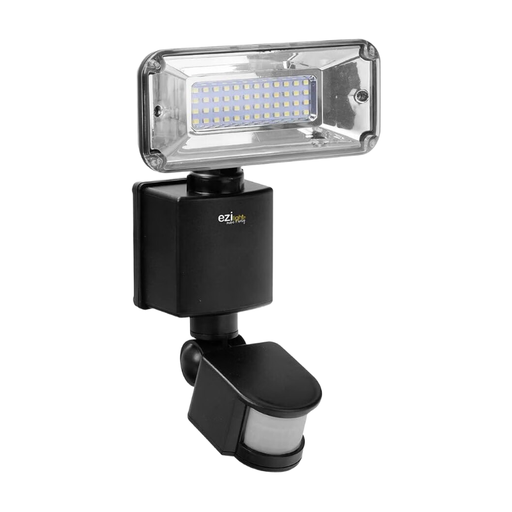
Why we chose it: For anyone who needs powerful, deterrent lighting at the entrance of their house, in front of the garage, or along a dark path. Here, function takes priority over decoration.
It directly tackles the traps of poor battery life and low brightness. Its motion sensor only activates full power when needed, thus preserving the battery. The LED spotlight is designed to effectively illuminate a wide area.
Its motion sensor, which ensures smart, energy-efficient lighting. Its adjustable head allows you to precisely target the area to be lit.

Why we chose it: Specifically designed to be embedded in a wooden deck, a gravel path, or a flowerbed. Its high durability allows it to withstand foot traffic, and even being driven over by a car.
It sidesteps the trap of fragility and poor waterproofing thanks to its IP66 rating and a design that can withstand high pressure. This is a product built to last in demanding conditions.
Its extremely high resistance (IP66) allows it to support the weight of a vehicle. It also features 360° illumination and a warm light.
Discover our full selection of products that meet our quality criteria and current standards.
It primarily depends on its battery. The LEDs themselves have a very long lifespan (often over 25,000 hours). However, the rechargeable battery (usually NiMH or Lithium) will last between 1 and 3 years depending on its quality and usage. The good news is that on many models, it is replaceable (often a simple AA or AAA battery), which can significantly extend the life of your lamp.
Yes, but with reduced performance. A solar panel doesn't need direct sunlight to charge; ambient daylight is sufficient. The charging will simply be slower, and the nightly runtime will be shorter. To optimise charging in all seasons, install the panel in a clear, unobstructed area, ideally facing south.
For a simple wireless wall light on a single-family home, no permit is required. However, if you are part of a homeowners' association (HOA) or live in a condominium, it is wise to consult the bylaws before making any modifications to the building's facade. Similarly, in protected areas (near a historic monument, a listed site), specific planning regulations may apply. A quick call to your local council will save you a lot of trouble.