
Livraison le jour même ou le lendemain

Qualité garantie

Débloquez vos offres de bienvenue: Livraison GRATUITE | Jusqu'à -80 % | 30 jours d'essai gratuits à JoyPlus
Téléchargez l'application
The idea of autonomous, cost-effective, and eco-friendly outdoor lighting is undeniably appealing. Yet, the outdoor solar light market is a jungle of promises that often fade after the first rain shower or during the short days of winter. As our editorial team's product expert, my mission is to help you distinguish reliable solutions from disappointing gadgets. Together, let's break down the common pitfalls to avoid and the criteria that truly matter for a smart purchase.
An attractive price tag often hides flaws that can render the product useless within a few months. Here are the warning signs you should never underestimate.
The most common trap? A light that goes out after just two or three hours. The cause is twofold: an underperforming solar panel and, more importantly, a poor-quality battery. Many entry-level models still use Ni-Cd (Nickel-Cadmium) batteries, which suffer from the infamous "memory effect" and have a very short lifespan. Ultimately, a light that can't last the night fails as both a decorative feature and a security measure.
A "water-resistant" label is not the same as "waterproof." Many cheap solar lights won't survive a single season of heavy rain. Water seeps in, corrodes the circuits and the battery, and sends the light straight to the landfill. Without a clearly stated IP (Ingress Protection) rating suitable for outdoor use, you risk having to replace everything the following year.
Confusing an ambient light with a security floodlight is a classic and costly mistake. Some sellers highlight a sleek design while conveniently omitting the light output, measured in lumens. A 10-lumen solar bollard light is perfect for marking a pathway but will be completely useless for illuminating a front door. It is therefore essential to choose a powerful solar light only when high visibility is a genuine requirement.
To make the right choice, focus on a few objective technical specifications. These are the true guarantees of quality and longevity for your solar garden lighting.
IP Rating (Ingress Protection)?: This standard defines a product's level of waterproofing. For exposure to rain, an IP44 rating is the absolute minimum (protection against water splashes). For maximum durability and resistance to powerful water jets (from a hose or severe storms), aim for an IP65 rating. This is a true mark of robustness for a solar wall light or a solar stake light that will be outdoors year-round.
Battery and Solar Panel?: Opt for Ni-MH (Nickel-Metal Hydride) batteries, which are longer-lasting and have no memory effect. The capacity, measured in milliampere-hours (mAh), is just as crucial: a 600?mAh battery will logically offer a better runtime than a 300?mAh one. The type of solar panel (amorphous, polycrystalline, or monocrystalline) also directly impacts charging efficiency, especially on overcast days.
Lighting Type?: It all depends on your goal.
Rather than an endless list, we've selected models that cater to specific needs, applying the reliability criteria we've just discussed.
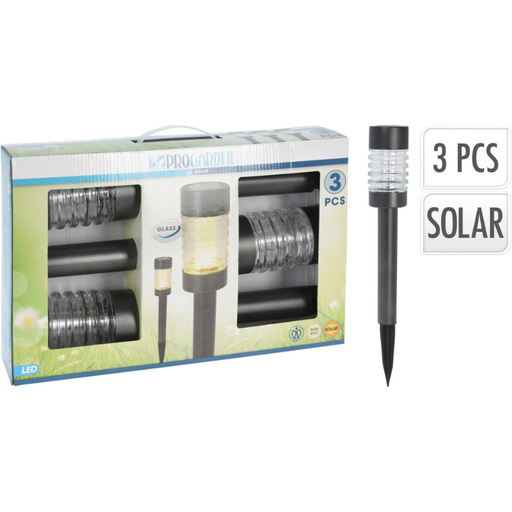
Why we chose it : Perfect for marking a pathway or decorating a flowerbed with a solution that is both elegant and easy to install. The set of three allows you to create a harmonious arrangement without breaking the bank.
This model includes a Ni-MH battery, ensuring a much longer lifespan than Ni-Cd accumulators. Its stainless steel and glass construction provides superior robustness compared to all-plastic alternatives, which tend to become brittle under UV exposure.
Elegant design with premium materials (steel and glass). Warm white light (2700-3000K) for a cosy and welcoming atmosphere.
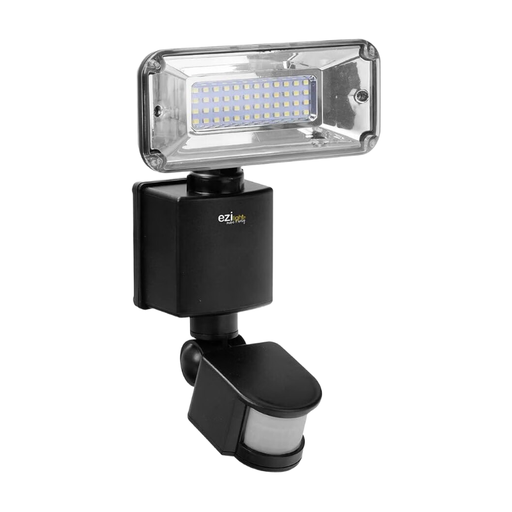
Why we chose it : Essential for securing an entrance, garage, or dark passageway. This solar floodlight with a motion sensor combines powerful, deterrent lighting with optimised energy consumption.
Unlike purely decorative lights, this model meets a specific need for power and functionality. Its robust design is built for intensive outdoor use, and the sensor ensures smart energy management.
Integrated motion sensor combines security with energy savings. Adjustable lamp head allows you to direct the light beam with high precision.
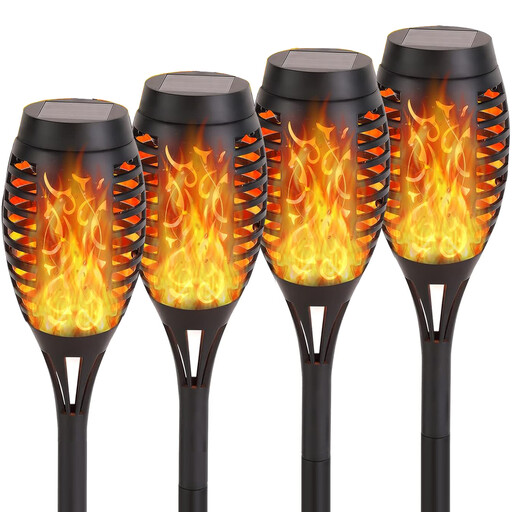
Why we chose it : For those who prioritise aesthetics and want to create a spectacular ambience in their garden or on their patio. The dancing flame effect is perfect for enhancing summer evenings.
This product embraces its purely decorative function without sacrificing reliability: its IP65 waterproof rating effectively protects it from heavy rain, a common weakness in low-end decorative models.
Highly realistic dancing flame effect for a unique atmosphere. IP65 rating guarantees excellent weather resistance.
Discover our full selection of solar lights and bollards that meet our criteria for reliability and safety standards.
Yes, but with reduced efficiency. Modern solar panels can charge even in low light, but the runtime will inevitably be shorter than in the middle of summer. For winter use, it's best to choose a model with a large solar panel and a high-capacity battery, or a floodlight with a motion sensor that only activates intermittently.
It all depends on its technology and quality. A good Ni-MH battery can last 2 to 3 years (around 600 to 1,000 charge cycles) before showing signs of degradation. On most quality solar lights, the battery is removable and easy to replace, often using a standard size (like a rechargeable AA or AAA).
This is one of the biggest advantages of a wireless solar light: its simple installation. For stakes and bollards, you just need to push them into the ground. For a solar wall light or floodlight, installation typically just involves mounting the bracket to a wall with a few screws. The only golden rule is to place the solar panel in an area that receives maximum direct sunlight during the day.