
Livraison le jour même ou le lendemain

Qualité garantie

Débloquez vos offres de bienvenue: Livraison GRATUITE | Jusqu'à -80 % | 30 jours d'essai gratuits à JoyPlus
Téléchargez l'application
Lighting up your garden, patio, or balcony without running wires or increasing your electricity bill? The promise is alluring. Outdoor solar lights seem like the perfect solution. Yet, disappointment is often just around the corner: a product that dies after the first downpour, or one that only stays lit for the duration of a cocktail.
As a product expert at Joybuy, my role is to help you navigate the jungle of options and make an... enlightened choice. Before you buy, let's review the common traps that turn a promising purchase into a bitter regret.
The solution to avoid getting burned? Rely on objective technical criteria, not on flashy marketing promises.
Forget about design for a moment. For a purchase that lasts, three technical points must be scrutinised.
This two-digit code is your best friend. It defines your device's level of protection against solid objects (first digit) and liquids (second digit).
Battery life depends on a simple equation: the ability to capture solar energy and store it efficiently.
The light output, measured in lumens, varies enormously from one model to another. It all depends on your goal.
To move from theory to practice, here are a few models that check all the right boxes.
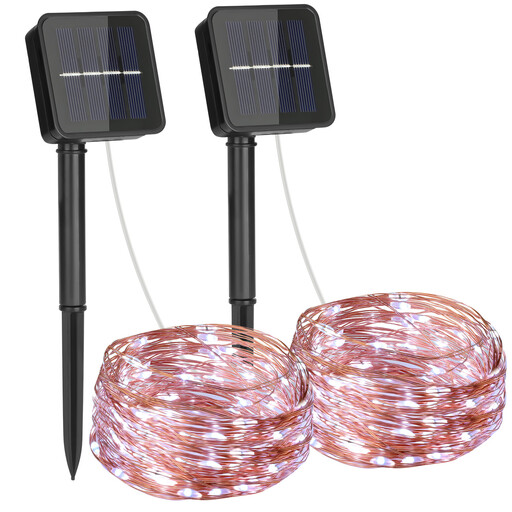
Why we chose it: Ideal for hosts who want to create a festive, bistro-like atmosphere on their patio or in their garden. The ultra-flexible copper wire weaves anywhere to decorate a pergola, balcony, or shrubs for a summer evening.
Its IP65 rating allows it to withstand surprise thunderstorms. The high-performance solar panel provides 8 to 14 hours of runtime, enough to last all night (or close to it), even after a gloomy day.
Its 8 lighting modes (steady, flashing, waves...) and memory function let you recall your favourite setting every evening without having to reconfigure everything.
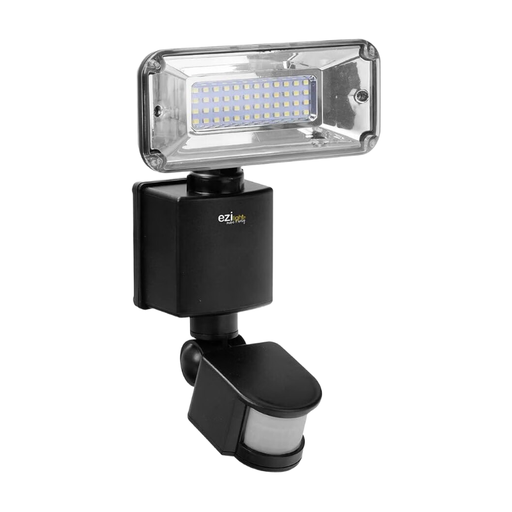
Why we chose it: Perfect for securing a driveway, an entrance, or a dark corner of the garden. Here, the goal is clear: visibility and deterrence over aesthetics.
Its smart motion detector preserves the battery by activating full power only when needed. This means it stays operational even after several days without strong sunlight. Its robust design is built to face the seasons without fail.
It combines a powerful LED spotlight, a motion detector, and an adjustable head for precision security lighting.

Why we chose it: Designed for those who want to mark a pathway or patio with a solution that is both discreet and indestructible. Its flat design sits flush with the ground and blends in seamlessly, without obstructing foot traffic or the lawnmower.
It checks all the boxes for durability: it has a drive-over rated design (it can withstand the weight of a car) and its IP66 rating shields it from the elements and impacts.
Its heavy-duty toughness and in-ground design allow for a flush installation, creating safe and stylish pathway marking that can handle anything.
We have selected dozens of other products that meet our standards for quality and safety.
The lifespan depends on two components: the battery and the LEDs. The LEDs have a very long life, often exceeding 25,000 hours. The rechargeable battery is usually the weakest link. Generally, a quality battery (Ni-MH or Lithium-ion) will last 2 to 4 years before showing signs of wear. The good news: on many models, it's easy to replace.
Yes, but with reduced performance. Modern solar panels can charge even in low light, but the charging time will be longer and the nightly runtime shorter. In winter, with shorter days and a weaker sun, the light will naturally hold less of a charge than in the middle of summer. Models with motion detectors are your best allies for this period, as they optimise the available energy.
Maintenance is minimal but crucial. The essential step: regularly clean the solar panel with a damp cloth to remove dust, pollen, or dirt that can block the sun. Also, check that it isn't obstructed by surrounding vegetation. In the autumn, be sure to sweep away any fallen leaves that accumulate on it.