
Livraison le jour même ou le lendemain

Qualité garantie

Débloquez vos offres de bienvenue: Livraison GRATUITE | Jusqu'à -80 % | 30 jours d'essai gratuits à JoyPlus
Téléchargez l'application
To enjoy your garden, patio, or even your balcony after dark, great lighting is essential. The outdoor solar light stands out as the ideal solution: easy to install, cost-effective, and eco-friendly, it illuminates your evenings without running up your electricity bill or requiring complex installation. But faced with a huge range of options, how do you make the right choice?
Our team has analyzed the market to help you make an informed decision. Follow our guide to discover the key criteria and our selection of the best models currently available.
Before you settle on a model, let's review a few key technical points. They are your guarantee of a successful purchase that's perfectly suited to your needs and environment.
The Ingress Protection (IP) rating is the first thing to check. This international standard measures a device's resistance to dust and water. For a product designed to live outdoors, it's an absolutely non-negotiable criterion.
Battery life is the crucial factor. It depends on the battery and solar panel combination. A good light must be able to store enough energy during the day to shine all night long (ideally between 8 and 12 hours). Take a look at the panel size and the manufacturer's claims, but don't forget the most important thing: for optimal charging, nothing beats plenty of direct sunlight.
Every need has its own type of lighting. The ambiance you want to create will dictate your choice.
To help you bring your project to life, here are three models that caught our eye, each designed for a specific need.

Why It Stands Out
Designed to elegantly cap fence or deck posts, this light shines with its versatility. Its secret? An adaptable base system that makes it compatible with most standard posts (wood or vinyl, from 4x4 to 6x6 inches), making installation incredibly simple.
Key Features
Who Is It For??
For those who want to enhance their fence, deck, or patio posts with an elegant touch of light, without any hassle.
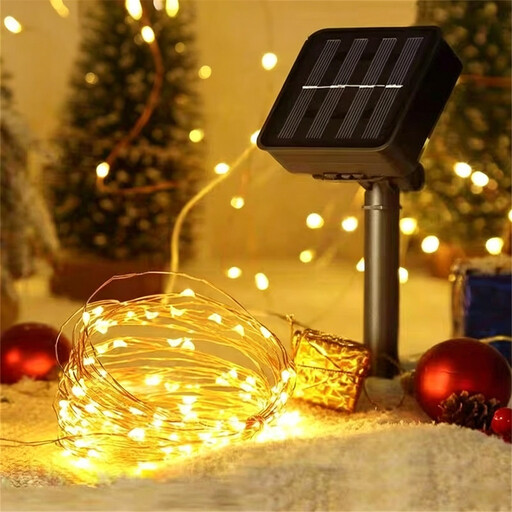
Its Charming Appeal
At 15 metres long and with 8 lighting modes, this outdoor solar string light is the queen of customisation. Its thin, malleable copper wire weaves in anywhere: wrapped around a tree, running along a pergola, or dressing up a balcony, it remains discreet, letting only the light shine through.
Key Features
Who Is It For??
For anyone dreaming of magical and versatile solar garden decor, for holidays, long summer evenings, or simply for visual pleasure.
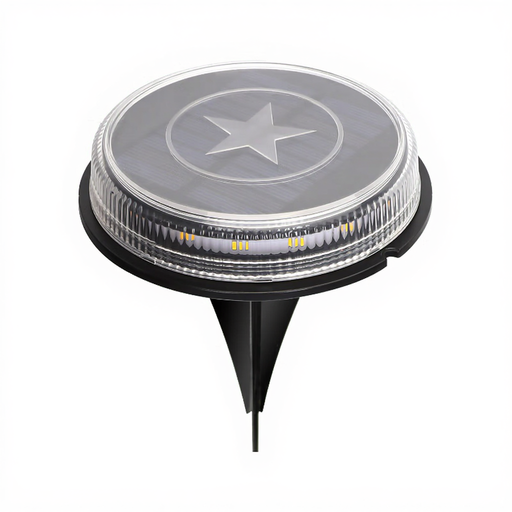
The Quiet Powerhouse
This discreet, in-ground outdoor solar spotlight is more than meets the eye. Its main asset is its unbeatable durability: it's designed to withstand the weight of a car! Add to that an IP66 protection rating, and you have a virtually indestructible ground light.
Key Features
Who Is It For??
For those who need ultra-durable ground lighting for a driveway, entrance, or patio, where durability and discretion are key.
Our selection is just a glimpse of the possibilities that solar lighting offers. To find the perfect gem that will elevate your outdoor space, browse our complete collection.
? Discover more outdoor warm white lights
1. What brightness level should I choose for a good outdoor solar light??
It all depends on the desired effect! The brightness, measured in lumens (lm), should be adapted to the use. For soft pathway lighting or a gentle ambiance (like a solar bollard light), 10 to 50 lumens per light point is more than enough. However, to properly illuminate and secure a high-traffic area like an entrance or staircase, aim for 100 to 400 lumens.
2. Do solar lights work in winter or on cloudy days??
Yes, but their performance will naturally be affected. A modern solar panel can capture diffuse light even on an overcast day, but the charge will be much slower than in direct sunlight. In winter, with shorter days and a lower sun, expect reduced battery life. The pro tip: keep the solar panel clean and, if possible, position it facing south to capture the maximum amount of light.
3. Do I need to turn solar lights off manually??
Not at all! That's the beauty of solar power. Almost all models include a dusk-to-dawn sensor. This means the light turns on by itself when night falls and turns off at dawn to recharge. It's a 100% autonomous system, so you don't have to worry about a thing.