
Livraison le jour même ou le lendemain

Qualité garantie

Débloquez vos offres de bienvenue: Livraison GRATUITE | Jusqu'à -80 % | 30 jours d'essai gratuits à JoyPlus
Téléchargez l'application
The idea of lighting up your garden, patio, or balcony without inflating your electricity bill is certainly appealing. The outdoor solar light promises an incredibly simple installation, autonomous operation, and a small step for the planet. Yet, disappointment is often just around the corner: a string of lights that doesn't survive the first downpour, ridiculously short battery life, or a hopelessly dim glow.
Before falling for tempting marketing promises, it's best to know the pitfalls to avoid. As the Head of Product Recommendations at Joybuy, my mission is to help you see things more clearly. Here are the essential points to check to make the right choice, regret-free.
The 3 pitfalls to avoid when buying solar lighting:
To avoid these setbacks, a few technical specifications are all you need to sort the good from the bad. They are the true guarantors of the quality and longevity of your future outdoor solar light.
This standard defines a product's level of resistance to elements. It consists of two digits: the first for solids (dust) and the second for liquids (water).
A powerful solar light is more than just its number of LEDs. Its true endurance depends on its ability to store energy. Battery life is the result of a winning combination:
The smart move: be wary of overly optimistic figures and opt for products that state a realistic battery life range (e.g., 6 to 10 hours depending on the season).
The format of the light should be tailored to your project.
To move from theory to practice, here are a few models that perfectly illustrate these criteria, meeting specific needs while sidestepping the classic pitfalls.
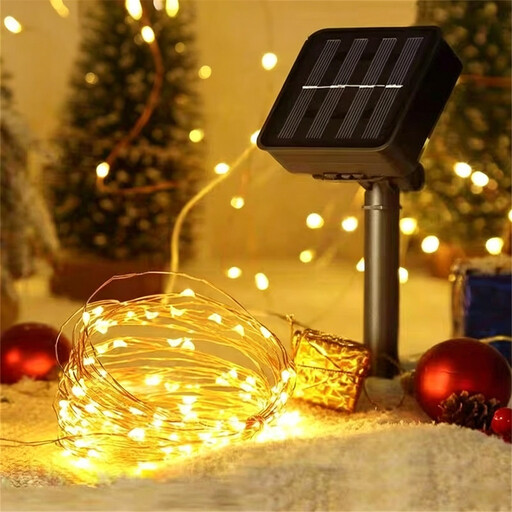
Why we chose it: Perfect for creating a warm, customised atmosphere. The thin, malleable copper wire can be shaped to your liking to adorn a railing, shrub, or pergola. The warm white light is ideal for summer evenings.
The mention of an improved waterproof design and an enlarged solar panel is a sign of a design that takes durability and charging efficiency seriously. This counters the pitfalls of short battery life and poor waterproofing.
Sold as a set of two, it offers an extra-long decorating length (nearly 15 metres per string). The 8 lighting modes with a memory function are a real plus, so you don't have to reconfigure everything every night.
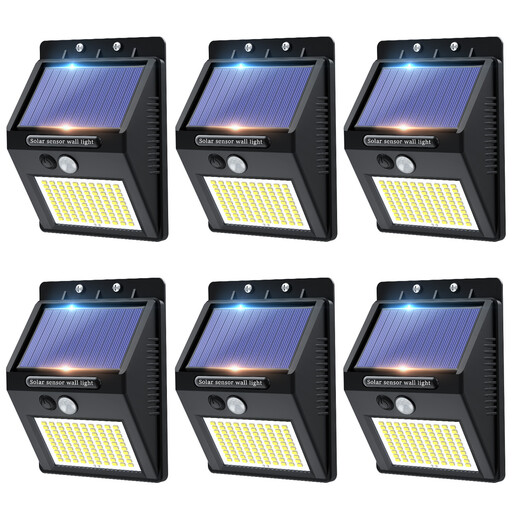
Why we chose it: Designed for functional and deterrent lighting. This type of wall light is perfect for automatically illuminating walkways, entrances, or garage walls, enhancing security without needing to run any cables.
Its wall-mounted format protects it from puddles on the ground. The high number of LEDs (100) per unit indicates a design focused on power, meeting a need for effective, not purely decorative, lighting.
The set of six allows you to equip several strategic areas of the property uniformly and cost-effectively. It's a turnkey solution for a security lighting project.
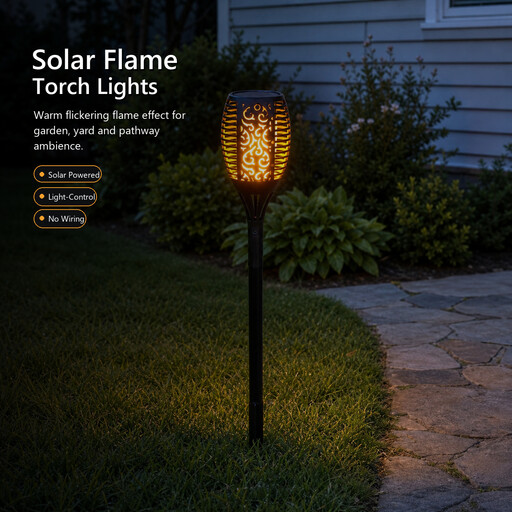
Why we chose it: For those looking to create a visual focal point and a unique atmosphere. The dancing flame effect adds a touch of exotic warmth, ideal for lining a path or decorating a corner of the garden.
The IP65 rating is clearly displayed: this guarantees excellent weather resistance, a crucial point for an item staked directly into the ground. It's a promise of durability that goes beyond mere marketing claims.
The "dancing flame" visual effect is achieved with 96 LEDs, creating a realistic illusion with zero fire risk. Its automatic operation (on at dusk/off at dawn) makes it completely self-sufficient once installed.
Discover our full selection of products that meet our quality criteria and current safety standards.
The lifespan depends on two main components: the rechargeable battery and the LEDs. Generally, LEDs have a very long life (often over 10,000 hours). The battery is the component that will wear out the fastest. A good quality battery can last between 2 and 4 years before its capacity significantly decreases. Choosing a model where the battery (often a rechargeable AA or AAA) is accessible and replaceable is a smart long-term move.
Yes, but with reduced performance. Modern solar panels can charge even in low light, but the charging will be slower and often incomplete. In winter, with shorter days and less intense sun, the light's runtime will logically be shorter than in summer. You shouldn't expect 12 hours of light after a gloomy December day.
Power isn't just measured by the number of LEDs. The most reliable metric is brightness, expressed in lumens.