
Livraison le jour même ou le lendemain

Qualité garantie

Débloquez vos offres de bienvenue: Livraison GRATUITE | Jusqu'à -80 % | 30 jours d'essai gratuits à JoyPlus
Téléchargez l'application
The promise of an outdoor solar light is undeniably appealing: zero impact on your electricity bill, a completely wireless installation, and a small gesture for the planet. In reality, however, the experience often ends in disappointment. A string of lights that doesn't survive the first downpour, a pathway light whose glow fades after just a few weeks... The cause? Technical details that are often omitted from the packaging.
As the Head of Product Recommendations at Joybuy, I'm here to help you see things more clearly. Let's forget the marketing jargon and focus on the criteria that truly make a difference. Here are the two most common mistakes and, more importantly, how to avoid them.
To make the right choice, you just need to check a few key technical points. These are the true guarantees of quality and longevity for your solar deck lighting or garden lights.
The Ingress Protection (IP) rating is your best friend for understanding a device's resistance to water and dust. It consists of two numbers:
For a garden, deck, or balcony exposed to the elements, an IP65 rating is the bare minimum to ensure the longevity of your setup.
The runtime of a wireless solar light depends on two factors: its battery capacity (expressed in milliampere-hours, or mAh) and the efficiency of its solar panel.
Don't just trust the advertised runtime on the box; check the battery capacity (in mAh) to get a more accurate idea of its real-world performance.
Solar lighting is far from one-size-fits-all. Choosing the right form factor and colour temperature is essential for creating your desired atmosphere.
To help you see how these criteria apply in practice, here are a few products that meet specific needs.
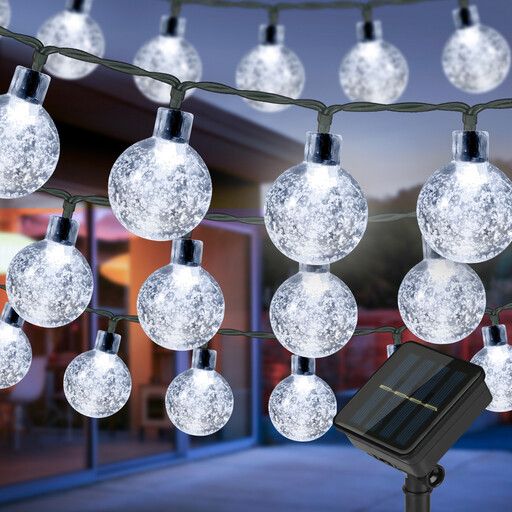
Why we chose it: At 11 metres long, this string light is perfect for decorating a large deck, a pergola, or an entire garden. Its 8 lighting modes let you change the mood, from a festive twinkle to a steady, calming glow.
Its IP65 rating provides effective protection against rain, preventing the notorious short-circuits that fry low-quality string lights at the first downpour.
The generous length (11 m) and 60 LEDs provide extensive coverage, ideal for large areas without needing multiple sets of lights.

Why we chose it: This in-ground spotlight is built to last. Flat and discreet, it integrates seamlessly into a driveway, wooden deck, or garage entrance. Its warm light marks the path without being glaring.
Its robust design and IP66 rating allow it to withstand not only rain but also heavy pressure (like being run over by a lawnmower or a car tyre), where a classic stake light would have already failed.
Ultra-durable design and 360° illumination for effective pathway marking and longevity in high-traffic areas.
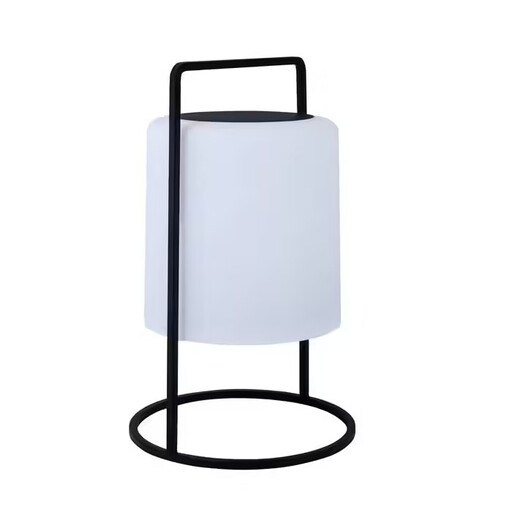
Why we chose it: This solar lantern is the ultimate portable decorative accessory. Placed on a garden table, by a pool, or on a balcony, it creates a warm and elegant focal point of light. Its handle allows you to move it easily wherever you like.
As a self-contained, weather-resistant unit, it avoids the problems of tangled wires or fragile remote panels. Here, everything is integrated into a single, robust, and well-designed block.
Its versatility. A solar garden light decoration solution that isn't fixed in place, offering complete freedom to illuminate different corners as your evenings unfold.
We have curated a complete range of products that meet these quality criteria and current safety standards.
The lifespan primarily depends on the quality of the battery and the LEDs. A good quality battery can operate optimally for 2 to 4 years. The LEDs, on the other hand, have a very long lifespan, often exceeding 10,000 hours. On some models, the battery can be replaced, which further extends the product's life.
Yes, but with reduced performance. Modern solar panels can charge even in low light, but the charging time will be longer, and the nightly runtime will be shorter. In winter, with shorter and less sunny days, expect a runtime of only a few hours, not a full night.
Maintenance is minimal but crucial. Remember to regularly clean the surface of the solar panel with a soft, damp cloth to remove dust, pollen, or bird droppings. A clean panel captures light more efficiently, ensuring a better charge and longer runtime. In winter, make sure snow does not cover the panel.