
Livraison le jour même ou le lendemain

Qualité garantie

Débloquez vos offres de bienvenue: Livraison GRATUITE | Jusqu'à -80 % | 30 jours d'essai gratuits à JoyPlus
Téléchargez l'application
An outdoor privacy screen can sometimes transform an exposed balcony, a terrace or a fence that is too open. But certain models disappoint after just a few months. Fabric that tears, fixings spaced too far apart, or an incorrectly assessed level of screening: installation can quickly become impractical, or even dangerous in strong gusts.
Before choosing a privacy screen for a balcony, a model for the garden or a screening fabric for a fence, focus on three things: the level of protection you need, the durability of the material, and compatibility with your support.
A decorative mesh can let light through and suggest silhouettes without completely blocking views. This is a good compromise if you want to maintain a sense of openness, but it won't be enough to create a true visual separation.
Mentions like 90% shade or low screening therefore do not mean 'view completely blocked'. For a terrace directly exposed to neighbours, look instead at the density of the weave and the detailed product description rather than just its colour.
A privacy screen for a terrace behaves like a surface that catches gusts. The tighter the fabric, the more tension it can exert on the eyelets, fixing ties and the fence itself. Fixings that are too light or poorly distributed increase the risk of distortion and detachment.
A windbreak net with a more open mesh may be better suited to an exposed garden. Conversely, a dense outdoor screening panel requires a solid support and closely spaced fixing points. In all cases, these products should not be used as load-bearing elements or safety devices.
Resistance to ultraviolet rays depends on the material, its density, its manufacture and its exposure. So check the information that is actually useful: polyethylene, textilene, weight per square metre, anti-UV treatment, reinforced edges, and whether the fabric can be cut without fraying.
An outdoor privacy screen can fulfil three distinct functions:
A very dense fabric generally offers better privacy, but it must be fixed with particular care. For a garden fence, measure the actual height between the ground and the top of the support. On a balcony, also check the width of the railings and the space available around the balustrade.
Expressed in g/m², the weight indicates the amount of material used. However, it alone is not enough to determine the product's lifespan. The Tenax Coimbra datasheet, for example, mentions a knitted fabric of 230 g/m². The Tenax Texstyle VIP, on the other hand, uses a textilene structure of 700 g/m², made of PVC and polyester according to its product sheet.
These figures should be considered in relation to the intended use: a city balcony, a sheltered garden, a very exposed terrace, or a professional installation. A UV-stabilised material and reinforced edges can limit fading and tearing, but the quality of the installation remains equally important.
The most common formats range from 5-metre rolls to longer lengths of 10 metres. Before ordering, measure:
Integrated eyelets simplify installation with suitable ties, hooks or clips. Fix the top and bottom edges regularly, without over-tensioning the fabric. On a balcony or terrace, check the fixings after every significant windy spell.
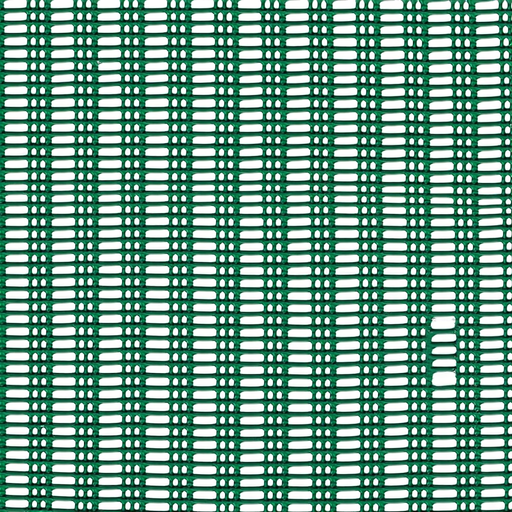
Why this choice suits this profile: Its 1 × 5 m format is ideal for a first installation on a small fence, a balcony or a limited area of the garden. Its open structure is designed to reduce wind force while retaining a decorative touch.
The mesh does not promise total screening; instead, it meets a need for filtering views and reducing wind.
Pattern combining two mesh sizes, anti-UV treatment and an easy-to-handle format for gradual installation.
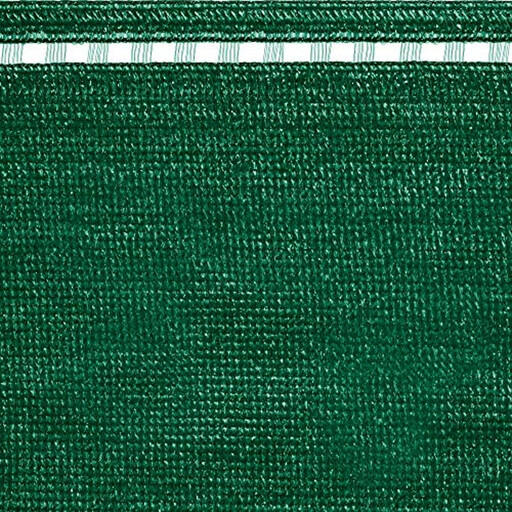
Why this choice suits this profile: With its dimensions of 2 × 5 m, this woven privacy screen is designed for large fences, terraces and spaces where a strong visual separation is desired.
The product sheet states a dense fabric of 230 g/m² and 100% screening. Nevertheless, check that the support is strong enough before installation.
Pre-installed peripheral eyelets, claimed fray-free cutting, and installation possible both vertically and horizontally, depending on the configuration.
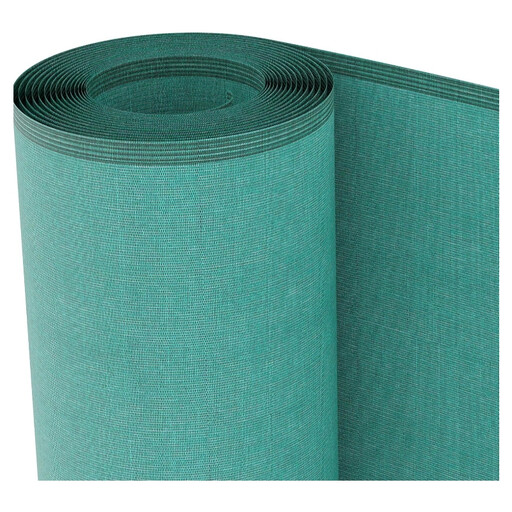
Why this choice suits this profile: Its 1.50 × 10 m roll is suitable for long fences, extensive gardens or projects requiring several sections of the same length.
The sheet mentions a dense mesh, reinforced edges and UV protection. Its vertical installation should, however, be reserved for a properly anchored support.
Claimed 90% shading, 10 m length and UV-resistant polyethylene construction, according to the provided description.
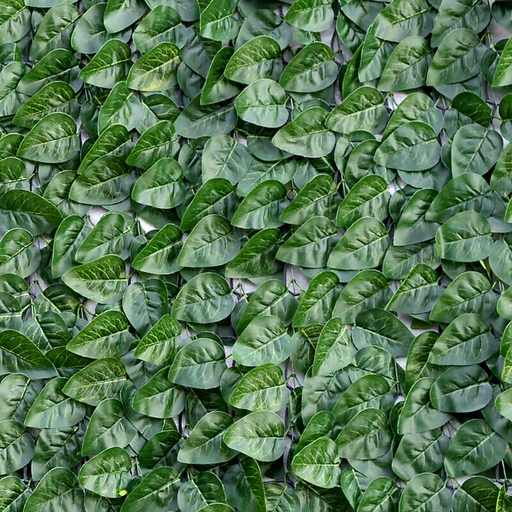
Why this choice suits this profile: This artificial hedge is aimed at those who want to conceal a wall, an ageing fence or a balcony partition with a natural-looking effect, without regular maintenance.
The square plastic grid acts as a support for the leaves and allows fixing with ties. It does not replace a structural fence.
150 × 300 cm format, simple unroll-and-fit installation, and materials claimed to be resistant to UV and weather.
For a more discreet and decorative result, grey, black or silver textilene screens filter light without completely enclosing the space. If you are looking for more pronounced screening, a dense fabric or an artificial hedge will generally be more suitable.
We have put together a complete, real-time updated selection of products that meet these demanding selection criteria, as well as European safety standards.
Use the eyelets provided on the edges if the model has them, then distribute the ties or fixings along the entire length. Avoid limiting yourself to just the four corners. The support must be stable, and the fabric should not be able to flap freely in the wind.
It depends on the material, exposure to sunlight, weather conditions, the tension applied and the quality of the fixings. A UV-stabilised product will generally retain its properties better, but no universal lifespan can be guaranteed. Regular inspection allows you to quickly spot tears, loose eyelets and faded areas.
No. Depending on the mesh and density of the material, it can limit views, filter some light and reduce draughts. It should not be considered a certified sun protection, a structure capable of withstanding loads, or a safety barrier. Its installation must always take into account the exposure and the strength of the support.