
当日/次日达

品质保障

开启新人专享福利: 全场免邮 | 低至 2 折 | 免费试用 30 天 JoyPlus 会员
下载 Joybuy
A pot or planter with a water reservoir can make maintaining a balcony, patio or garden much easier. But you need to pick a well-designed model. A poorly thought-out reservoir, insufficient capacity or a material that can’t stand up to the weather can quickly turn a good idea into a disappointing purchase.
Before you choose your outdoor pots and planters with water reservoirs, check three things: how the drainage works, the available sizes, and the material’s durability. Here’s a straightforward way to compare models and find the one that truly suits your space and your plants.
A water reservoir doesn’t mean the roots should sit in water permanently. Moisture needs to rise gradually to the plant without causing stagnation. A planter with drainage must therefore have openings, a retention zone, or a system separated by a filter grid.
For indoor use, also plan for a saucer or tray to protect the floor. Outdoors, check regularly that the holes aren’t blocked by compost or roots.
An anthracite flower tub, a stone-effect finish or a matte surface can easily fit into a contemporary décor. But appearance doesn’t tell you much about the container’s stability, the thickness of its walls, or its resistance to temperature changes.
On a balcony, a pot that’s too light might shift in the slightest breeze. Conversely, a large model filled with damp soil can become very heavy. Check the base area and the load your setup can support, especially if you live on an upper floor.
The stated capacity doesn’t always match the amount of usable compost: part of the container may be taken up by the water reservoir. For an already well-established plant, a large-capacity pot offers more stability and gives roots more room. For seasonal flowers, a more compact planter can be perfectly adequate.
Consider the plant’s mature size, the volume of its current root ball, and its expected growth, rather than just the container’s external dimensions.
A flower pot with a water reservoir is especially suited to those who want to space out watering, for example during busy days or a short absence. It doesn’t mean you can skip checking moisture levels: needs vary depending on light exposure, season, type of compost and the plant itself.
In particular, check for:
In winter, water that freezes can put strong pressure on the container. Even when a manufacturer claims frost resistance, it’s best to avoid water build-up and protect the most sensitive plants.
A rectangular planter of 50 cm can work on a windowsill, a sufficiently wide railing, or along a patio edge. For a more substantial display, a 74 L or 98 L model will make a bolder visual statement.
A tall square pot is practical for structuring a walkway, framing a doorway, or showcasing an upright plant. However, its stability needs checking, especially if the plant has dense foliage that catches the wind.
Before ordering, measure the available width, depth and height. Also think about the space you’ll need for watering and cleaning around the pot.
For permanent outdoor use, look for precise information about UV protection and frost resistance. A frost-resistant and UV-resistant pot is designed to keep its shape and appearance better through changing conditions, but you should still follow the manufacturer’s instructions.
Moulded plastic has the advantage of being lightweight, easy to move, and not easily damaged by everyday knocks. Models made from recyclable plastic can also appeal to shoppers who care about the product’s end of life. Mentions like “100% recyclable” or “Origine France Garantie” should be understood as features declared for that specific model, not as a promise valid for the whole category.
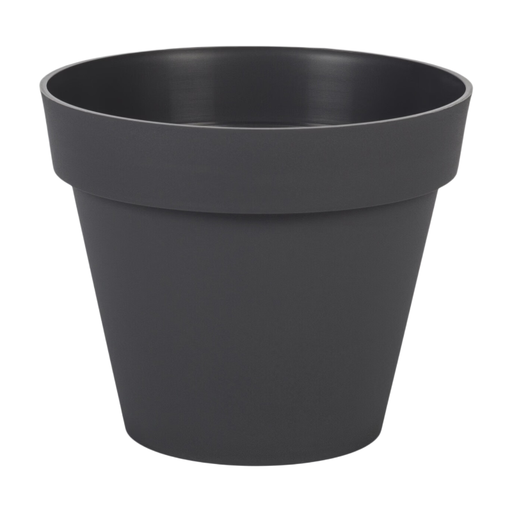
Why this choice suits this profile: At 3 L, this compact size is ideal for small plants, herbs and first-time arrangements on a balcony or indoors.
Its small size reduces the risk of choosing a container that’s too large and hard to move. The built-in retention zone should still be kept clear.
Made in France, material stated as 100% recyclable, matte finish, and suitable for both indoor and outdoor use.
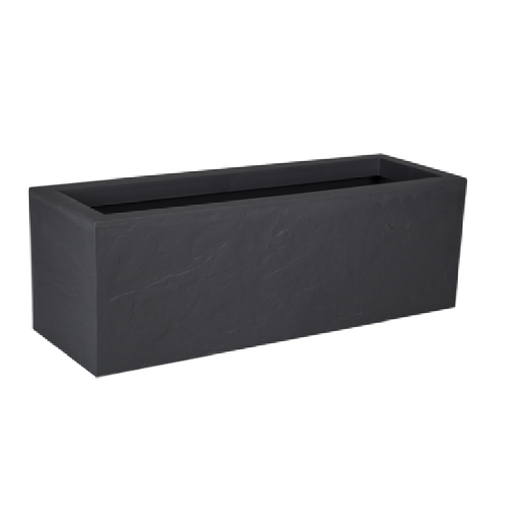
Why this choice suits this profile: Its double wall, calcarenite look and generous capacity naturally belong on a styled patio or in a garden where the container plays a key part in the décor.
The dimensions and capacity are clearly stated, so you can plan for the footprint and weight before filling it.
98 L, double wall, stated UV protection and frost resistance, with Origine France Garantie certification.
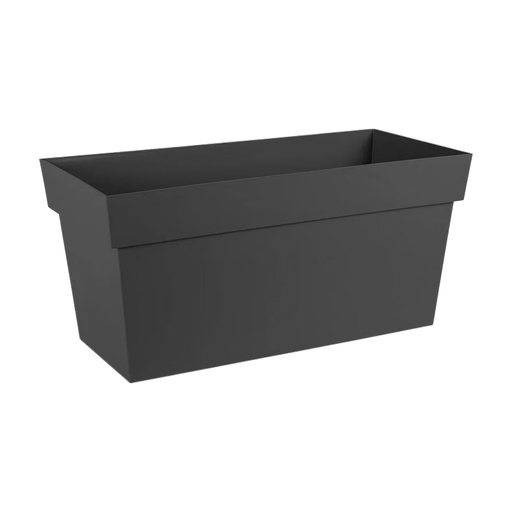
Why this choice suits this profile: At 79 cm and with castors, this model is aimed at large displays on a patio, terrace or spacious balcony, where you need to be able to move the tub.
The filter grid and filling spout make the system clearer than a simple hidden cavity. Its large capacity does mean you need to check the floor can support the weight.
74 L, castors, water reservoir, filter grid, stated UV protection and frost resistance, made in France.
We’ve put together a full, real-time selection of products that meet these demanding criteria and comply with European safety regulations.
To set up your container properly:
An indoor or outdoor pot can remain versatile, but the plant and local climate determine how often you need to water. On a south-facing balcony, water will generally evaporate faster than in a shaded courtyard.
No. It allows you to space out watering, but it doesn’t replace checking the compost. A newly planted specimen, intense heat or regular wind can increase its needs.
A rectangular planter is often the most practical for making the most of a limited length, especially on a shelf or along a railing. Measure the available depth and check the support’s stability before filling it.
It depends on the material and the features stated for the model. Look for mentions of UV protection and frost resistance. In severe frost, above all avoid standing water and follow the manufacturer’s care recommendations.