
Livraison le jour même ou le lendemain

Qualité garantie

Débloquez vos offres de bienvenue: Livraison GRATUITE | Jusqu'à -80 % | 30 jours d'essai gratuits à JoyPlus
Téléchargez l'application
An outdoor planter lets you grow flowers, herbs, vegetables or climbing plants without taking up too much space. But some purchases can quickly disappoint: the planter may be too shallow, drainage may be inadequate, the structure may be unstable or the material may not be suited to the weather.
Before comparing models, here are some common pitfalls to avoid and the key things to look for when choosing a planter to suit your space and gardening habits.
A wooden, metal or stone-effect planter can look right at home on a patio. But its appearance tells you nothing about its planting capacity, how much weight it can support or how well it will withstand outdoor conditions.
A long, narrow planter is ideal for flowers and herbs that don’t need much depth. It’s less suitable for vegetables with larger root systems. Likewise, a tall planter needs to be stable enough, especially on a wind-exposed balcony.
A planter without drainage holes or a suitable water-retention system may hold too much water. The roots can end up sitting in waterlogged compost, while a container that drains moisture too quickly will need frequent watering.
Check for drainage holes, a liner, a water reservoir or a water-retention area. A planter with a water reservoir can reduce how often you need to water, but you’ll still need to keep an eye on the compost’s moisture levels.
With wet compost, plants and water inside, a planter can quickly become very heavy. If you’re using one on a balcony, check the building’s rules and don’t position a large planter without checking the weight limit for your chosen spot.
For a planter on legs, a model with castors or a raised planter, check its stability, maximum load and risk of tipping over. Tall products or those with a trellis should be installed on a level surface and, where required, secured to the wall or ground.
Start by measuring the available width, then leave enough room to move around and water your plants. A 60 to 90 cm balcony planter is generally suitable for flowers and herbs. Vegetables such as tomatoes and some varieties of pepper will do better in a deeper planter.
For a raised planter, check the internal dimensions rather than just the external measurements. Multi-tier models let you separate crops and make the most of a small space, while a vertical planter uses the available height.
A planter with a trellis is ideal for climbing plants such as peas, beans, clematis and some varieties of tomato. It can also create a visual screen on a patio. Make sure the trellis is tall enough and the base won’t tip over.
A planter with a water reservoir is especially useful if you’re often away from home. If you expect to move it regularly, choose a model with lockable castors and check the stated maximum load.
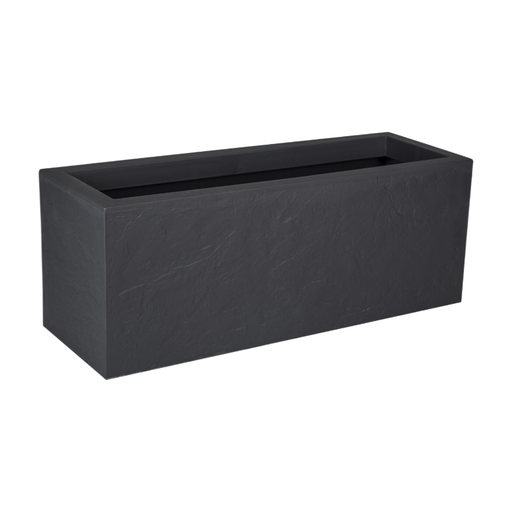
Why it suits this type of gardener: With a capacity of 25 litres and dimensions of 59 × 19.5 × 22.8 cm, this planter is well suited to flowers and smaller plants on a balcony. Its water-retention area means you can water less often.
The double wall and water-retention area help reduce the need for frequent watering, while keeping the planter compact.
Built-in reservoir, stone-effect finish and no assembly required.
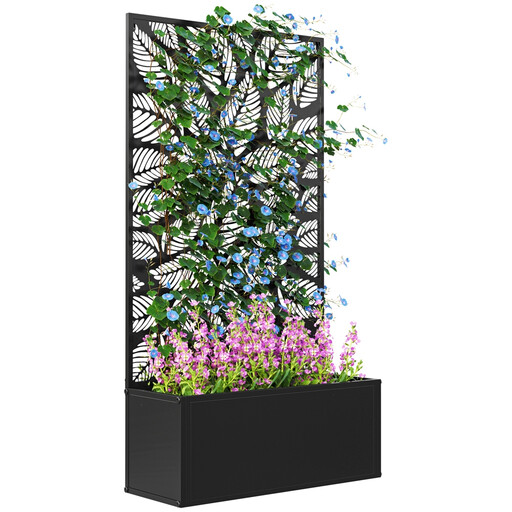
Why it suits this type of gardener: This model combines a rectangular planter, a trellis and an openwork screen in a black structure measuring 61 × 23 × 113 cm. It helps you make the most of your patio while creating an attractive divider.
The drainage openings and two installation options help reduce issues with water and positioning. If it’s exposed to the wind, it’s still essential to secure it properly.
Built-in trellis, can be installed on the ground or wall, and a stated maximum load of 50 kg.
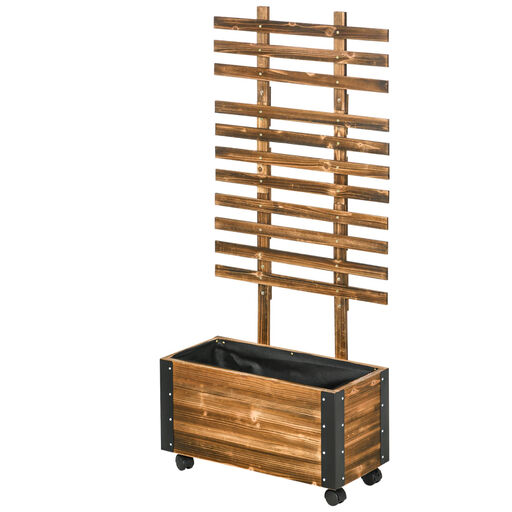
Why it suits this type of gardener: If you regularly move your plants, you’ll appreciate the 4.5 cm castors, 42 litre planter and 128 cm-high trellis.
The slatted base and geotextile fabric help water drain away, while the castors mean you don’t have to lift a full planter.
Built-in mobility, tall trellis, stated maximum load of 35 kg and pre-oiled spruce wood.
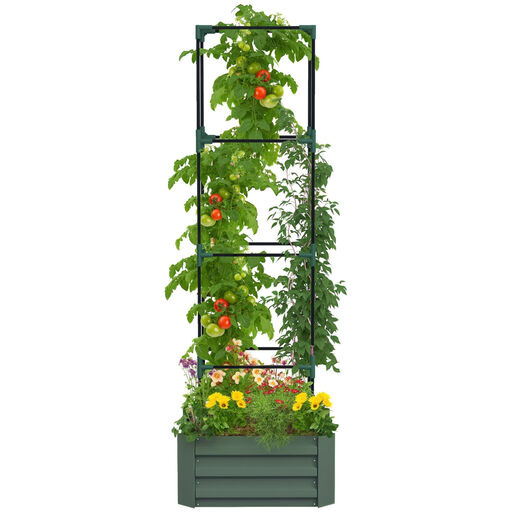
Why it suits this type of gardener: This galvanised steel raised bed offers a 61 × 61 cm growing area and an adjustable trellis, making it ideal for supporting tomatoes and climbing plants as they grow.
The open base helps water drain away, while the 30 cm height keeps plants off the ground and helps limit the growth of unwanted weeds.
Adjustable trellis, galvanised steel with a powder-coated finish and a stated growing load of 50 kg.
We’ve selected a comprehensive range, updated in real time, of products that meet these demanding criteria and comply with European safety regulations.
Choose a compact, stable model that’s suitable for the permitted load. A balcony planter with a water reservoir can be useful if your balcony gets a lot of sun or you don’t water regularly. If you’re choosing a hanging planter, also check how it attaches to the railings and the maximum weight it can support.
It depends on what you’re growing. Herbs and some flowers can manage in a shallow planter, while tomatoes, root vegetables and larger plants need more soil. Check the internal dimensions and allow for a sufficient depth of growing medium, without blocking the drainage holes.
Place it on a stable surface, keep the drainage clear and don’t let water collect. In winter, protect models that aren’t stated to be frost-resistant. For wooden planters, follow the manufacturer’s care instructions. And never exceed the stated load, especially when the compost is wet.