
Same-day & Next-day Delivery

Quality Guaranteed

Unlock Your Welcome Offers: FREE Delivery | Up to 80% OFF | Free 30-day JoyPlus trial
Download the APP
An outdoor planter can be enough to transform a balcony, patio or entrance into a proper green oasis. But you need to choose the right model. Oversized dimensions, a water reservoir that’s fiddly to maintain, or a material that weathers poorly in sun and frost – some purchases quickly become disappointing. Before you fall for a colour or a decorative effect, it’s worth looking at the features that really matter.
A large trough lets you plant more, but its weight shoots up once it’s filled with damp compost, clay pebbles and plants. A 74 or 98-litre planter isn’t necessarily suitable for a balcony railing or an elevated surface.
On a balcony, check the floor’s stability, the available width and any building regulations. On a patio, make sure there’s enough space around the trough so you can water, clean and move it without difficulty.
A planter with a water reservoir can stretch the time between waterings, but it doesn’t let you off checking the compost’s moisture. An overfilled reservoir, a blocked drain, or a plant that prefers dry soil can quickly lead to waterlogging.
Choose a system that’s easy to access and, if possible, one with a drainage feature or a removable plug. Follow the manufacturer’s instructions for filling and emptying to the letter.
A matt finish or a stone effect doesn’t guarantee resistance to outdoor conditions. For year-round use, look for specific information on UV and frost resistance, recyclability and any winter care precautions.
Even a planter advertised as frost and UV-resistant needs to sit on a stable surface. During a hard frost, the water inside the container can increase pressure on the walls. Keep the drainage holes clear and follow the manufacturer’s wintering recommendations.
The length should suit the space you have, while the depth depends on the root system of your plants. Seasonal flowers and herbs are generally happy in a shallow trough. Shrubs, larger plants and small fruit trees need a large flower pot with a bigger volume of compost.
As a rough guide, compact models work well on windowsills and small balconies. Containers from 36 to 74 litres offer more scope for creating a dense arrangement. A 98-litre trough is better suited to a patio or garden, where its weight once filled will be less of an issue.
A plant trough needs to let excess water drain away. An integrated reservoir can be very handy, provided you can easily check its level and how it’s working. For indoor use, place the indoor-outdoor flower pot on a saucer or waterproof tray to protect the floor.
Pre-drilled models are simpler to install, but make sure the holes aren’t blocked by compost. For plants that dislike damp conditions, standard drainage is often better than a permanent reservoir.
Moulded plastic is lightweight and easy to move. Recycled or recyclable polypropylene can also be a good choice if you want to limit replacing the container. Some products mention French manufacture or the Origine France Garantie certification. This tells you about the product’s origin, but it doesn’t guarantee performance in every situation.
Metal and ceramic can be good choices indoors, but they come with their own drawbacks. Iron, for example, needs to be dried after watering, while some decorative pots aren’t designed to stay outside all year round.
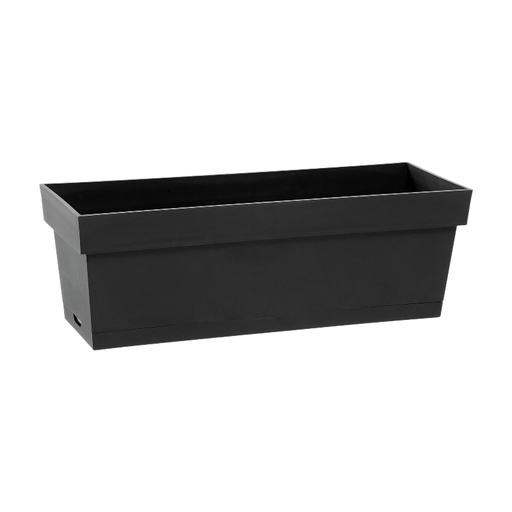
Why this choice suits this profile: At 50 cm long and weighing just 0.68 kg, this model fits easily into small spaces, on a windowsill or for a first planting project.
Its compact size reduces the risk of ending up with a planter that’s too heavy or too bulky for a balcony.
Moulded plastic, anthracite finish, French manufacture and intended use on balconies, windowsills or borders.
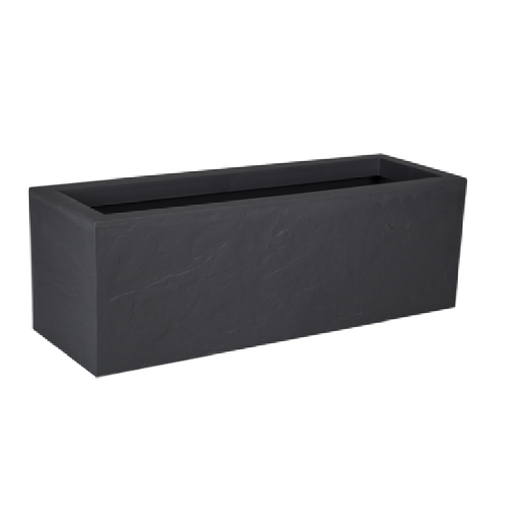
Why this choice suits this profile: Its mineral look and 98-litre volume blend naturally into a well-designed patio, garden or large entrance.
The double wall and retention zone are clearly indicated, so you can tell the decorative element apart from the real practical function.
98-litre capacity, advertised UV and frost protection, 100% recyclable material and Origine France Garantie certification.
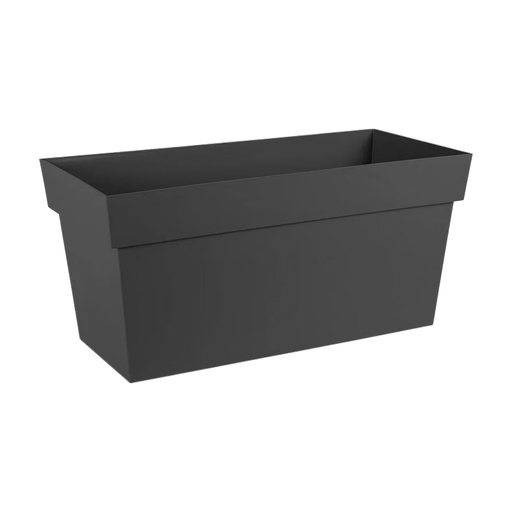
Why this choice suits this profile: Gardeners who regularly rearrange a patio or courtyard will appreciate its 74-litre volume and built-in castors.
The castors make the trough easier to move, while the filter grid helps stop debris getting into the reservoir.
74 litres, water reservoir, filling spout, castors, plastic advertised as UV and frost-resistant, French manufacture.
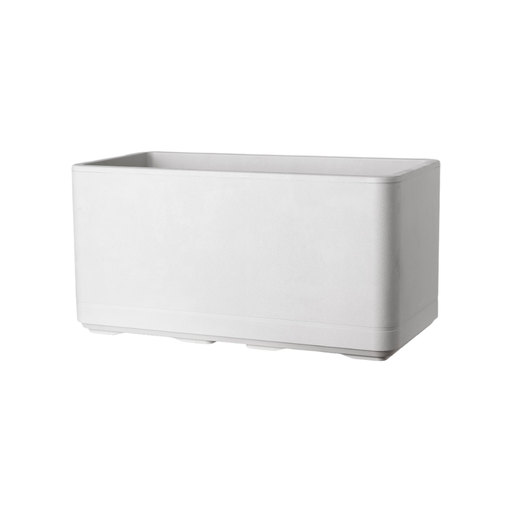
Why this choice suits this profile: This model is ideal for those who want to adjust watering according to the season, the plant or the balcony’s aspect.
The removable bottom plug lets you choose between reservoir mode and standard drainage, depending on the plant’s needs.
Integrated reservoir, castors, recycled materials advertised as fully recyclable, frost and UV resistance stated by the manufacturer.
We’ve listed the products that best meet these demanding selection criteria and European safety regulations, in a complete list updated in real time.
Before planting, place the container on a level, stable surface. On a balcony, avoid spots where it could tip over or stop water draining properly. Spread the compost without exceeding the recommended capacity, and leave a few centimetres free below the rim to make watering easier.
Clean the sides regularly with water and a soft cloth. At each change of season, inspect the drainage holes, the reservoir and any plugs. Indoors, put a waterproof tray under the indoor-outdoor flower pot.
For larger models, choose the final position before filling them. Even a planter with castors becomes very heavy with soil and water. The castors make it easier to move on a level surface, but they don’t replace a stable installation.
Start by measuring the available width and depth. A planter of 50 to 60 cm is generally suitable for small spaces. A volume of at least 25 litres lets you combine several flowers or herbs, but always think about the total weight once the trough is filled.
It can stretch the time between waterings, depending on the plant, temperature and aspect. However, it doesn’t let you off checking the water level. Species that prefer dry soil may sometimes need standard drainage or a reservoir used sparingly.
Plastic treated against UV and frost is lightweight and easy to maintain. Models made from recycled or recyclable materials can also help reduce waste. To compare a French flower pot or a recyclable planter, check the information on the material, origin and conditions of use, rather than relying solely on appearance.