
Same-day & Next-day Delivery

Quality Guaranteed

Unlock Your Welcome Offers: FREE Delivery | Up to 80% OFF | Free 30-day JoyPlus trial
Download the APP
Choosing an outdoor planter? It seems simple enough, in theory. But all too often, that impulse-buy flower pot ends up cracked by the first frost or faded after a single summer. Beautifying your balcony, terrace, or garden should be a joy, but the venture can quickly turn into a headache of wasted money and effort. To help you avoid any nasty surprises, let's review the common pitfalls and the criteria that truly matter for a successful and long-lasting purchase.
When faced with tempting marketing claims, knowing how to read between the lines is key to making an informed purchase and anticipating problems that descriptions (sometimes intentionally) omit.
To stop buying "disposable" containers that need replacing every year, rely on objective technical specifications. This is the only true guarantee of quality for your outdoor flower box.
This is arguably THE number one criterion. While terracotta and wood retain their authentic charm, modern composite materials offer a host of practical advantages for outdoor use.
Keep a close eye on recycled injection-moulded plastic. When it's high-quality, like the kind used by renowned manufacturers such as Deroma, it ticks all the right boxes:
Good drainage is fundamental. The golden rule: always inspect the bottom of the pot. The most practical solutions are:
Forget endless lists. To help you make a clear choice, we've matched proven products with user profiles for real-world applications.
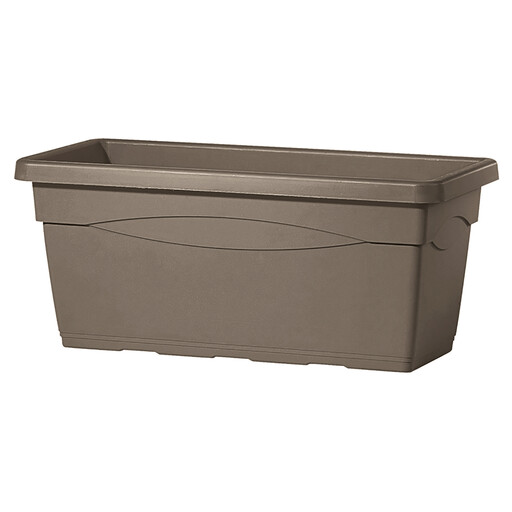
Why it's the right choice: With its rectangular shape and 80 cm length, this planter is perfect for defining a space on a balcony or dressing up a windowsill without taking up valuable walkway space.
Made from high-quality recycled plastic, it is certified frost- and UV-resistant. Say goodbye to the trap of vague, unguaranteed "resistance."
Its durable design and eco-friendly approach (recycled and recyclable materials) make it a responsible choice for years to come.
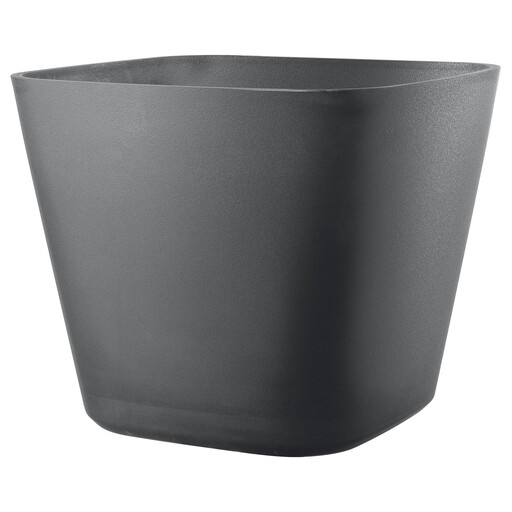
Why it's the right choice: Ideal for those who love to rearrange their terrace or bring delicate plants indoors for the winter. This 38 cm square pot is a versatile all-rounder, suitable for everything from annual flowers to small shrubs.
It solves the drainage headache with its removable plug. This means you can use it outdoors without fear of waterlogging, or indoors as a simple decorative pot cover.
Its indoor/outdoor versatility makes it a smart investment that adapts to the seasons and your decorating whims.
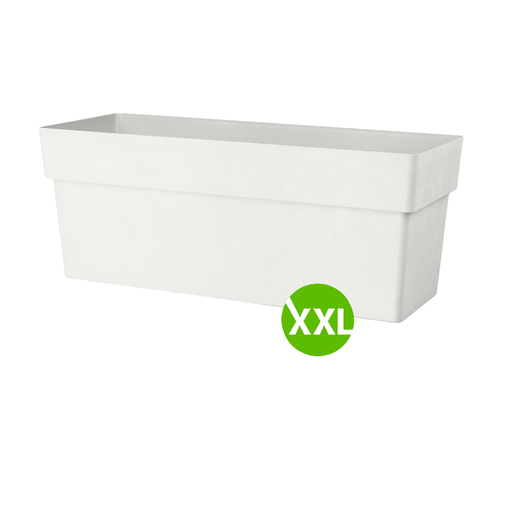
Why it's the right choice: At nearly a metre long, this large planter is perfect for structuring a terrace, creating a privacy screen, or designing XXL floral arrangements.
Its base comes pre-drilled, eliminating any drainage issues from the start. Its recycled injection-moulded plastic construction ensures excellent resistance to frost and UV rays, even on such a large scale.
Its XXL size and sturdiness allow you to take on ambitious projects with a reliable product that remains lightweight and easy to install.
Discover our full selection of products that meet our demanding standards for durability and quality.
Look for clear statements like "frost-resistant" or "frost-proof," guaranteed by the manufacturer. For plastic pots, opt for high-quality polypropylene or injection-moulded plastic, which include additives to maintain flexibility in freezing weather. Reputable brands like Deroma are a good indicator: their reputation is built on the durability of their products.
Absolutely, provided the industrial process is rigorous. Advanced technologies now make it possible to transform used plastics into a new raw material—the recycled plastic flower pot—whose performance (sturdiness, UV resistance, longevity) is every bit as good as virgin plastic. It's the smart choice that combines performance with an eco-friendly action.
It all depends on the model. The key is to read the product description carefully. A "pre-drilled" planter is ready for outdoor use. A model with a "removable plug" offers maximum flexibility for mixed indoor/outdoor use. If the pot isn't drilled, check for guided drill zones (pre-marked, thinned-out circles on the bottom of the pot) that make the job easier and prevent the plastic from cracking.