
Same-day & Next-day Delivery

Quality Guaranteed

Unlock Your Welcome Offers: FREE Delivery | Up to 80% OFF | Free 30-day JoyPlus trial
Download the APP
An outdoor planter can sometimes transform a patio, add structure to a garden or bring greenery to a balcony. However, disappointing purchases are not always down to appearance. A pot that is too small, poorly designed drainage or insufficiently documented weather resistance can lead to repeated replacements — and put your plants under unnecessary strain.
Here are the key criteria to check before choosing an outdoor flower pot, planter or large planter that can withstand French weather conditions.
A stone effect, matt finish or on-trend colour says nothing about a pot’s stability, drainage or resistance to temperature fluctuations. For a patio and balcony planter, also check the width of the base and the total weight once the container is filled with damp compost.
A flower pot with water reservoir can reduce how often you need to water, but it will never replace monitoring the plant. A reservoir that is too full or a blocked opening could cause excessive moisture. The system must therefore be combined with effective drainage and a suitable growing medium.
Resistance to frost, ultraviolet rays and bad weather depends on the material, design and conditions of use. A frost-resistant planter can remain outdoors, but the soil and roots inside it are still exposed to freezing and expansion. In colder regions or for more delicate plants, winter protection remains essential.
The external diameter or length is not enough: also look at the usable capacity, shown in litres. As a guide:
A planter that is too narrow may restrict root development. Conversely, a large planter filled with soil and water soon becomes very difficult to move. Measure the available space, particularly the depth of the balcony and the width of access routes.
For a permanent outdoor installation, look for clearly stated UV protection. A UV-resistant flower pot is designed to retain its appearance better in sunlight, but the intensity of exposure and the product’s colour can speed up or accentuate changes over time.
Frost resistance also deserves attention. Recycled or recyclable materials can be highly durable, provided the design can withstand temperature variations. In winter, above all, prevent water from pooling in the pot or reservoir.
A pot with pre-drilled holes will generally allow excess water to escape. Some models add a removable plug or a reservoir compartment. Before placing your order, check the following:
These precautions are particularly important for an indoor and outdoor flower pot: a leak could damage an indoor floor, wall or façade.
A recyclable plastic planter is lightweight, easy to clean and simple to move. The wording ‘100% recyclable’ indicates that the material can be recovered; it does not guarantee that every local authority offers the same collection facilities.
Those who pay close attention to product origin may also look for French manufacturing or Origine France Garantie certification. These indications should nevertheless be distinguished from a simple marketing claim.
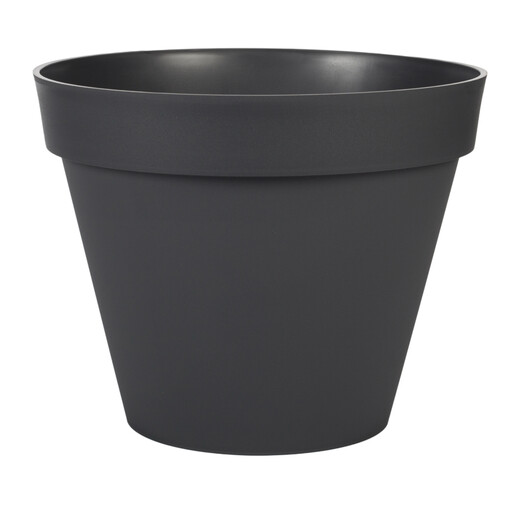
Why this choice suits this profile: With its 23 l capacity, this size is ideal for a first arrangement on a balcony, patio or in an entrance hall. Its French manufacturing and 7-year guarantee in mainland France offer reassuring credentials for a first purchase.
The product details mention UV protection, a water reservoir compartment and a perforation beneath the base. You will nevertheless need to keep the drainage outlet clear and protect the pot if the soil is likely to freeze.
100% recyclable polypropylene, matt finish, 39.5 cm diameter and suitable for both indoor and outdoor use.
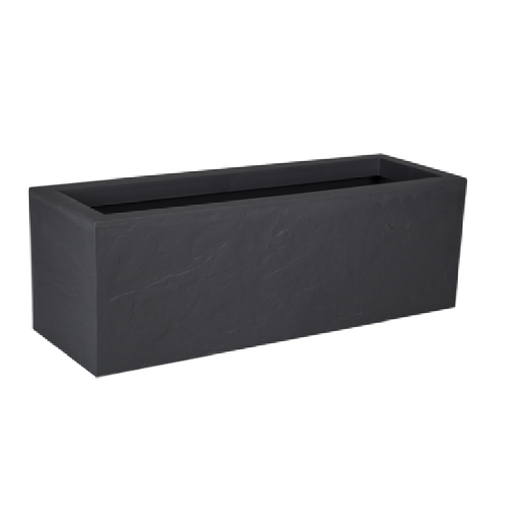
Why this choice suits this profile: With its 98 l capacity and mineral appearance, this large planter can also be used to define a patio or create a structured display in a garden.
The product details specify a double wall, a pre-drilled water-retention system, UV protection and frost resistance.
98 l capacity, double-wall design, 100% recyclable material and Origine France Garantie certification.
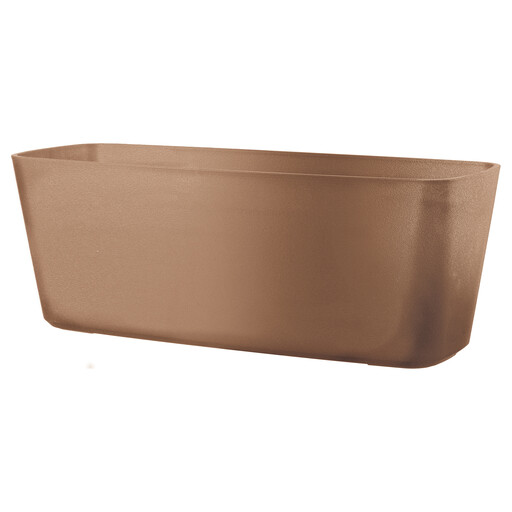
Why this choice suits this profile: Its removable plug lets you adapt water management to the location: drainage outdoors or water retention for decorative indoor use.
Being able to choose between drainage and water retention reduces the risk of unsuitable use. The product details also mention resistance to frost and UV rays.
Recycled and recyclable material, removable plug and easy cleaning with a damp cloth.
We have brought together a complete, real-time updated selection of products that meet these demanding criteria as well as European safety requirements.
Start by measuring the available depth and allow enough room for a sufficiently wide passage. A compact 20 to 25 l planter is suitable for several flowering plants or herbs. Longer, larger models require you to check the balcony’s maximum load capacity.
It can reduce watering frequency, depending on the plant, season, wind and exposure. However, it does not remove the need to check the moisture level of the growing medium. In autumn and winter, generally reduce watering and take care to prevent water from stagnating.
It all depends on the stated resistance of the container, its drainage and local conditions. A UV-resistant flower pot or frost-resistant planter will generally cope better with outdoor installation, but waterlogged soil that freezes can place considerable pressure on the sides. Moving or protecting the pot is sometimes the best solution.