
Livraison le jour même ou le lendemain

Qualité garantie

Débloquez vos offres de bienvenue: Livraison GRATUITE | Jusqu'à -80 % | 30 jours d'essai gratuits à JoyPlus
Téléchargez l'application
Designing your balcony, terrace, or garden is a real pleasure. But when it comes time to choose an outdoor planter, enthusiasm can quickly fade. Between marketing promises and the test of the seasons, many products don't stand the test of time. To prevent your investment from turning into a costly disappointment, here are the pitfalls to avoid.
Here are the 3 most common mistakes to avoid:?
To make an informed decision, you need to focus on objective technical criteria, which are far more reliable than marketing claims.
To guarantee the longevity of your setup, three parameters must be closely inspected.
The choice of material determines your planter's entire resistance to the elements.
The container's size should obviously suit your plants, but also your space. A large flower box is perfect for structuring a terrace or creating a mini vegetable garden. For a balcony planter, narrower and longer models are preferable to optimise the square footage without making it feel cluttered.
Also, think about the final function. A tall planter can be transformed into a garden privacy screen that is as effective as it is beautiful. Paired with a trellis for climbing plants, it creates a true living wall, perfect for gaining privacy or dressing up a dull facade.
Always take a look under the pot. Drainage holes are not an option; they are a must. Ideally, the base is slightly raised or has integrated feet. This allows water to flow freely and air to circulate, preventing root rot. Some models are sold pre-drilled, which is a real practical advantage.
To help you see how these criteria apply in practice, here are a few options that meet specific needs while avoiding the pitfalls mentioned.
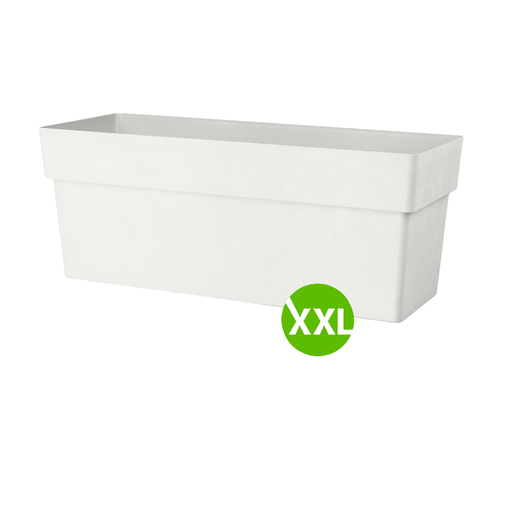
Why we chose it: Ideal for defining a terrace or a corner of the garden with its clean, contemporary lines. Its large volume can accommodate shrubs or dense floral arrangements.
Made from injection-moulded recycled plastic, it guarantees certified resistance to frost and UV rays, protecting it from cracks and fading. The base is pre-drilled for optimal drainage.
Its generous length (99 cm) and its sustainable design using recycled and recyclable materials.
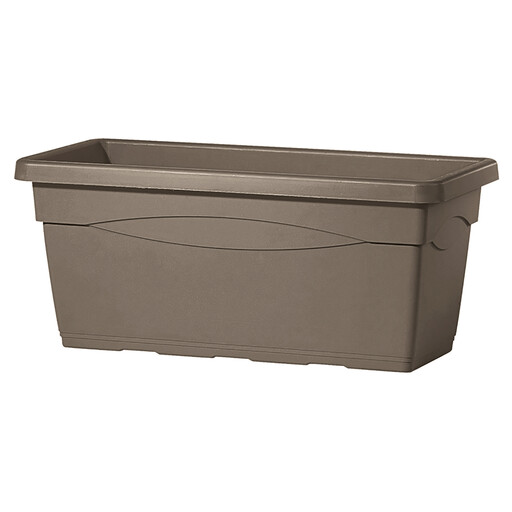
Why we chose it: Its 80 cm size is an excellent compromise for balconies and terraces. Its "Camel" colour adds a warm, modern touch that is easy to integrate into many decor styles.
Its recycled material construction ensures it holds up perfectly against the elements (frost, UV). No need to replace it after one season: this is an investment built to last.
The perfect balance of contemporary design, versatile dimensions, and all-weather durability.
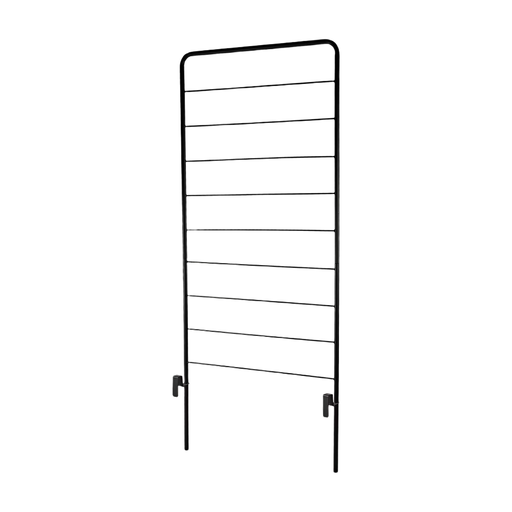
Why we chose it: More than just a planter, this is an essential outdoor plant support. This trellis is perfect for playing with verticality, guiding climbing plants (like ivy or jasmine), and serving as a living screen.
Unlike low-end trellises that rust after the first rain, this one is made of powder-coated steel. This treatment gives it excellent resistance to weather and UV rays, guaranteeing long-term stability and aesthetics.
A dual-purpose function (support and privacy screen) delivered with a minimalist architectural design and a construction that's built to last.
We have compiled a complete selection of products that meet our criteria for quality and durability.
For maximum durability against frost, rain, and UV rays, injection-moulded recycled plastic is a top-tier choice. It combines lightness with robustness. Fibre cement is also very durable, but much heavier. If you are set on terracotta, make sure it is explicitly labelled as "guaranteed frost-resistant".
Beyond choosing a frost-resistant material, a few simple actions can make a big difference. Ensure drainage is impeccable so the soil doesn't become waterlogged (it's the freezing water that causes pots to crack). Also, consider raising the planter on blocks to facilitate drainage and insulate it from the frozen ground.
Absolutely. A tall, rectangular balcony planter, or a row of several boxes, creates a very effective visual barrier. By planting dense foliage plants like non-invasive bamboo or by pairing it with a trellis for climbing plants, you can create a solution that is beautiful, natural, and functional for protecting your privacy.