
Livraison le jour même ou le lendemain

Qualité garantie

Débloquez vos offres de bienvenue: Livraison GRATUITE | Jusqu'à -80 % | 30 jours d'essai gratuits à JoyPlus
Téléchargez l'application
Outdoor lighting should first and foremost suit its intended use: making a path safer, creating an atmosphere on a balcony, lighting a table or accompanying you during a night of camping. However, some product listings focus solely on the number of LEDs, the word “waterproof” or long battery life, without explaining the conditions under which these claims are achieved.
Before placing your order, keep these three pitfalls in mind:
The IP rating consists of two numbers. The first concerns protection against dust and solid particles; the second indicates resistance to water under precisely defined conditions.
For a garden lamp exposed to the elements, check that the casing, control button and charging port are properly protected. Even with a high rating, do not attempt to submerge the lamp and always follow the manufacturer’s recommendations.
A cordless portable lamp can run on batteries, a rechargeable battery or a solar panel. Each technology has its advantages:
Check the charging time, the brightness level associated with the advertised battery life and whether the battery can be replaced. Battery life measured at low intensity may bear no relation to the result achieved at full power.
The lumen measures the amount of light emitted. A small mood lamp may only need a modest light output, whereas path or table lighting should be considerably brighter.
Colour temperature is expressed in kelvins:
Also consider the direction of the beam. A 360° lamp spreads light all around it, while a directional beam is more suitable for lighting a path or a specific area.

Why it’s a suitable choice : This outdoor solar lamp is ideal for anyone looking to mark out a garden or border without installing an electrical cable. Its flat, round shape makes it easy to place on a stable surface.
With its 0.6 W solar panel and cordless operation, it requires very little installation work. However, it must be placed somewhere directly exposed to sunlight.
IP66 rating, warm 3 200 K light, 360° illumination and a 500 mAh lithium battery.
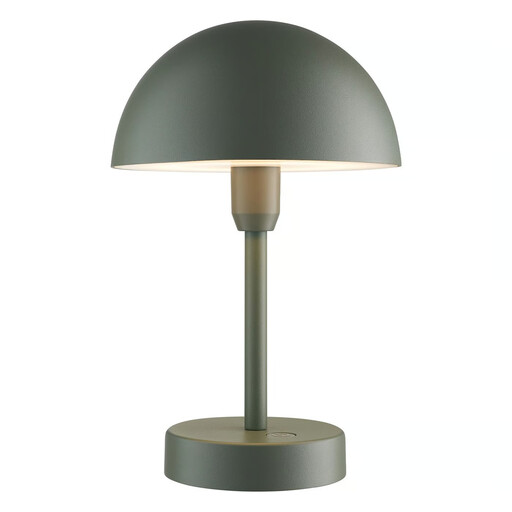
Why it’s a suitable choice : Its aluminium design, adjustable brightness and charging station make it a portable patio lamp for anyone looking for an object that is as stylish as it is practical.
Battery life is specified for three brightness levels: around 4 hours at 300 lm, 6 hours at 200 lm and 12 hours at 100 lm.
300 lm, three brightness levels, a colour temperature of 3 000 K and IP44 protection against water splashes.
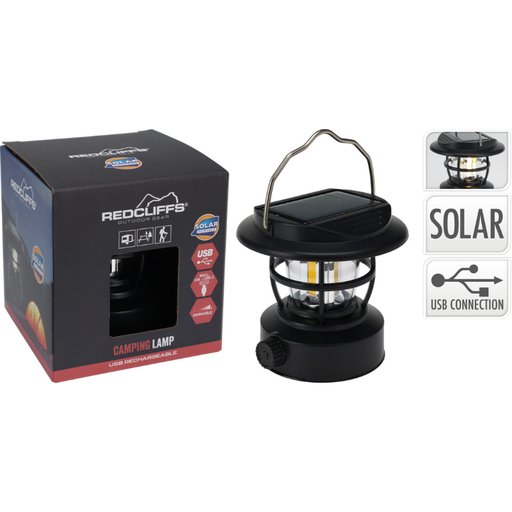
Why it’s a suitable choice : With its handle, solar panel and USB-C charging, this camping lantern is easy to take on outings, picnics and evenings under an outdoor shelter.
The figures clearly distinguish the charging time, around 6 hours, from the operating time, which ranges from 2 to 3 hours. The 1 200 mAh 18650 battery can be replaced.
Advertised light output of 200 lm, three COB panels, charging cable included and dimensions of 108 × 108 × 100 mm.
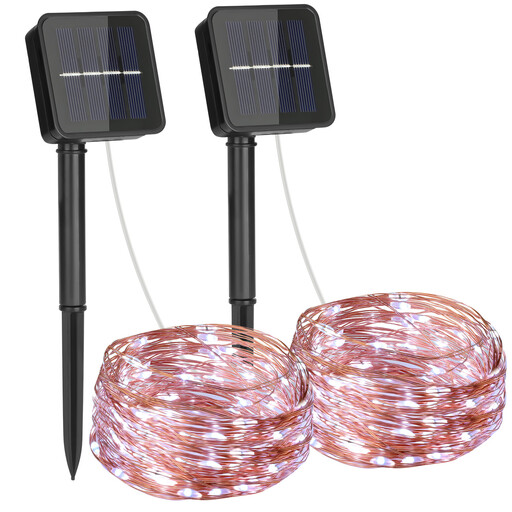
Why it’s a suitable choice : These two solar string lights are ideal for decorating a railing, balcony, pergola or table at an outdoor reception.
The length, number of LEDs and charging conditions are clearly stated: two 12 m cables, 120 LEDs per cable and 6 to 8 hours of charging in sunlight.
IP65 rating, eight lighting modes with memory function and advertised battery life of 8 to 14 hours, depending on the weather and charge level.
We have selected a complete, real-time-updated range of products that meet these strict criteria and the requirements of European safety regulations.
A few simple habits are all it takes to maintain the performance of your light fittings:
For a mains-powered outdoor post light, the installation must retain the stated IP rating. The VEJERS model, for example, uses an E27 bulb holder and can be installed with a compatible base sold separately. For a permanent installation, it is best to have the work carried out properly by a qualified professional.
Yes, but their battery life depends on the amount of sunlight, the panel’s orientation and how clean its surface is. In winter, partial recharging can significantly reduce the length of time the lamp stays lit during the night.
On a sheltered patio, IP44 may be sufficient to withstand water splashes. For a device more exposed to rain and dust, choose at least IP54 or IP65, but do not submerge it in water. The manufacturer’s recommendations should always be treated as the definitive guide.
LEDs generally use less electricity than other technologies, but actual consumption depends on their power, how long they are switched on and the number of light fittings. Solar models do not draw electricity from the mains when operating, but their battery life varies according to the weather conditions.