
Livraison le jour même ou le lendemain

Qualité garantie

Débloquez vos offres de bienvenue: Livraison GRATUITE | Jusqu'à -80 % | 30 jours d'essai gratuits à JoyPlus
Téléchargez l'application
A light that comes on too late, a solar panel installed in the shade or a sensor triggered by every passing cat can quickly turn a practical purchase into a waste of money. Whether you need lighting for an entrance, driveway, garage, patio or garden, choose outdoor lighting with a motion sensor based on the conditions where it will actually be used, not just the number of LEDs stated on the box.
Here are the points to consider before buying an outdoor solar light, wall light or solar LED floodlight.
A high lumen count tells you the stated light output, but on its own it says nothing about the useful range, how evenly the light is spread or how long it will stay on. A powerful floodlight might be ideal for a large courtyard, but far too dazzling for a small patio.
Also consider the direction of the light source, the number of adjustable heads and the coverage angle. For a narrow entrance, a well-directed beam may be enough. For a garden or wide driveway, broader coverage is often more practical.
A solar wall light depends directly on the sunlight its panel receives. A north-facing wall, covered balcony or spot shaded by trees can reduce its daily charge. As a result, the light may stay on for less time, especially after several cloudy days.
Before you buy, find a spot where the panel will get as much direct sunlight as possible. Also remember to clean its surface regularly to prevent dust, pollen and residue from the weather building up.
Check the IP rating carefully. An IP65 outdoor light is protected against dust and water jets, but it is not designed to be submerged. An IP54 outdoor wall light offers a different level of protection, suitable for many outdoor uses, provided it is installed according to the manufacturer’s instructions.
The light’s position also matters: a model installed under an awning won’t face the same conditions as a floodlight directly exposed to wind, rain and splashes.
A PIR sensor detects changes in infrared radiation caused by the movement of a person or animal. Compare its detection range, coverage angle and available settings, including how long the light stays on and the light-level threshold.
A longer range can be useful for a garage or long driveway, but it could also trigger the light unnecessarily if the sensor points towards the road. On a residential property, angle it to monitor the entrance without unnecessarily covering neighbouring spaces.
Cordless solar lighting avoids the need for electrical wiring and suits both homeowners and tenants, as long as you have permission to install the light. However, it needs enough exposure to sunlight and a suitably sized battery.
A mains-powered wall light offers more consistent availability, but installation involves a 220-240 V connection. If the model needs to be earthed, like a Class 1 wall light, ask a qualified person to connect it if you’re not completely confident working with electrical installations.
Aluminium, galvanised steel, glass and certain technical plastics aren’t all suited to the same needs. By the sea, salt and damp accelerate corrosion in metals that aren’t designed for coastal conditions. Look for clear confirmation that the product is suitable for coastal use, and maintain its surfaces according to the manufacturer’s instructions.
For a light that will stay outside all year, also check how sturdy the fixing is, how easy the solar panel is to access, and whether spare parts or a guarantee are available.
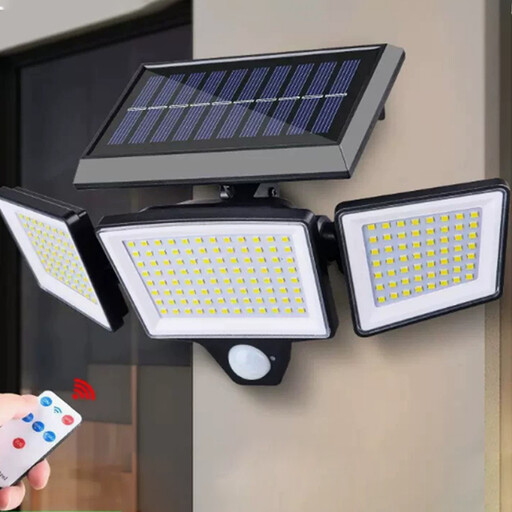
Why it suits this type of buyer : This solar LED floodlight is a good choice for a first installation without wiring. Use it to light a garage, courtyard or entrance that gets enough sun.
Its three modes let you adapt how it works to suit the situation, while the three adjustable heads help reduce poorly lit areas.
302 LEDs, stated light output of 3,000 lumens, detection up to 18,3 metres with a 180° angle, and an IP65 rating stated by the manufacturer.
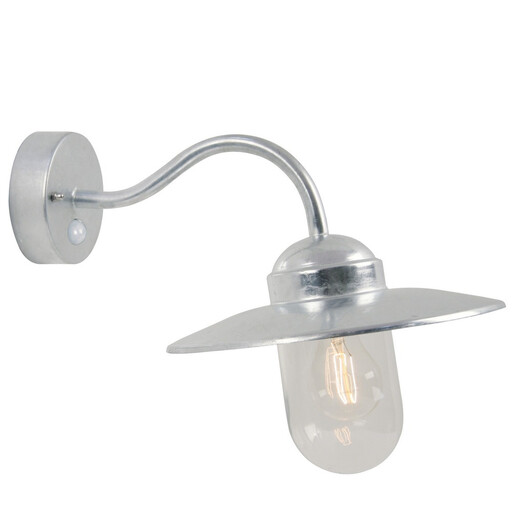
Why it suits this type of buyer : The combination of galvanised steel and glass works well on a façade, patio or entrance, including in coastal settings.
The product details state that it’s designed for coastal use and has a built-in motion and light sensor, so there’s no need to buy a separate detector.
Galvanised steel, glass, E27 lamp holder, IP54 rating, parallel wiring and a 15-year guarantee against surface deterioration, as stated by the manufacturer.
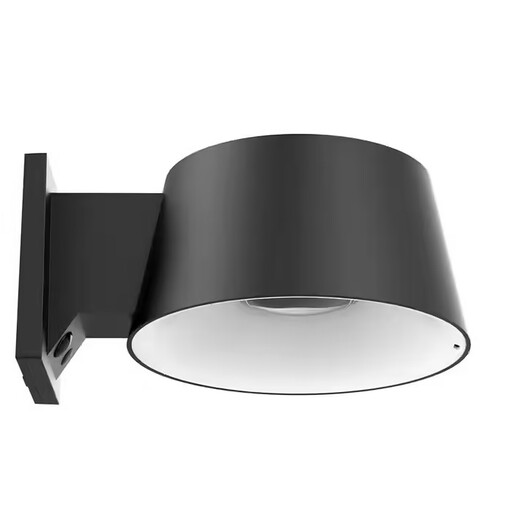
Why it suits this type of buyer : This compact solar wall light is ideal for a doorway, balcony, small path or patio when you want light directed downwards.
Its built-in panel and wire-free wall mounting make installation easy, as long as you choose a spot that gets enough sun.
Downward-facing LED beam, built-in solar panel, wall-mounted design and materials stated to be resistant to outdoor conditions.
We’ve put together a comprehensive selection, updated in real time, of products that meet these demanding criteria and European safety standards.
For reliable detection, install the sensor at a height suited to the area you want to monitor. Avoid pointing it towards a heat source, a busy road or vegetation that could move. Tighten the brackets securely, without modifying the casing or drilling into any part designed to remain watertight.
For a solar model:
Yes, but how long it stays lit depends on the amount of sunlight it receives during the day, the battery capacity and the temperature. Several overcast days can therefore reduce its run time. In winter, choose an unobstructed spot and clean the panel regularly.
A wall light with a directional beam can be ideal for a small entrance. For a long driveway, garage or large courtyard, it’s better to compare the coverage angle, sensor range and direction of the light heads than to rely on the stated lumen count alone.
An IP65 rating means protection against dust and water jets. It doesn’t mean the product can be submerged or that it will withstand every kind of physical stress without care. Follow the instructions, make sure the fixing is secure and choose a location suited to local conditions.