
Livraison le jour même ou le lendemain

Qualité garantie

Débloquez vos offres de bienvenue: Livraison GRATUITE | Jusqu'à -80 % | 30 jours d'essai gratuits à JoyPlus
Téléchargez l'application
Outdoor lighting can transform a pathway, patio or terrace. But you need to choose the right model: a poorly suited light often ends up at the back of a cupboard. The product photos sometimes focus entirely on atmosphere, without mentioning the real battery life, the water protection rating or the installation requirements.
Before buying a solar garden light, an outdoor string light or a solar floodlight, it's worth keeping three common pitfalls in mind.
An LED string light or a garden bollard light creates a lovely ambience, but it won't necessarily replace a light designed to make a step or pathway safe. Small solar lights with just a few lumens are mainly for marking out areas or decoration.
To light a walkway, check the stated luminous flux, the beam direction and the height of the fitting. Conversely, for a dinner party or evening gathering, a softer light is often better to avoid glare.
The IP rating gives you a useful first indication. An IP44 product is splash-proof, but it should not be submerged or left exposed to continuous heavy rain without protection. An IP65 model offers better protection against dust and water jets, but it is not designed to be kept underwater.
The battery compartment, connectors and solar panel also need to be properly protected. Even when an outdoor light is advertised as waterproof, it must still be installed in line with the manufacturer's intended use.
A solar garden light placed under a tree, against a north-facing wall or in a shaded area will charge less effectively. The battery life stated by the manufacturer depends on many factors: the season, the weather, the panel's orientation and the battery's condition.
In the UK, sunlight levels can vary considerably between July and December. So choose a clear, open spot and clean the solar panel regularly.
For a covered patio, an IP44 rating can be suitable if the product is positioned correctly. For an installation that is directly exposed to the weather, check the technical specifications and the protection of each component carefully, especially the connectors.
A light intended for a pathway must also be perfectly stable. The stakes, bases and cables must not create any trip hazard. Fuel-burning torches, meanwhile, should be placed well away from dry plants, fabrics and any flammable materials.
Colour temperature plays a big role in the atmosphere you create:
Also remember to check the total length of a string light, the spacing between the LEDs, the number of available modes and whether there is a memory function. A length of 10 metres does not always mean 10 metres of illuminated area: part of it may be taken up by the power cable.
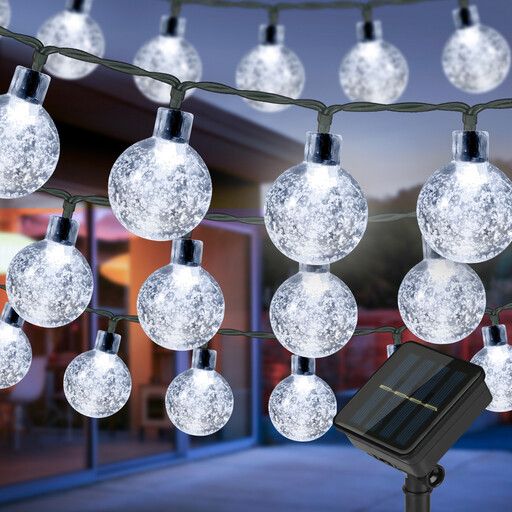
Why this choice suits this profile: this solar string light is 16 feet, or approximately 4.9 metres, making it suitable for a balcony, a small patio or occasional decoration without needing a mains connection.
The panel must be placed in full sunlight and the components must not be submerged. The technical specifications state a charging time of 6 to 8 hours, for a battery life of 8 to 14 hours depending on conditions.
30 LED crystal ball effect, 8 lighting modes, automatic on/off and flexible copper wire.
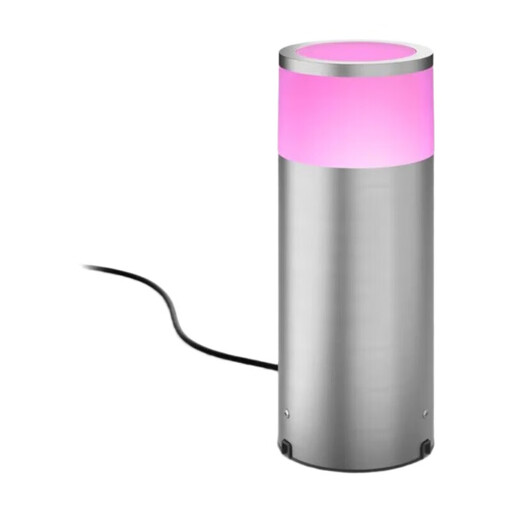
Why this choice suits this profile: this garden bollard light is for those who want to programme the ambience of a patio, pathway or terrace from an app.
The connection requires a Philips Hue bridge and a low-voltage outdoor power supply. You will need to plan the wiring and comply with local electrical regulations.
LED offering colours and different shades of white, programmable, app control, voice assistants and Hue switches.
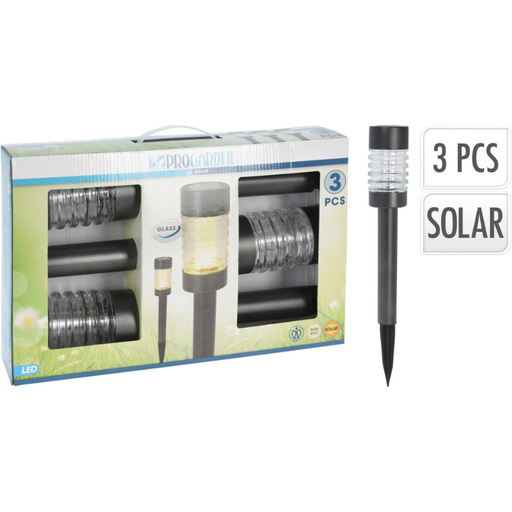
Why this choice suits this profile: this set of three lights is suitable for marking out a pathway, garden border or entrance, thanks to its stake installation.
At 5 lumens per light, this product provides ambient and marker lighting, not powerful security lighting.
Stainless steel construction, glass diffuser, warm white LED at 2,700 to 3,000 K and AA NiMH battery included.
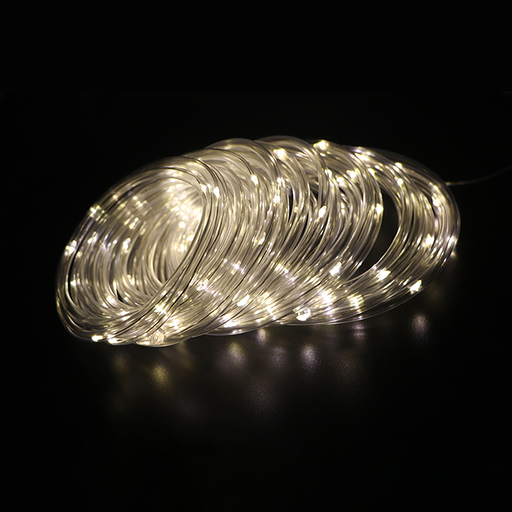
Why this choice suits this profile: its length is ideal for a reception, wedding, Christmas or patio decoration that needs extensive coverage.
The IP44 rating protects against splashes, but the battery compartment must be kept dry. The 3 AA batteries are not included.
150 warm white LEDs at 3,000 K, 8 modes, memory function and a stated total length of 15.3 metres.
We've put together an updated selection of products that meet practical choice criteria and the requirements applicable in the UK.
For a pathway, it's better to use multiple light points spaced evenly rather than installing one very powerful beam. On a patio, an outdoor string light or a warm-light bollard will create a cosier atmosphere. To highlight a tree, a wall or a statue, an adjustable solar floodlight is often more suitable.
Bamboo torches, such as the Articasa Garden Torch, are fine for occasional, decorative use. However, they require fuel, flame supervision and a clear space around them. For a permanent installation, an electric or solar LED solution reduces the amount of maintenance.
A solar light doesn't use electricity from the grid, but its battery may need replacing after several charge cycles. Battery-powered models have an ongoing cost for replacements. For a mains-powered light, the cost depends on its wattage, how long it's used and your electricity tariff. An LED generally uses less power than a traditional bulb for a similar brightness level, but always check the product specifications.
It depends on its IP rating and the manufacturer's recommendations. An IP44 string light should be installed in a location protected from significant water splashes, and its battery compartment must be kept completely dry. Before winter, inspect the cables, connectors and housings. Unplug or store the string light if the instructions advise it.
Place the panel in an open area, clean its surface with a soft cloth and avoid covering the LEDs or connectors. Remove the batteries from string lights that use them when they won't be used for several months. Finally, check the stability of the stakes and the condition of the cables regularly at the start of each season.