
Livraison le jour même ou le lendemain

Qualité garantie

Débloquez vos offres de bienvenue: Livraison GRATUITE | Jusqu'à -80 % | 30 jours d'essai gratuits à JoyPlus
Téléchargez l'application
Good outdoor lighting does more than just illuminate; it can turn a simple patio into a true outdoor living space and transform a dimly lit garden into a welcoming, secure area. The problem? The market is flooded with products making tempting promises that can quickly lead to disappointment. Before you commit, let's review the three most common pitfalls that lead to purchases you'll deeply regret.
Fortunately, understanding a few key technical criteria is all it takes to navigate this jungle with confidence and choose a product that will truly deliver on its promises.
To make an informed choice (no pun intended), focus on three fundamental parameters. They are your guarantee of durability, convenience, and performance for your future garden lighting.
This rating is the true measure of your light fixture's resilience. It consists of two digits: the first indicates protection against solids (like dust), and the second against liquids (like rain).
The choice of power source directly impacts installation and daily use.
Smart outdoor lighting opens the door to nearly endless customisation possibilities: changing colours, setting schedules, voice control, and more. Be aware, however, that most systems (like Philips Hue) require a "bridge" (sold separately or in a starter kit) to connect your lights to your Wi-Fi network. Without this hub, smart features are often very limited or non-existent. So, be sure to check the compatibility and prerequisites of the ecosystem you're interested in.
To help you see things more clearly, here are a few products we recommend. Each one is tailored to a specific need and user profile.
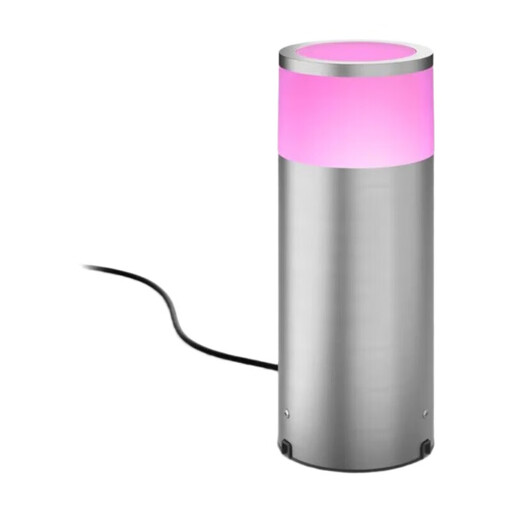
Ideal for those who want a fully integrated lighting experience. This outdoor bollard light connects to the Philips Hue outdoor ecosystem, allowing you to create colourful ambiances and sync your garden lighting with the rest of your home via the app or voice assistants.
This product is part of a cohesive and proven ecosystem. It avoids the hidden cost pitfall by clearly stating the need for a Hue Bridge for full control, ensuring compatibility without any unpleasant surprises.
Virtually endless customisation (16 million colours) and seamless integration into a robust smart home system. The low-voltage system simplifies and secures the installation.
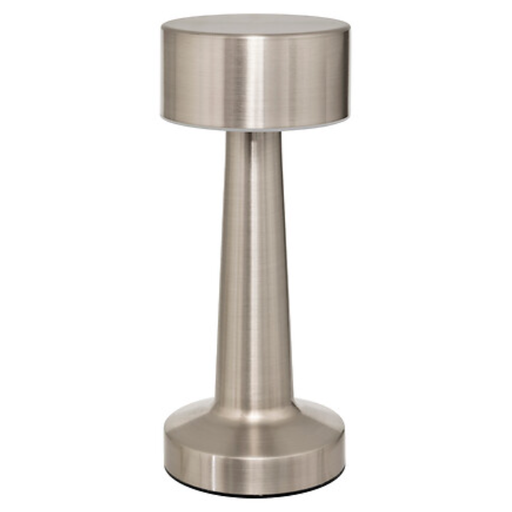
Perfect for those seeking a flexible, stylish, and portable ambient lighting solution for a patio and balcony. This wire-free outdoor lamp can be placed on a table or on the floor with zero installation hassle.
This model avoids the low-battery-life pitfall by clearly advertising up to 6 hours of use and convenient USB-C charging. Its IP44 rating is suitable and honestly positioned for use on a sheltered balcony or patio, without making false promises.
Total portability and a sleek design. Its touch switch allows you to toggle between warm and cool white light to match the mood of the moment.
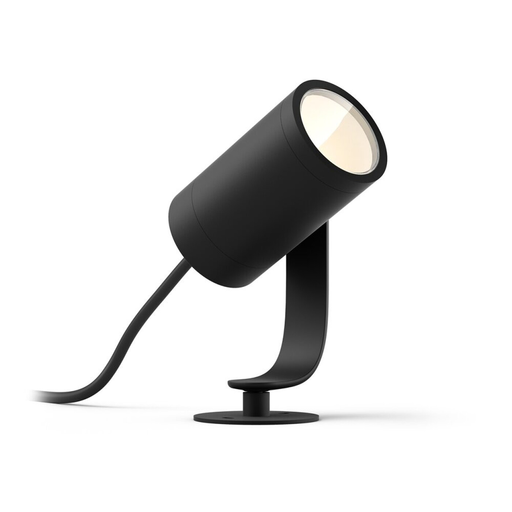
Designed for those who want to literally sculpt their garden with light. This LED outdoor spot is perfect for highlighting a tree, a facade, or a flowerbed. It integrates into an expandable low-voltage system, ideal for a custom landscaping design.
This is the foundational building block of a modular system, which helps avoid the trap of underperforming "all-in-one" spots. The user builds their own powerful and durable lighting network, fully aware that the power supply and Hue Bridge are required components.
Powerful and adjustable accent lighting. The 24V low-voltage system is robust and, most importantly, expandable to adapt as your garden evolves.
LED technology offers an exceptional lifespan. Most quality LED outdoor fixtures are rated for between 15,000 and 25,000 hours of use. With an average use of 4 hours per day, that translates to over 10 years of peace of mind—a decisive advantage over old halogen bulbs.
It all depends on its exact location. For a wall light installed under a porch or a lamp placed on a covered balcony table, an IP44 rating is sufficient as it protects against splashes. However, for an outdoor bollard light or a spot placed in a flowerbed, directly exposed to rain and sprinklers, an IP65 rating or higher is essential to ensure its longevity.
Low-voltage systems (12V or 24V) are specifically designed to be safer and much simpler to install than 230V circuits. A competent DIYer can typically handle the installation themselves by carefully following the manufacturer's instructions. However, it's still crucial to adhere to basic safety rules, especially for burying cables and connecting the transformer. When in doubt, or for a large-scale installation, hiring a professional is always the wisest course of action.