
Livraison le jour même ou le lendemain

Qualité garantie

Débloquez vos offres de bienvenue: Livraison GRATUITE | Jusqu'à -80 % | 30 jours d'essai gratuits à JoyPlus
Téléchargez l'application
Choosing the wrong outdoor lighting can quickly turn into an unnecessary expense. A solar lamp installed in the shade will remain dim, a poorly protected wall light may allow moisture to enter, and an overly powerful floodlight can cause more glare than comfort.
Before placing your order, it is therefore worth looking beyond promises such as “easy installation”, “weather-resistant” or “high brightness”. Three mistakes occur regularly:
The IP rating measures an appliance’s protection against dust and water. The first digit relates to solid particles, while the second indicates the level of protection against moisture.
For a highly exposed area, such as the edge of a patio or an uncovered pathway, IP66 outdoor lighting will often be the more suitable choice. For a covered entrance, an IP54 model may be more than sufficient.
A solar outdoor lamp works without a power cable, but its run time depends on the amount of daylight received, the season and the condition of its battery. It is particularly suitable for lighting a path, garden borders and areas where installing an electrical supply would be difficult.
A mains-powered light fitting offers more consistent operation, but installation requires the usual precautions. Class I models, including several Nordlux wall lights featured here, must be earthed and installed in accordance with current electrical regulations, preferably by a qualified electrician.
With an outdoor GU10 light, you choose the bulb and its colour temperature separately. Warm outdoor lighting, typically between 2,700 and 3,200 K, creates a pleasant atmosphere on a patio or along a façade. A whiter light will make it easier to see in passageways.
An adjustable LED solar spotlight can be used to highlight a tree, façade or decorative feature. A wall light spreads more light around a door, garage or carport. To illuminate a path, several small bollard lights will distribute the light more evenly and reduce glare compared with a single powerful floodlight.
Also remember to check:

Why this choice suits this profile : This cordless lamp is easy to place on the ground. It is suitable for small gardens, borders and pathways without an electrical connection. Its warm 3,200 K light helps you move around without creating a cold atmosphere.
Its IP66 rating is clearly stated, and its solar operation means there is no need to buy cables or carry out connection work. However, you will need to find a position where it is directly exposed to sunlight.
0.6 W solar panel, 500 mAh lithium battery, 3,200 K light and a compact round design measuring 121.4 mm.
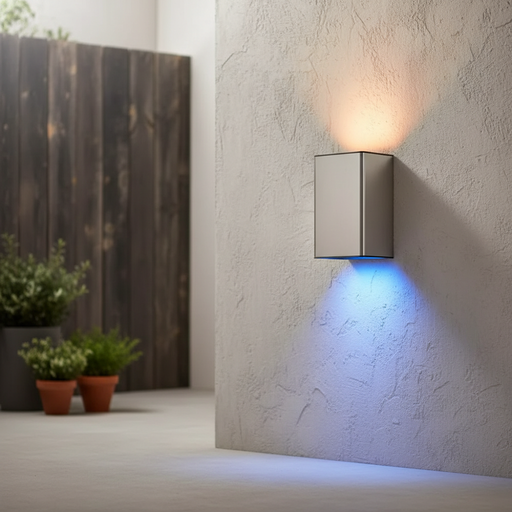
Why this choice suits this profile : This outdoor wall light is designed for anyone who wants to control the lighting on their patio, entrance or façade from an app, while integrating it into a compatible smart-home ecosystem.
Remote control and Philips Hue integration are clearly advertised. The connection is wired, so installation should be carried out by a qualified electrician. This helps ensure that the work involved is not underestimated.
Adjustable white and coloured LED lighting, stainless steel finish, and compatibility with the Philips Hue Bridge and voice assistants.
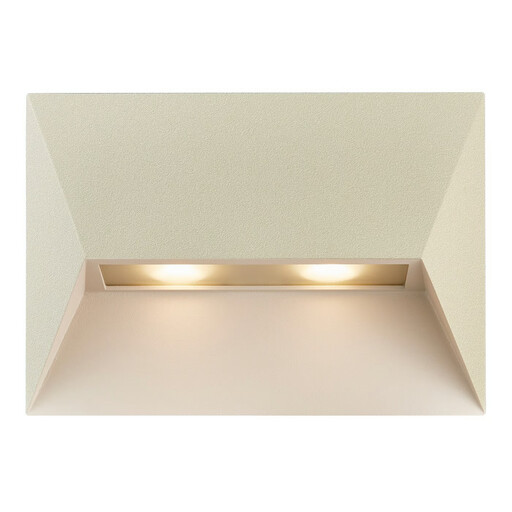
Why this choice suits this profile : Its two GU10 lamp holders and wall-mounted design make it suitable for an entrance, carport or façade that needs consistent, customisable lighting.
The product information specifies the IP54 rating, Class I classification and that bulbs are not included. You can therefore choose compatible GU10 bulbs, including dimmable options if required, without assuming they come supplied.
Two GU10 lamp holders, dimming possible with suitable bulbs, parallel connection possible and painted aluminium construction.
We have selected a complete, real-time updated range of products that meet these demanding criteria as well as European safety standards.
For a solar lamp, choose an unobstructed position and clean the panel regularly with a slightly damp, soft cloth. Charging performance varies depending on the orientation, weather and hours of sunlight.
For a mains-powered wall light, switch off the power before carrying out any work. Ensure it is earthed where required and check that the seals are not pinched when securing the fitting. A GU10 bulb must never exceed the maximum wattage specified by the manufacturer.
In coastal areas, salt and moisture accelerate the build-up of dirt on metal surfaces. Regular cleaning with a non-abrasive cloth will help preserve the finish. Avoid using overly harsh products.
For a partially sheltered area, an IP54 model may be suitable. For a light fitting directly exposed to rain and water splashes, IP66 outdoor lighting will offer better protection against dust and water jets. However, the location and quality of the installation remain crucial.
Yes, but its run time may decrease when the days become shorter, the sky remains overcast or the panel receives less light. Install it in an unobstructed location, position the panel correctly where possible and keep its surface clean.
For a path, it is better to use several spaced-out light sources than to rely on a single very powerful point of light. Solar bollard lights, an adjustable LED solar spotlight or small warm-light lamps will mark out the route while limiting glare. For an area used frequently, a mains-powered light fitting will provide more consistent availability.