
Same-day & Next-day Delivery

Quality Guaranteed

Unlock Your Welcome Offers: FREE Delivery | Up to 80% OFF | Free 30-day JoyPlus trial
Download the APP
With the warmer weather, the desire to enjoy the garden or patio grows stronger. Whether for a dinner with friends, an evening under the stars, or simply to secure the areas around your home, good outdoor lighting transforms the atmosphere. But with an overwhelming number of options, the pitfalls are many: a solar lamp that gives out before appetisers are over, a "waterproof" wall light that leaks at the first downpour, or an attractively designed model that doesn't survive the first winter.
To prevent your purchase from turning into a disappointment, let's review the three most common mistakes.
Fortunately, avoiding these setbacks is simply a matter of mastering a few key technical criteria. They are your guarantee of the durability and performance of your future lighting.
Navigating the jungle of technical specifications can seem complex. In reality, three indicators are all you need to assess a light fixture's quality and its suitability for your needs.
The Ingress Protection (IP) rating is an international standard that classifies a device's level of protection against solid objects (dust) and liquids (water). It consists of two digits:
The type of power supply is a strategic choice that will depend on your intended use and location.
Aesthetics shouldn't overshadow durability. The materials determine how long your light fixture will last against the elements.
The right light for every space, the right solution for every need. Here are a few suggestions that cater to distinct user profiles, keeping in mind the quality criteria we've just covered.
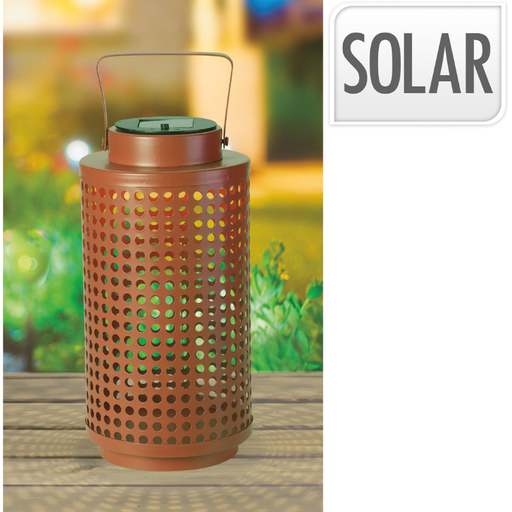
Perfect for those looking for a decorative touch and ambient light on a balcony, patio, or in a garden without worrying about cables. Just set it down, let it charge, and it will turn on by itself at dusk.
Its sturdy metal frame protects it from bad weather and premature ageing, unlike low-end plastic models. This is an object designed to last more than one season.
Zero installation: no wiring constraints. Its amorphous silicon solar panel charges even on cloudy days, providing up to 6 hours of soft light.
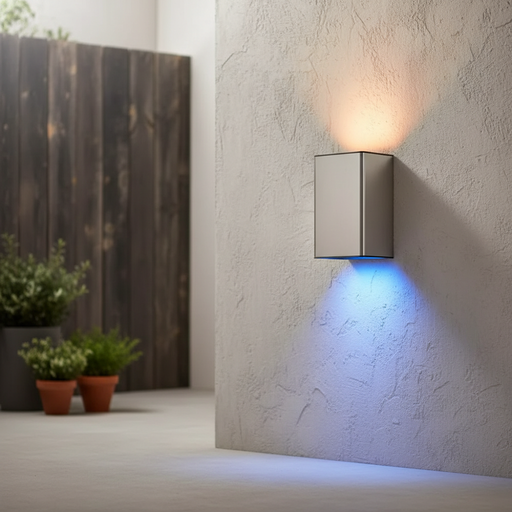
For those who already have a smart home ecosystem or want total control over their lighting ambience. Ideal for creating scenes, changing colours, and managing lighting remotely.
As a wired product, it eliminates the trap of limited solar power and battery life. Its stainless steel construction ensures maximum resistance to corrosion and weathering.
Endless customisation (16 million colours) and integration with voice assistants. Its design projects light both upwards and downwards for a modern architectural effect.
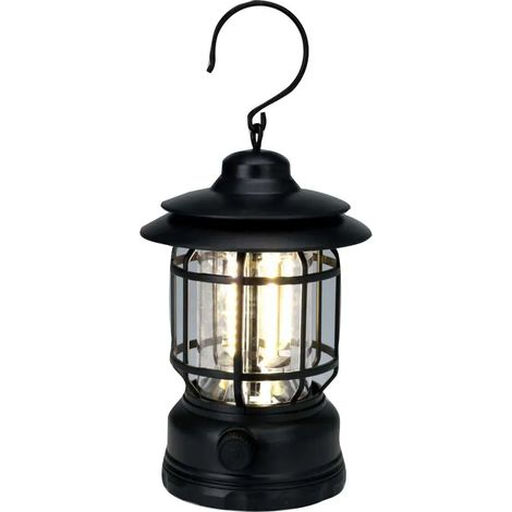
Perfect for those who need a mobile light source, whether for camping, as an accent light on a balcony, or to illuminate a dark corner of the garden for an evening.
It bypasses the trap of solar dependency. Thanks to its USB-rechargeable battery, it guarantees a reliable runtime of 2 to 3 hours, regardless of the day's weather.
Its versatility and portability. Compact and lightweight, it recharges quickly (3 hours) and uses COB LEDs for powerful and efficient illumination.
We have selected a full range of light fixtures for you that meet our quality and safety standards.
The lifespan depends on two main components: the battery and the LED. A good quality Ni-MH battery can handle approximately 500 to 800 charge cycles (about 2 years) before its capacity noticeably decreases. The LEDs, on the other hand, have a very long lifespan, often exceeding 20,000 hours, which means they will generally outlive the battery.
For a fixture placed under a porch, a pergola, or attached to a wall sheltered from driving rain, an IP44 rating is generally sufficient, as it protects against splashes. However, for a lamp staked in the middle of a lawn, a ground-level spotlight, or any other lighting directly exposed to the elements, it is highly recommended to opt for an IP65 rating or higher for better longevity.
To ensure optimal performance, place your solar lamp in a location that receives maximum direct sunlight during the day, ideally south-facing and without shadows cast by trees or buildings. Also, remember to regularly clean the solar panel with a damp cloth to remove dust or pollen that could block the sun's rays.