
Livraison le jour même ou le lendemain

Qualité garantie

Débloquez vos offres de bienvenue: Livraison GRATUITE | Jusqu'à -80 % | 30 jours d'essai gratuits à JoyPlus
Téléchargez l'application
An outdoor light can transform a dark entrance, mark out a path or create a pleasant glow on a balcony. But some purchases quickly disappoint: battery life that’s too short, materials that can’t handle the weather, or lighting that’s not bright enough for what you need. Before comparing models, start by distinguishing between decorative, functional, security and portable lighting.
A small solar lantern or a few-lumen LED outdoor light is fine for a table, a planter or a border. It won’t necessarily replace a wall light designed to illuminate an entrance. So check the light output in lumens and the beam direction, rather than relying solely on staged photos.
The IP rating indicates the level of protection against solid objects and water. A product rated IP44 is splashproof, while an IP54 model offers enhanced protection against dust and splashes. That doesn’t mean it can be submerged or left exposed to heavy rain for long periods without care.
For a fixed installation, follow the manufacturer’s instructions and call in a professional if mains connection is required.
A solar outdoor light depends on the amount of sunlight, the panel’s orientation and the season. A shaded spot, a dirty panel or several cloudy days can significantly reduce the lighting duration. Solar models are therefore best suited to path marking and ambience. For reliable, powerful lighting, it’s better to opt for a rechargeable or wired light.
A portable light with a dimmer can cover several uses, provided its battery offers enough battery life.
A cordless outdoor light can run on a solar panel, a rechargeable battery or disposable batteries. Compare:
For example, the Rechargeable Camping Lamp features a replaceable 1,200 mAh 18650 lithium-ion battery, a solar panel and USB-C charging. It delivers 200 lumens, a charging time of around 6 hours and a battery life of 2 to 3 hours depending on conditions.
For a garden floor lamp or an outdoor bollard light, check the base stability, height and fixing system. The Nordlux VEJERS model measures 92 cm, uses an E27 socket and has an IP54 rating. Its bulb is not included – a detail to factor into your budget and choice of colour temperature.
For solar lights, clean the panel regularly with a soft cloth. For connected or mains-powered lights, the installation must preserve the housing’s waterproofing and comply with current electrical regulations.
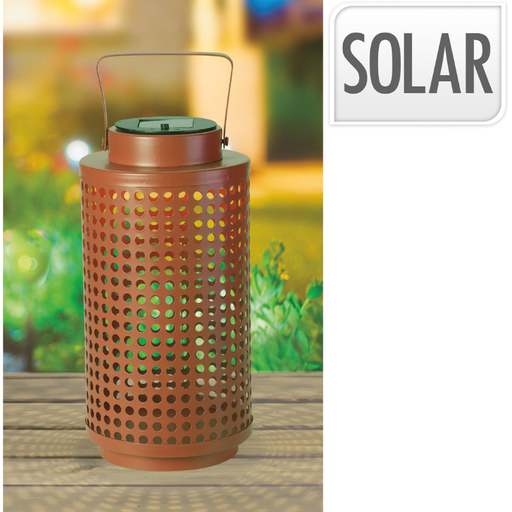
Why this choice suits this profile: This solar lantern can be placed in seconds on a patio, balcony or near a path, with no cables or complicated installation.
Its solar operation means you don’t need to buy a cable or arrange a connection, while the automatic on/off function minimises daily handling.
Integrated solar panel, rechargeable AA Ni-MH battery, warm white light and stated battery life of up to 6 hours.
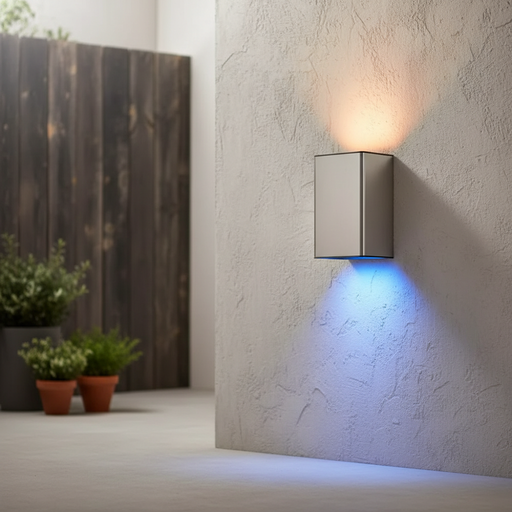
Why this choice suits this profile: This light fits perfectly at an entrance or on a façade, where remote control and lighting scenes are genuinely useful.
Designed for fixed wall installation, this connected light avoids relying on a battery with limited life.
Adjustable white or coloured LED, control via the Philips Hue app and compatibility with smart home systems.
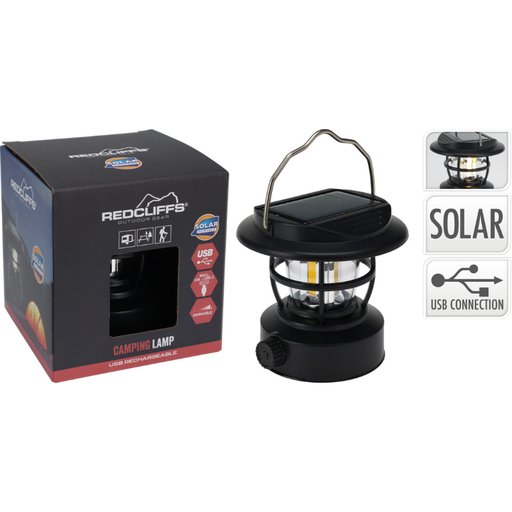
Why this choice suits this profile: With its handle design, it’s ideal for campers, van-lifers and anyone who wants to easily move a light between the garden, garage and shed.
It doesn’t rely solely on the sun: USB-C charging takes over from the solar panel, and the battery is replaceable.
Stated output of 200 lumens, three COB panels, weight of 177 g and charging cable included.
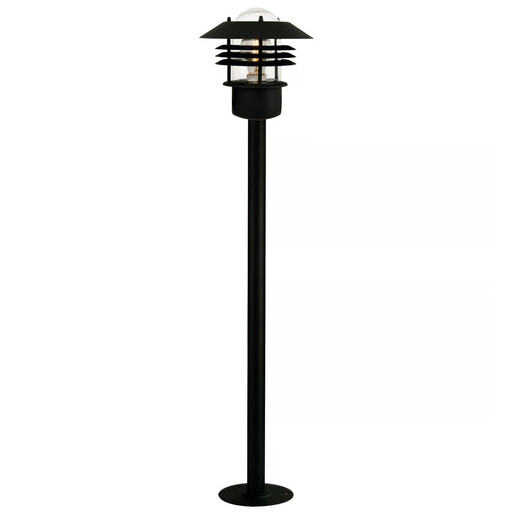
Why this choice suits this profile: At 92 cm tall and with a fixed design, it’s ideal for marking out a path, entrance or patio that needs permanent lighting.
Its IP54 rating is clearly stated, while the E27 socket lets you choose a separate bulb suited to the brightness level you need.
Metal and glass construction, dimmable with a compatible E27 bulb, and parallel connection built into the design.
We’ve put together a comprehensive, real-time updated selection of products that meet these demanding criteria, while complying with European safety regulations.
A solar or rechargeable light is usually the most practical solution for a patio without a power socket. For ambience, a solar lantern is often enough. For reading or lighting a meal, go for a rechargeable light with a clearly stated battery life and, if possible, several brightness levels.
A solar outdoor light doesn’t use any electricity while it’s running. However, its battery and some components may need replacing over time. Its performance depends mainly on sun exposure, how clean the panel is, and the season.
Clean the panels and diffusers, check the seals and avoid any submersion, even if a product is marketed as water-resistant. For a wall light or connected model that’s wired to the mains, switch off the power before any maintenance. When necessary, have the installation done by a qualified electrician.