
Livraison le jour même ou le lendemain

Qualité garantie

Débloquez vos offres de bienvenue: Livraison GRATUITE | Jusqu'à -80 % | 30 jours d'essai gratuits à JoyPlus
Téléchargez l'application
By Joybuy, Your Product ExpertPublished: August 27, 2026
The right lantern can transform a patio, garden, or balcony into a truly cosy and inviting space. The problem? The outdoor lantern market is saturated with marketing promises that often lead to disappointment. Between the solar lantern that dies after just an hour and the supposedly "waterproof" model that rusts at the first sign of rain, it's all too easy to make a purchase you'll regret.
Our mission is to help you navigate this landscape. Let's skip the technical jargon and focus on what really matters. Here are the most common pitfalls and, more importantly, how to avoid them to ensure you make a purchase you won't regret.
Before you fall for an attractive design, keep these three common issues in mind—they can render your lantern useless in just a few months.
To avoid these traps, focus on a few objective technical specifications. These are the true guarantees of quality and durability for your future outdoor lighting.
The Ingress Protection (IP) rating is an international standard that defines a device's level of resistance to solids (dust) and liquids (water). This is a non-negotiable criterion.
Whether solar or rechargeable, your lantern's performance depends directly on its power source.
Low-grade plastic can't withstand sun or frost: it becomes brittle and fades quickly. For better longevity, opt for robust materials:
To put theory into practice, here are a few models that meet specific needs while avoiding the pitfalls we've mentioned.
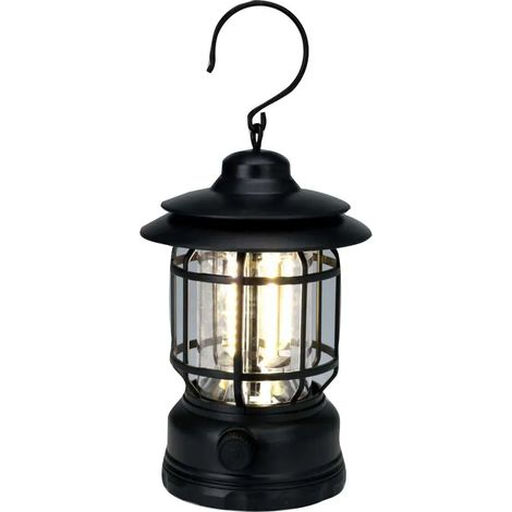
Why we chose it: Designed for mobility, this compact and lightweight lantern is the perfect ally for adventurers. It meets the need for reliable, easy-to-carry lighting, whether for camping or hiking.
It avoids the "false portability" trap with its clearly specified 1200 mAh battery, ensuring 2 to 3 hours of bright light. Its USB charging makes it completely independent of the sun's whims.
Its replaceable battery (18650 model) and universal USB charging give it great versatility and an extended lifespan.
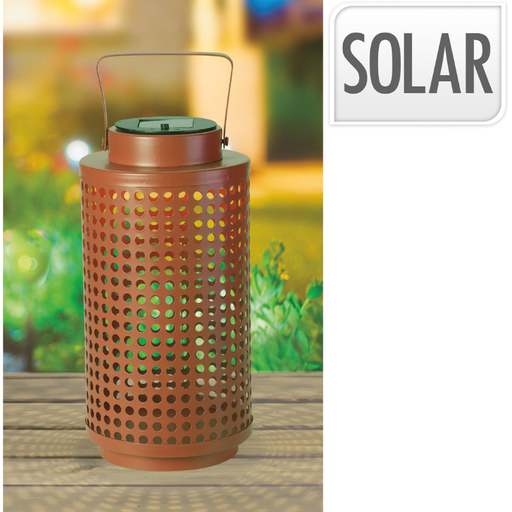
Why we chose it: Perfect for those looking to combine aesthetics and ambiance. This decorative lantern made of metal adds a touch of colour and style to a garden or patio, all without a single wire.
It avoids the "gimmicky solar lantern" trap with its sturdy metal construction, which is far more durable than simple plastic. Its stated runtime (up to 6 hours) is realistic for ambient lighting.
Its 100% solar and automatic operation (it turns on by itself at dusk) offers absolute ease of use: just set it and forget it.
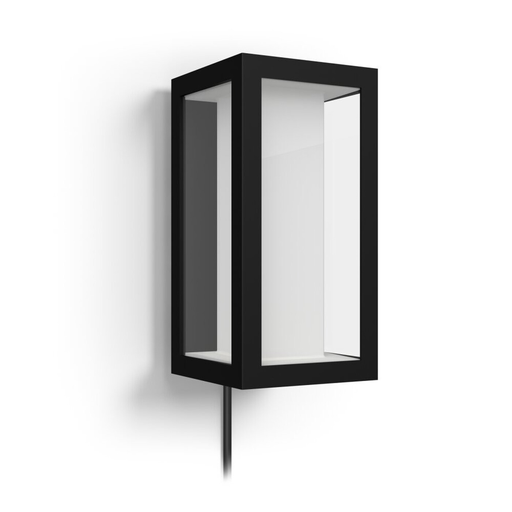
Why we chose it: The perfect option for integrating your outdoor lighting into a smart home ecosystem. This wall light offers complete control over colour and brightness, all managed from an app.
It avoids the "questionable waterproofing" trap by displaying a clear IP44 rating, perfectly suited for sheltered outdoor use. Coming from a reputable brand, its technical specifications are reliable and transparent.
Integration with the Philips Hue ecosystem opens the door to endless customisation (16 million colours) and the automation of lighting scenes.
We have curated a complete selection of products that meet our quality criteria and current safety standards.
1. What is the lifespan of a solar lantern? Its lifespan primarily depends on two components: the rechargeable battery and the solar panel. The LED itself has a very long life (often over 30,000 hours). The battery is the weakest link: it typically starts to degrade after 1 to 3 years (or 500 to 1,000 charge cycles). Choosing a model with a removable battery is therefore an excellent way to extend your lantern's life.
2. Is an IP44 rating sufficient for a garden lantern? An IP44 rating means the product is protected against water splashes. This is sufficient for installation in a location sheltered from driving rain: under a porch, on a covered balcony, or as a wall light under an eave. For areas fully exposed to the elements, it is safer to aim for a higher rating like IP54 or IP65.
3. LED vs. Candle Lantern: Which is better for ambiance? For safety and convenience, the LED lantern is the safest option, especially in the presence of children or pets. Many recent models do an excellent job of mimicking the flicker of a real flame. The traditional candle lantern retains an undeniable authentic charm, but it requires constant supervision for obvious safety reasons.