
Livraison le jour même ou le lendemain

Qualité garantie

Débloquez vos offres de bienvenue: Livraison GRATUITE | Jusqu'à -80 % | 30 jours d'essai gratuits à JoyPlus
Téléchargez l'application
An outdoor lamp can illuminate a path, create an atmosphere on a balcony, light up a garden table or accompany you when camping. But the differences between models can be considerable: solar power, rechargeable batteries, disposable batteries, mains connection, water resistance and compatibility with smart home systems.
Before placing your order, three common pitfalls are worth avoiding:
Brightness is measured in lumens. For decorative lighting in the garden, a few lumens may be enough. For a patio, table or camping activity, it is better to choose a higher light output and several brightness settings.
Colour temperature also affects the atmosphere:
An outdoor LED lamp is therefore not automatically suitable for every use. First ask yourself whether you are looking for ambient lighting, simple pathway illumination or a powerful enough light to be genuinely practical.
The IP rating consists of two digits. The first indicates the level of protection against solid objects and dust, while the second concerns resistance to water. A IP44 lamp, for example, is resistant to splashing water but must not be submerged. A IP54 model offers better protection against dust. As for the IP66 rating, it corresponds to a product designed for more exposed outdoor conditions, in accordance with the manufacturer’s guidance.
For a wall light, installation must comply with French electrical regulations. Where a mains connection is required, it is best to entrust the work to a professional. With a cordless portable lamp, remember to keep the charging port closed and avoid heavy rain and immersion, even if the casing displays a protection rating.
An outdoor solar lamp works without an electrical socket, but its performance depends directly on exposure to sunlight. A north-facing balcony, a dense tree or a wall that remains in the shade can reduce the daily charge. Remember to clean the panel regularly to prevent dust from reducing its efficiency.
A rechargeable camping lamp offers more predictable battery life, provided you plan ahead for charging time. In particular, check:
For a permanent installation, also consider maintenance and how accessible the lamp is. When travelling, weight and portability often become the top priorities.
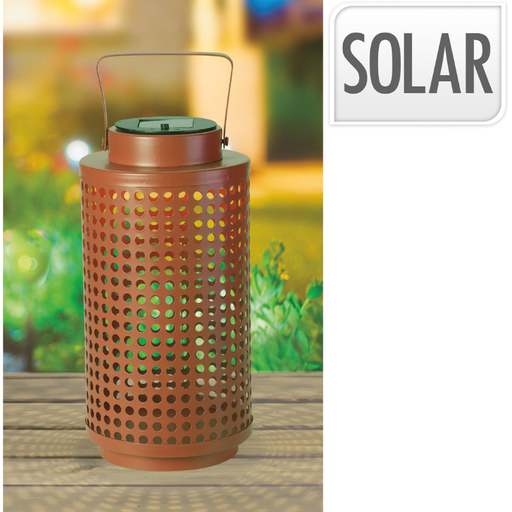
Why this choice suits this profile : This solar lantern is ideal for anyone who wants to set up lighting easily, without cables or a socket, on a patio, balcony or in a small garden.
Its integrated solar panel allows it to switch on automatically at dusk. However, it needs to be installed in a sunny location to receive enough charge.
Rechargeable AA Ni-MH battery, stated battery life of up to 6 hours and a metal design measuring 235 mm in height.
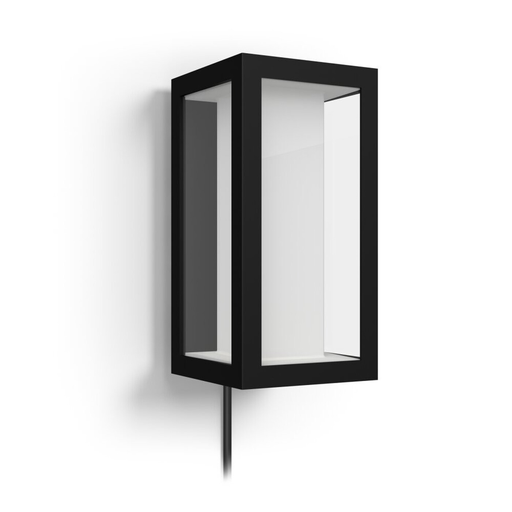
Why this choice suits this profile : This wall light is designed for users who want to integrate connected outdoor lighting into an existing Philips Hue ecosystem.
The product details specify that the Philips Hue Bridge is essential and sold separately. This helps you avoid ending up with an incomplete installation when it is time to fit the light.
IP44 rating, adjustable colour temperature from 2,000 to 6,500 K and a choice of up to 16 million colours through the Hue app.
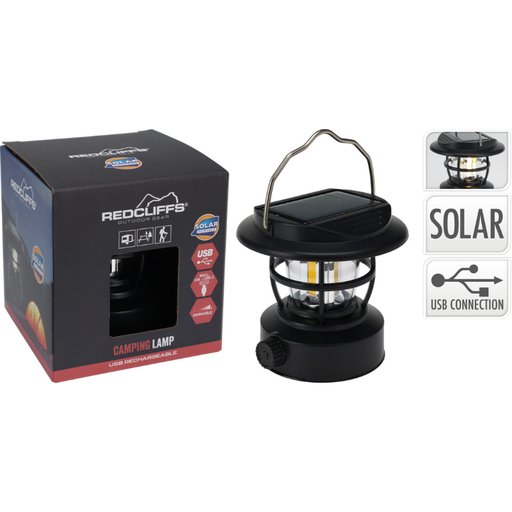
Why this choice suits this profile : Its handle makes it easy to carry when camping, in the garden or anywhere you need to move your light source with ease.
The product details clearly state a battery life of 2 to 3 hours and a charging time of 6 hours. They also specify that the 1,200 mAh 18650 battery can be replaced.
Polycrystalline solar panel, USB-C charging, three COB modules and a stated light output of 200 lumens.
We have brought together a complete, real-time updated selection of products that meet these demanding criteria, while also taking European safety regulations into account.
Yes, but its battery life may decrease as the days get shorter or when the panel receives less direct sunlight. Install it in an unobstructed location and clean its surface regularly. For essential lighting, a rechargeable lamp can provide a reliable alternative.
For a patio lamp exposed to splashing water, a rating such as IP44 may be suitable, provided you follow the manufacturer’s instructions. In an area particularly exposed to dust and bad weather, a higher rating, such as IP54 or IP66, offers a higher stated level of protection. However, none of these ratings allows the product to be submerged.
A solar lamp does not require an electrical connection to operate. However, you should take its purchase price, battery lifespan and any replacement costs into account. A decorative lamp fitted with a small panel will produce moderate light. For more consistent lighting, also compare rechargeable models and their charging times.