
Same-day & Next-day Delivery

Quality Guaranteed

Unlock Your Welcome Offers: FREE Delivery | Up to 80% OFF | Free 30-day JoyPlus trial
Download the APP
Outdoor garden lighting can transform a dark path, patio or balcony into a welcoming space as soon as night falls. But between promises of long battery life, sometimes misinterpreted water-resistance ratings and particularly flattering photos, some purchases can quickly disappoint after a few weeks.
Before choosing a solar garden light, an outdoor string light or a smart bollard light, take the time to consider the following criteria to avoid any nasty surprises.
A small 5-lumen solar light can create a pleasant atmosphere along a border, but it will not replace lighting designed to make a step or entrance safer. To move around, spot an obstacle or light a table, check the luminous flux, expressed in lumens.
Colour temperature also has a major impact on the appearance of the light. A temperature between 2,700 and 3,000 K generally creates a warm atmosphere, while a temperature close to 6,500 K produces whiter, brighter light.
The IP rating indicates the level of protection against solid objects and water. However, it does not mean that a light fitting can be submerged or exposed to heavy rain without precautions.
An IP44 rating is suitable for an outdoor installation sheltered from significant water splashes. An IP54 rating provides enhanced protection against dust. For a string light installed in an open garden, also check the protection provided for the battery box, solar panel and connectors.
Solar products must also be installed in an area that receives genuine exposure to sunlight. If placed beneath a dense tree or against a north-facing wall, a panel may recharge the battery much less efficiently day to day.
A solar LED string light or solar spotlight may appear easy to install, but its position directly affects how well it works. The panel must remain unobstructed, clean and correctly positioned. Battery-powered models require periodic battery replacement, while rechargeable lights must remain easily accessible so they can be connected to a USB socket.
For a low-voltage electrical installation, such as a Philips Hue smart lighting system, also plan the cable routing and follow the manufacturer’s instructions carefully. Depending on the layout of the site, it may be preferable to call in a professional.
To light a patio or border, compare the lumens, stated battery life and charging time. A brighter light generally uses more energy. With a solar model, battery life varies depending on the season, amount of sunlight and condition of the panel.
Rechargeable models are particularly practical when an area receives little sunlight. A rechargeable portable light can be moved as needed, while an outdoor light bollard stays in place and is better suited to permanent pathway marking.
Stainless steel, aluminium, plastic and bamboo offer different looks and maintenance requirements. Metal creates a more structured appearance, while bamboo blends naturally into a warmer outdoor setting. For a string light, check the flexibility of the cable and the sturdiness of the housings.
Never modify an outdoor light fitting or use the product in a way that goes against its instructions. For battery-powered devices, remove the batteries before prolonged storage to help reduce the risk of leakage.
Measure the area to be lit before placing your order. A 10-metre string light will not necessarily cover 10 metres of frontage, as part of its length may be taken up by the power cable. Along a path, space bollard lights evenly. On a patio, position the light sources to avoid direct glare.
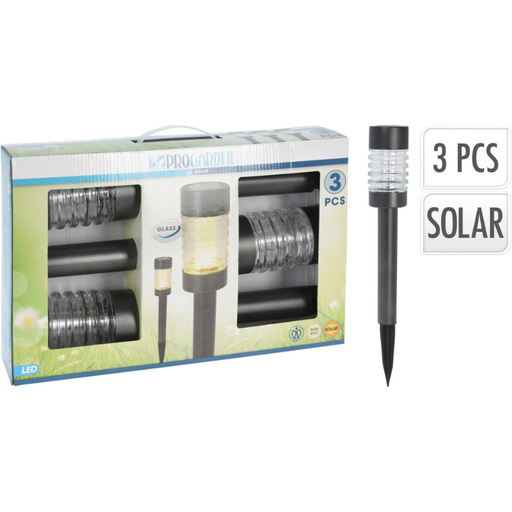
Why this choice suits this profile: This set of three solar lamps is easy to install along a path, border or entrance, with no electrical wiring required.
Its specifications clearly state a brightness of 5 lumens and a colour temperature between 2,700 and 3,000 K : you therefore know that it is primarily intended for decorative pathway marking, rather than as the main light source.
Anthracite stainless steel structure, glass diffuser, amorphous silicon solar cell and AA NiMH battery included.
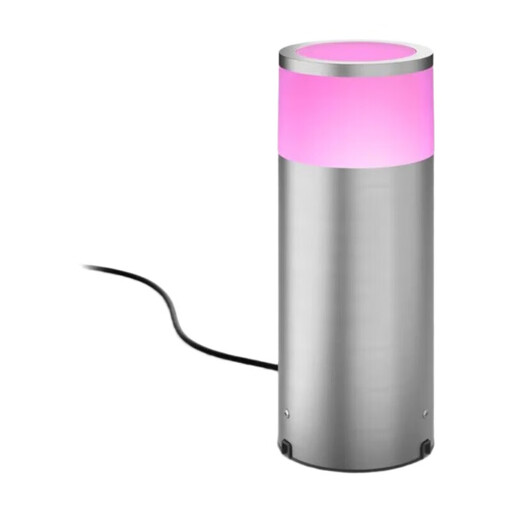
Why this choice suits this profile: This smart outdoor bollard light is aimed at households that want to programme and personalise the atmosphere in their garden or on their patio.
Connected operation explicitly requires a Philips Hue Bridge and a low-voltage power supply : these requirements should be taken into account before buying.
Adjustable colours and shades of white, control via the app, voice assistants or Hue accessories, with low-voltage power supply included.
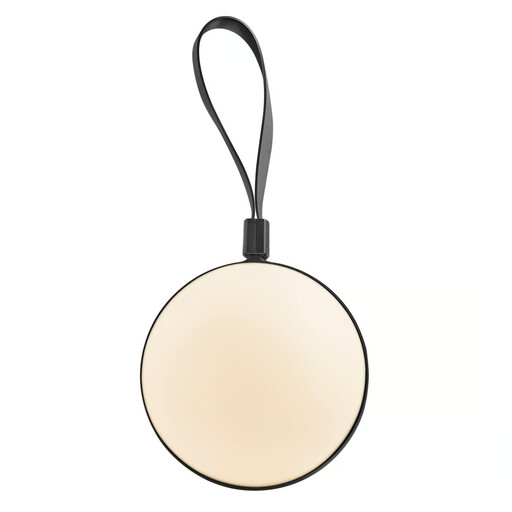
Why this choice suits this profile: Its handle makes it easy to move the lamp from the patio to the balcony, garden or table during the evening.
The stated battery life depends on the selected brightness level: around 8 hours at 70 lumens and up to 24 hours at 20 lumens. The USB-C port must be protected from moisture while charging.
Two brightness levels accessible at the touch of a button, rechargeable lithium-ion battery, recycled plastic materials and stated IP54 rating.
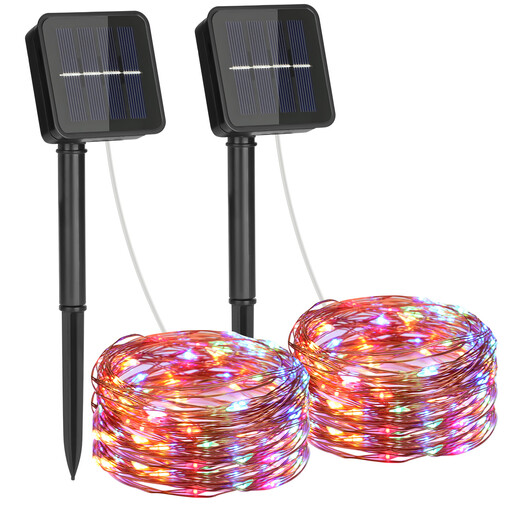
Why this choice suits this profile: This set of two 26-foot string lights, approximately 7.9 metres each, is suitable for trees, balconies, pergolas and party decorations.
The length, number of LEDs and eight modes are listed separately. However, each solar panel must be placed in direct sunlight, while the connectors should be kept away from flammable materials.
80 coloured LEDs per string, eight modes with memory function, solar power and IP65 rating stated in the product details.
We have brought together a complete, real-time selection of products that meet these exacting criteria while complying with European safety regulations.
For a path, it is better to opt for regular pathway marking than a very powerful light source. Low-brightness bollard lights or solar lamps can indicate the route without causing glare. If the path has steps, add a more powerful light fitting positioned to provide indirect illumination.
A solar lamp uses the energy stored during the day and generally requires no permanent connection. However, its efficiency depends on the amount of sunlight, how clean the panel is and the condition of the battery. A battery-powered string light requires regular battery replacement, while a rechargeable lamp can be charged using a compatible USB power source.
It depends on the IP rating, the protection provided for the power-supply housing and the manufacturer’s instructions. An outdoor string light should be installed where there is no risk of immersion, away from flames and with the connectors properly protected. If you will not be using it for an extended period, remove the batteries or store it in a dry place.