
Same-day & Next-day Delivery

Quality Guaranteed

Unlock Your Welcome Offers: FREE Delivery | Up to 80% OFF | Free 30-day JoyPlus trial
Download the APP
Choosing an outdoor flower pot? It seems simple enough. But in reality, common pitfalls are everywhere. That impulse buy at the store often leads to disappointment: colours that fade in the sun, cracks that appear after the first frost, or a watering system that drowns your plants. To avoid buyer's remorse and select a planter that will truly enhance your balcony, patio, or garden, it's best to know the classic mistakes to avoid.
The two most common mistakes? Trusting vague claims like "weather-resistant" without checking the material, and prioritising design over practicality—especially when it comes to drainage. A poorly designed pot can not only compromise the health of your plants but also degrade at an alarming rate, forcing you into a costly and premature replacement.
Before you buy, consider a few technical points that make all the difference between a short-lived gimmick and a long-term investment.
Behind the generic term "plastic flower pot" lie huge disparities. Low-end plastics, often thin and brittle, handle freeze/thaw cycles poorly, and their colours fade or dull under the assault of UV rays.
For complete peace of mind, opt for high-quality polypropylene (PP) or polyethylene (PE) pots. These materials are treated to ensure true frost and UV resistance, making them an inherently frost and UV-resistant pot. Some models, like double-walled planters, even offer superior thermal insulation. They protect the roots from temperature shocks—a major advantage for more sensitive plants.
Poor drainage is the number one reason potted plants fail. Water that stagnates at the bottom of the container suffocates the roots, promoting rot and disease. A good outdoor flower pot must therefore offer an effective drainage solution.
Check for pre-drilled drainage holes or, at the very least, pre-marked areas for you to drill yourself. For even more convenience, a self-watering planter is an excellent choice. A well-designed system consists of a grid that separates the soil from the reservoir and an overflow to drain excess rainwater. Some models even include a removable plug, allowing you to easily switch from indoor use (no drainage) to outdoor use.
The volume of your pot should be proportional to the plant's mature size, as well as the space you have available. A tall planter or a large designer flower pot, for example, can be used to define a dining area on a patio. A modern planter in an anthracite grey colour adds a contemporary and understated touch.
On a balcony, a stable, rectangular balcony planter is often a smarter choice than a large round pot, which is bulkier and potentially unstable in the wind. Always consider the final weight once the pot is filled with damp soil—it can be surprisingly heavy!
To help you make an informed decision, here are a few models that meet specific needs and avoid the common pitfalls.
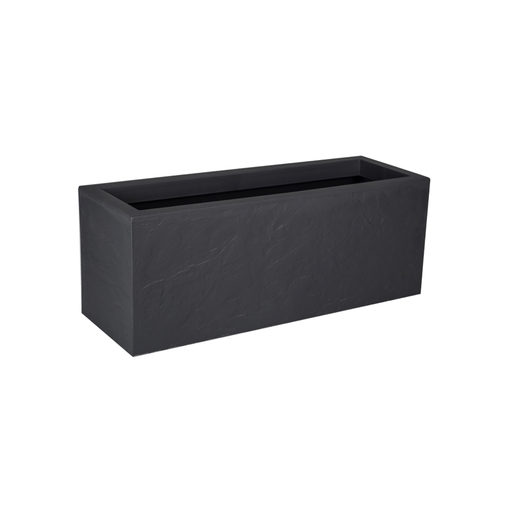
Why we chose it: Its rectangular shape and compact size (59 cm) are perfectly designed to optimise space on a balcony or windowsill, without sacrificing planting volume (25 L).
Its integrated water retention system (with pre-drilled overflow) simplifies watering and prevents root rot, a common problem in balcony planters that are often overwatered.
Made in France (Origine France Garantie certified), it is UV-treated and frost-resistant, ensuring excellent long-term durability. Its stone-effect design is a real aesthetic bonus.
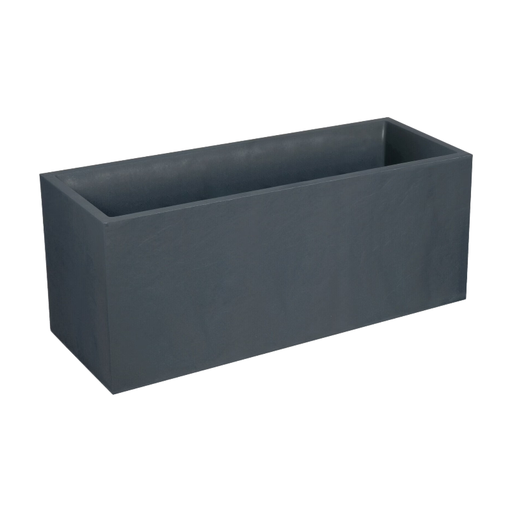
Why we chose it: With its generous 98-litre volume and nearly one-metre length, this patio planter is perfect for creating a green divider, housing a shrub, or crafting a large-scale floral arrangement.
Its double wall is not just an aesthetic gimmick: it provides far better thermal insulation for the roots and increased stability, reducing the risk of frost cracks and tipping over in the wind.
The combination of a large volume, robust construction, and a stone-effect anthracite grey design makes it a true structural element for a contemporary outdoor layout.
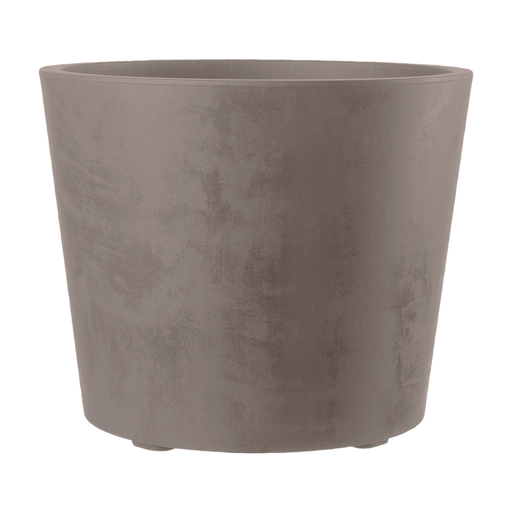
Why we chose it: This large 59 cm pot is ideal for those seeking a product that is durable, practical, and environmentally friendly. It is suitable for large plants and can be moved effortlessly.
Made from recycled and recyclable materials, it ensures excellent frost and UV resistance, preventing premature degradation. Its removable plug offers complete control over drainage.
The integrated wheels are the key feature of a pot this size. They allow you to move it effortlessly for cleaning, repositioning it for sunlight, or sheltering it for the winter.
We have curated a complete selection of products that meet our strict criteria for durability and performance.
If your pot is certified frost-resistant, it can theoretically stay outside. However, be careful: it's often the freezing of waterlogged soil that exerts fatal pressure and can cause it to crack. To minimise risks, ensure drainage is optimal and don't place the pot directly on the ground (use shims or pot feet). For the most sensitive plants, a surface mulch and a winter fleece cover are essential.
A single-walled pot, as its name suggests, is made of a single layer of material. A double-walled pot has an inner and an outer wall, creating an air gap between them. This gap acts as a thermal insulator, protecting the roots from both intense summer heat and winter cold. This design also makes the pot more robust and stable.
A self-watering planter is extremely practical for many plants, as it provides a constant supply of moisture and allows you to water less frequently. It's a valuable ally on a very sunny balcony. However, it is not recommended for plants that dislike stagnant moisture, such as succulents, cacti, or certain Mediterranean plants (lavender, rosemary...). For these, a classic terracotta pot with impeccable drainage remains the safest option.