
Livraison le jour même ou le lendemain

Qualité garantie

Débloquez vos offres de bienvenue: Livraison GRATUITE | Jusqu'à -80 % | 30 jours d'essai gratuits à JoyPlus
Téléchargez l'application
Whether you want to elevate your patio furniture, insulate yourself from the cold ground during a picnic, or simply add a bit of comfort to your hike, an outdoor cushion seems like a straightforward accessory. However, the market is flooded with products making enticing promises that often don't stand up to daily use. Make the wrong choice, and you're stuck with instant buyer's remorse.
I'm the Head of Product Curation at Joybuy, and my mission is to help you see things more clearly. Let's break down the common pitfalls and essential criteria together to make a smart choice that's perfectly suited to your needs.
Before you even start comparing models, it's crucial to recognise the traps that can turn a good idea into a purchase you'll regret.
To avoid falling into these traps, a few objective characteristics are all you need to sort the good from the bad. These are the true guarantors of your outdoor cushion's quality and durability.
The choice of cover material is paramount. It determines the cushion's resistance to water, stains, and sun.
The core of the cushion is its filling. This is what provides comfort and insulation.
For on-the-go use, every gram and every centimetre counts.
To put these criteria into practice, here are three products that cater to very different user profiles.
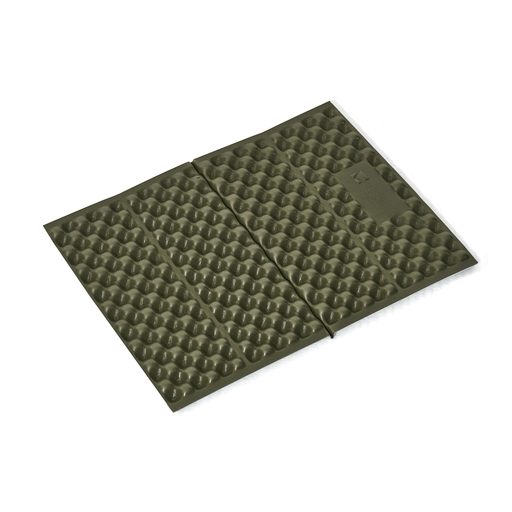
Why we chose it: For hikers, anglers, or picnickers looking for an ultra-light and clever solution to insulate themselves from the ground without being weighed down.
It sidesteps the trap of being mismatched for its use. Its XPE foam is designed for insulation and lightness (around 45g), not for living room comfort. It doesn't flatten and isn't afraid of moisture.
Its strong suit: impressive thermal insulation against cold and damp ground, combined with extreme portability thanks to its feather-light weight and foldable design.
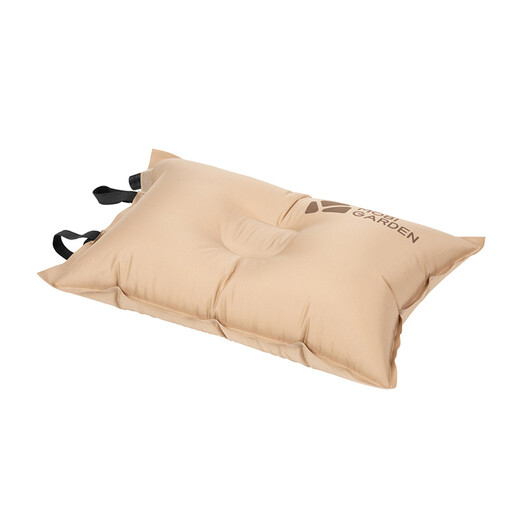
Why we chose it: Ideal for camping, long journeys, or even a nap at the office. It offers tailored support for your neck or lower back while remaining ultra-compact when packed away.
It tackles the pitfalls of short-lived comfort and bulkiness. The firmness is adjustable with every breath, and its one-way valve prevents air leaks—the weak point of low-end inflatable products.
Comfort is customisable thanks to inflation, and it offers maximum compactness for transport. Its 210T polyester fabric is both durable and easy to clean.
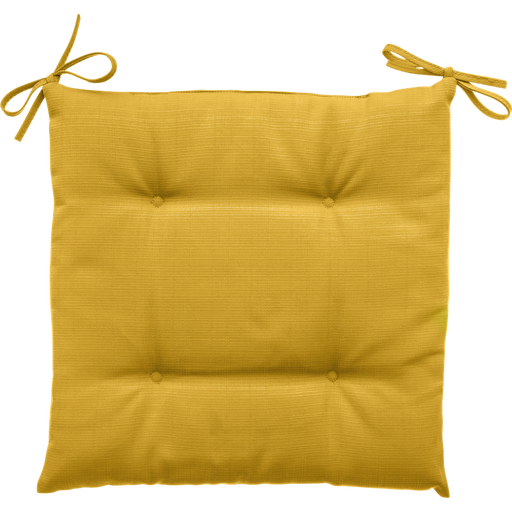
Why we chose it: Perfect for anyone wanting to add a touch of colour and comfort to their terrace, balcony, or summer dining area with a stylish and coordinated solution.
This product plays it straight: it's designed for furnishing, not for extreme conditions. It thus avoids the trap of false promises by focusing entirely on comfort and style for everyday use.
The main benefit: a turnkey solution that is both practical and stylish. The set of four matching pads allows you to harmonise a space's decor in an instant, whether indoors or out.
For more specific needs, like furnishing a poolside area, we've prepared a selection of products that meet demanding criteria for water and UV resistance.
1. How do I clean and maintain an outdoor cushion to maximise its lifespan? Most technical cushions are not machine washable. For a surface stain, a damp cloth and a little mild soap are sufficient. Let it dry completely before storing it in a dry, ventilated area to prevent any mould. As for garden cushions, remember to bring them inside or cover them in case of heavy rain—it's the best way to extend their life.
2. What's the difference between a water-repellent and a waterproof cushion? A water-repellent fabric has undergone a treatment that causes water to bead on the surface. It will withstand a light drizzle, but not submersion or a sustained downpour. Conversely, a waterproof fabric (often featuring a membrane or coating) completely blocks water penetration, even in heavy rain. For unsheltered outdoor use, waterproof is a much safer criterion.
3. Can a hiking cushion be used on a garden chair? Yes, but it's not ideal. A hiking cushion is primarily designed to be lightweight and insulating; its comfort is therefore minimal on a hard surface like a chair. In contrast, an outdoor chair pad will be much plusher but far too heavy and bulky for a hike. It all depends on your priority: versatility or comfort dedicated to a specific activity.