
Livraison le jour même ou le lendemain

Qualité garantie

Débloquez vos offres de bienvenue: Livraison GRATUITE | Jusqu'à -80 % | 30 jours d'essai gratuits à JoyPlus
Téléchargez l'application
The promise is alluring: a touch of colour and nature on a balcony, terrace, or in a garden, without the hassle of watering and maintenance. But be warned—the artificial flower market is a minefield where the best products coexist with the worst. One wrong choice, and your aesthetic investment can turn into a costly disappointment. To avoid falling into this trap, here are the three most common pitfalls that await uninformed buyers.
For a successful purchase, photos aren't enough. The key is to understand a few technical criteria to find realistic faux flowers that will stand the test of time.
Forget the marketing jargon and focus on what really matters. Here are the three points to inspect closely before you buy.
The quality of an artificial flower is primarily determined by its materials. Low-end models, often made of 100% plastic, sorely lack realism. The best options, however, cleverly combine materials:
A high-end artificial flower bouquet often combines silk petals with treated plastic stems and leaves for the perfect balance of aesthetics and robustness.
This is THE non-negotiable criterion for outdoor artificial flowers. Don't settle for a vague "sun-resistant" claim. Insist on UV-resistant plants with a "solution-dyed" treatment.
In practical terms, this means that colour pigments and protective agents are mixed into the core of the material (plastic or fabric) during manufacturing, not just sprayed on the surface. This is the only technique that guarantees excellent colour fastness against prolonged sun exposure, preventing fading for several seasons.
The final look of your composition will largely depend on the design of each flower.
To move from theory to practice, here are a few concrete examples suited for different uses.
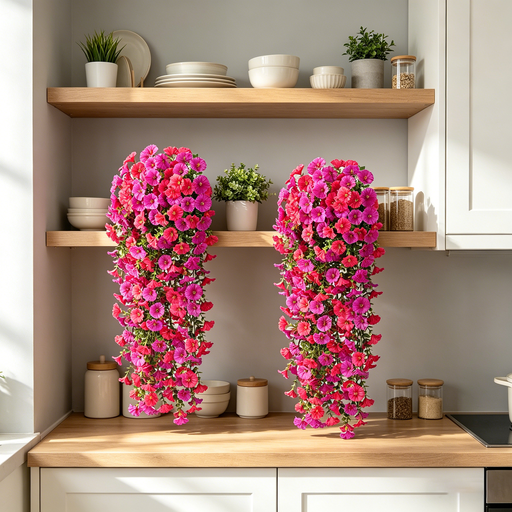
Why this choice: Perfect for quickly and stylishly filling planters or hanging baskets. The trailing format and dense foliage create an immediate colourful cascade effect, with zero gardening effort required.
The materials are advertised as fade-resistant, an essential criterion for outdoor use. With 4 bouquets and nearly 128 flowers in total, you can say goodbye to a sparse, unconvincing look.
The set is designed to offer generous volume, enough to fill a large planter or hanging basket with a single purchase.
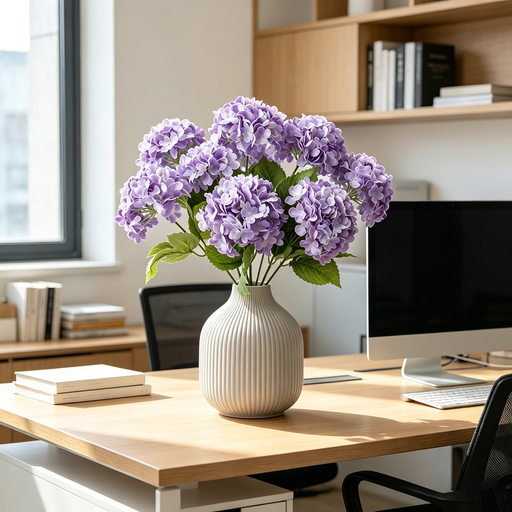
Why this choice: A classic and elegant flower, the hydrangea is a perfect choice for artificial flowers for cemeteries. This compact bouquet is easy to place in a memorial vase and offers a dignified, respectful presence that endures over time.
The use of silk for the petals ensures a delicate and realistic look, far from the cheap "plastic" effect. The flexible stem allows you to adjust the height for a perfect fit in the container.
Thanks to its 7 heads, a single bouquet is enough for a dense, simple, and effective maintenance-free floral arrangement.
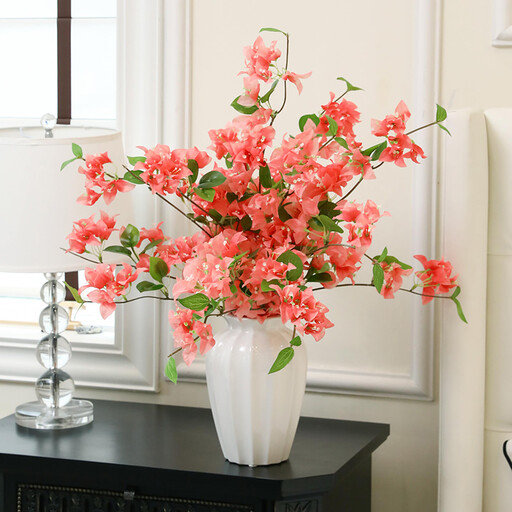
Why this choice: For those who love to create their own arrangements, decorate an event, or craft a wreath. The long, fully flexible stems offer maximum creative freedom.
Its internal wire structure is a guarantee of sturdiness, avoiding the pitfall of fragility. The stems can be twisted and shaped at will without risk of breaking, unlike low-end models.
The long length (76 cm) and total flexibility of the stems make it a highly versatile product, suitable for large vases as well as for creating garlands or wall decor.
We have compiled a complete selection of products that meet our criteria for quality and durability.
Maintenance is virtually non-existent. To remove dust and pollen, a simple dusting with a feather duster or a blast of cool air (from a hairdryer) is sufficient. If they get dirty, wipe them with a damp cloth or give them a gentle rinse with clean water. Just avoid harsh detergents that could damage the UV-resistant treatment.
It all depends on the quality of the treatment and the intensity of sun exposure. High-quality artificial plants for balconies, with a solution-dyed UV treatment, will retain their colours for several years. Conversely, low-end models can start to fade in the first summer.
It's not a good idea. Artificial flowers designed for indoor use are generally not treated to withstand UV rays, moisture, or temperature fluctuations. When exposed to the elements, they will fade very quickly, and their materials are likely to degrade (mould on fabric, plastic becoming brittle). For outdoor use, it is therefore imperative to choose products specifically designed for that purpose.