
Livraison le jour même ou le lendemain

Qualité garantie

Débloquez vos offres de bienvenue: Livraison GRATUITE | Jusqu'à -80 % | 30 jours d'essai gratuits à JoyPlus
Téléchargez l'application
Truly restorative sleep is a luxury, especially when back pain enters the picture. The market for so-called "orthopaedic" mattresses promises dream-like nights, but it's easy to get lost in marketing jargon that often conceals poor design. Before you pull out your credit card, it's essential to know the pitfalls to avoid to make a choice that will genuinely relieve your back and improve your comfort.
As a bedding expert for this publication, my mission is to help you see more clearly by providing objective criteria. Here are the two most common mistakes to avoid and the key points to check when choosing bedding for back pain that lives up to its promises.
The "hard mattress = good for your back" myth: We often hear that a very firm mattress is the miracle solution for back pain. This is a stubborn, and often false, misconception. A mattress that's too firm for your body type or sleeping position will, on the contrary, create painful pressure points on your hips and shoulders, worsening the problem instead of solving it. The ideal firmness is personal: it depends on your build and your sleeping habits.
The "orthopaedic" label: a marketing term: The term "orthopaedic" is not regulated by any legal standard. Any manufacturer can therefore apply it to their product, even if it offers no particular benefit. The true value of a mattress isn't found on its label, but in its technical specifications: zoned support, pressure relief capabilities, quality of materials, and more.
To make the right choice, forget the marketing and focus on concrete features that meet your needs.
This is the most important technical criterion. A 7-zone mattress is designed to adapt intelligently to your body. It offers reinforced support for the lumbar region (where weight is most concentrated) and more softness for the shoulders and pelvis to allow them to sink in slightly. This ergonomic design helps keep the spine perfectly straight, regardless of your sleeping position, and significantly reduces tension.
The composition of your mattress directly impacts your comfort, its longevity, and the quality of your sleep.
Rather than offering a one-size-fits-all solution, we have identified products that meet specific needs, based on the objective criteria mentioned above.
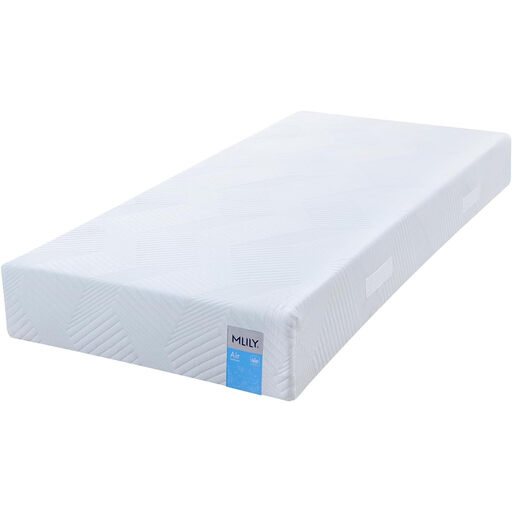
Why we recommend it: This mattress is a practical solution for those who want to put an end to night sweats. Its structure combines several technical foams to ensure optimal ventilation.
It doesn't just promise coolness; it delivers it with a gel-infused Cool-Flex foam and an ultra-breathable cover. The result: active temperature management that prevents the oven-like effect typical of low-end memory foams.
It checks all the boxes: ergonomic 7-zone support, effective thermal regulation, and the safety of Oeko-Tex and CertiPUR labels.
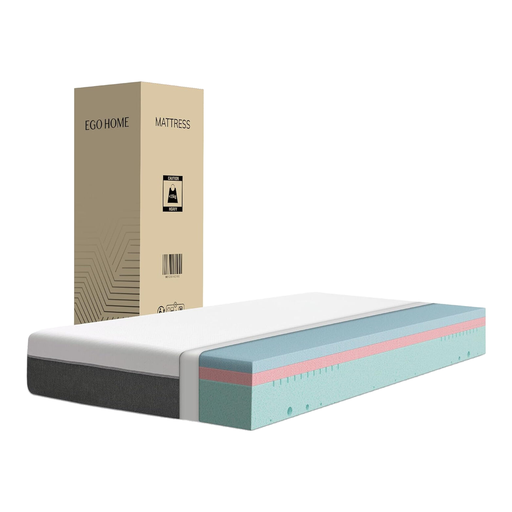
Why we recommend it: Perfect for those who demand targeted support for perfect spinal alignment. Its design is entirely focused on pressure distribution and ergonomics.
It goes far beyond a simple "orthopaedic" label. It proves its effectiveness with a 7-zone support system and a three-layer foam structure, offering a perfect balance between cradling comfort and firm support.
Its H3 (firm) firmness, combined with the cold foam and 7 zones, ensures stable yet never rigid support. Ideal for those seeking uncompromising back support.
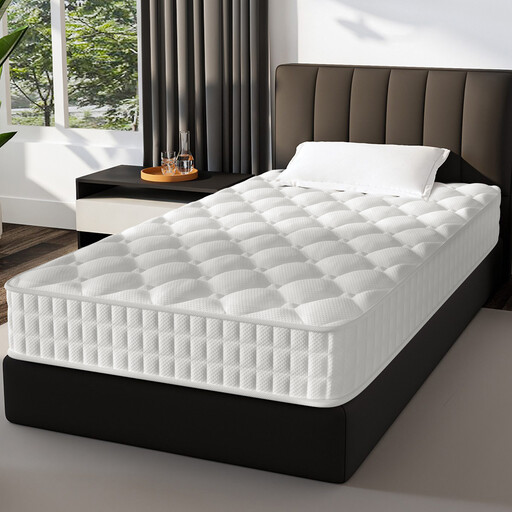
Why we recommend it: It combines spring technology with a 7-zone design, with a special focus on healthy materials. It's a safe and versatile option for adults and children alike.
Instead of settling for a vague "hypoallergenic" claim, it relies on materials that naturally limit the growth of bacteria and mould. Its high breathability ensures a healthier sleep environment.
Motion isolation. Its pocketed springs absorb each person's movements, ensuring peaceful sleep even if your partner tosses and turns. A real bonus for couples.
Explore our full selection of mattresses that meet our criteria for quality, support, and durability.
A quality mattress is an investment designed to last between 8 and 10 years. Of course, this depends on the materials (high-density foams and quality springs are more durable), your body type, and how you care for it. A good habit: remember to rotate it head-to-toe every six months (if the model allows) to distribute wear and maximise its longevity.
No, and this is the most common mistake! The ideal firmness is unique to each person: it depends on your body type and your favourite sleeping position. A mattress that is too hard for you will create pressure points and misalign your spine. For most people, a medium-firm support combined with good zoning is the best compromise between support and comfort.
Absolutely, its role is crucial! For a foam mattress (memory foam or other types), a slatted base with closely spaced slats (less than 7 cm apart) is essential. It ensures even support and optimal ventilation, two critical conditions for preserving the mattress's performance and preventing it from sagging prematurely. A worn-out or unsuitable bed base can ruin the benefits of your new mattress.