
Livraison le jour même ou le lendemain

Qualité garantie

Débloquez vos offres de bienvenue: Livraison GRATUITE | Jusqu'à -80 % | 30 jours d'essai gratuits à JoyPlus
Téléchargez l'application
Good sleep is the cornerstone of a healthy life. But when back pain enters the picture, each night can turn into a nightmare. Far from being a luxury, a suitable orthopaedic mattress is a true investment in your health—the promise of pain-free mornings and energy-filled days. Faced with an overwhelming number of options and often obscure technical jargon, it's easy to feel lost.
At Joybuy, our mission is to demystify the world of bedding for you. This guide is designed to give you the keys to understanding the essential features of a good mattress and finding the one that precisely meets your needs, all without the unnecessary marketing jargon.
To make the right choice, let's review the fundamental criteria to consider before diving into our selection.
The core technology of the mattress is crucial for comfort and support. Three main types dominate the market?:
Beware of common misconceptions?: a firm mattress isn't necessarily the cure-all for back pain. The goal is to get proper support, not a wooden plank. A mattress that's too hard creates painful pressure points, while one that's too soft lets the spine sag.
7-zone support is a major innovation. The mattress is designed with different firmness levels for each part of the body (head, shoulders, lumbar, pelvis, etc.). Typically, the shoulder zone will be softer to avoid creating tension when sleeping on your side, while the lumbar zone will be reinforced for optimal support.
Restorative sleep is uninterrupted sleep. Temperature regulation is therefore essential. A breathable mattress promotes air circulation and wicks away moisture, preventing you from waking up sweaty during the night. Open-cell foam, cooling gel, technical fibre covers (Tencel, Coolmax)... these technologies are your best allies for staying cool all night long.
After analysing technical specifications and customer reviews, we have selected models for you that excel in comfort and support.
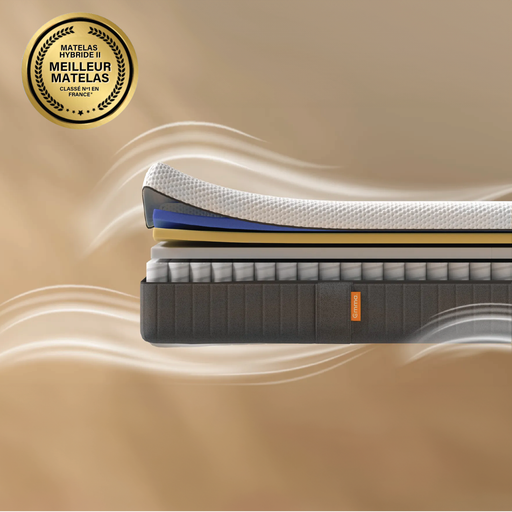
Key Features: The Emma Original+ is a hybrid mattress that skilfully combines memory foam and pocket springs. It features "Edge-to-Edge" spring technology, ensuring uniform support across the entire surface, even at the edges. Its thermoregulating cover is a real bonus for sleepers who tend to get hot.
Highlights:
Who is it for?: Perfect for those seeking versatility and comfort suitable for all sleeping positions. It's an excellent option for couples, thanks to its very good motion isolation. This model is available in the standard 140x190 cm mattress size.
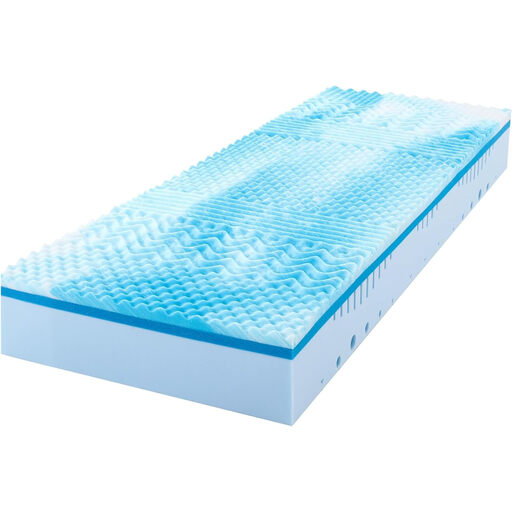
Key Features: The MLILY PRO focuses on high-precision support with its 7-zone support foam structure. It layers three technical foams (Aircell, CoolFlex, Responsive Support) designed for airflow and durability. Its unique feature?? A cover infused with avocado oil which, according to the brand, offers antimicrobial and moisturising properties.
Highlights:
Who is it for?: Recommended for sleepers seeking surgical-precision support to relieve pressure points. Its design is ideal for people with back or joint pain, who will fully benefit from its zoned support.
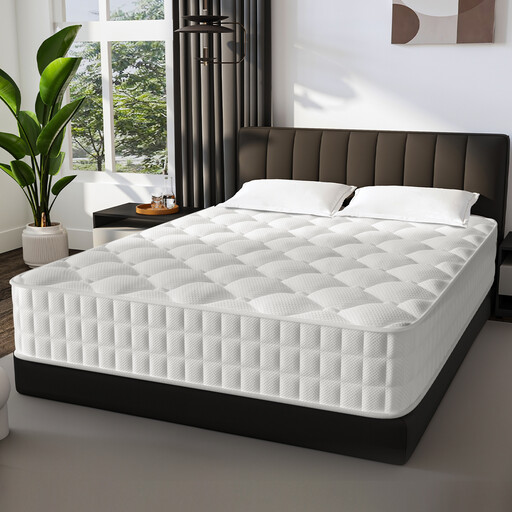
Key Features: This GTIMEX orthopaedic mattress plays the durability card with a spring structure proven for its longevity. It also adopts an ergonomic 7-zone design to contour to the body's lines. Its complex 10-layer architecture, including viscoelastic foam, promises peaceful sleep by absorbing noise and motion vibrations.
Highlights:
Who is it for?: An option to consider for those who trust the longevity of springs but don't want to give up the benefits of zoned support. It is suitable for sleepers of all body types and in all positions, including the most restless ones.
The models in our selection are designed for everyday sleeping. Are your needs different?? Are you looking for a comfortable guest bed or a portable solution that's easy to store?? Other options are available to you.
For a practical and comfortable spare bed, take a look at our selection of roll-up memory foam floor mattresses.
Contrary to a persistent myth, a "very firm" mattress is not the magic solution. The ideal choice depends on your body type (weight, height) and your favourite sleeping position. A balanced support, often described as "medium-firm", is generally the most recommended?: it keeps the spine straight without creating painful pressure points on the hips or shoulders.
A memory foam mattress refers to a specific technology (viscoelastic foam). An orthopaedic mattress is a broader category?: it's a mattress designed to provide optimal ergonomic support for the spine. An orthopaedic mattress can therefore use memory foam, but also springs, latex, or a combination of these technologies (hybrid), most often with a zoned comfort structure.
Allow for an adjustment period of two to four weeks. Your body, even if it was used to your old, unsupportive mattress, needs time to adjust to this new support. Also, remember that mattresses delivered compressed and rolled need 24 to 72 hours to regain their original shape and display their full comfort potential.