
Livraison le jour même ou le lendemain

Qualité garantie

Débloquez vos offres de bienvenue: Livraison GRATUITE | Jusqu'à -80 % | 30 jours d'essai gratuits à JoyPlus
Téléchargez l'application
Finding the right organizer bag is the first step toward finally bringing order to a chaotic daily routine. Yet, the market is saturated with models that make tempting promises but often prove disappointing in practice. A bag that's too large but poorly designed, a supposedly "durable" material that frays after a few months, or a zipper that breaks at the worst possible moment—these letdowns are surprisingly easy to avoid.
As the Head of Product Curation at Joybuy, my mission is to help you decode spec sheets and focus on what really matters. This guide focuses on the three most common pitfalls and gives you the keys to choosing a model that meets your needs, whether it's a carry bag for daily use, a multi-pocket bag for your hobbies, or a rugged tool bag for the job site.
Large volume doesn't automatically mean good organization. Too many bags simply offer one large main compartment where everything gets jumbled together, making your belongings impossible to find. True efficiency lies in a smart layout. A well-designed storage bag, even one that appears more compact, will hold far more items in an orderly fashion than a large, catch-all tote.
"Durable" is a marketing claim often used without concrete proof. However, a bag that goes everywhere with you must be able to withstand abrasion, tears, and the elements. Beware of vague descriptions and look for tangible quality indicators: the type of fabric (e.g., a high-denier polyester), the presence of reinforced stitching, or a rigid base.
A bag is like a chain: it's only as strong as its weakest link. And for a bag, those weak links are often the zippers, buckles, and seams. A high-tech fabric is useless if the zipper gets stuck or a strap gives out in the middle of the street. The presence of brand-name components (like YKK zippers) or double-stitched seams are tell-tale signs of quality.
To avoid falling into these traps, focus on these few technical and objective points.
Your bag's lifespan directly depends on its material. For heavy-duty use, like that of a tool bag, opt for synthetic fabrics known for their toughness.
Organization is the whole point of this type of bag. Analyze the pocket layout based on what you plan to carry.
A bag should remain practical to carry, even when packed to the brim. Be sure to check the quality of the straps and handles. An adjustable, padded shoulder strap is a must-have for a heavy carry bag. Some models offer multiple carrying options (shoulder, hand, waist), allowing them to adapt to different activities.
Here are a few models that cater to specific user profiles, selected based on the quality and functionality criteria we've just covered.
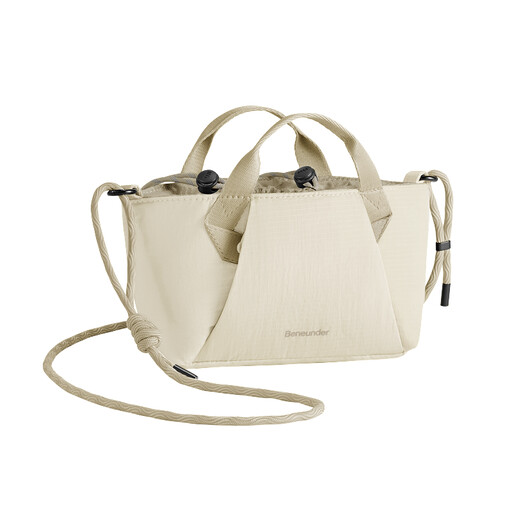
Ideal for: daily commutes where light weight is key. It lets you carry the essentials (phone, wallet, keys) without being weighed down, while also expanding to accommodate an unplanned purchase or a small umbrella.
It avoids the one-size-fits-all trap with a clever expansion system that triples its capacity (from 1.2L to 3.6L). Its high-tenacity nylon material is a specific technical feature, far more telling than a vague "durability" claim.
Its feather-light weight of 98 grams and expandable volume make it ultra-versatile for urban use. Its fabric also features a water-repellent and stain-resistant treatment.
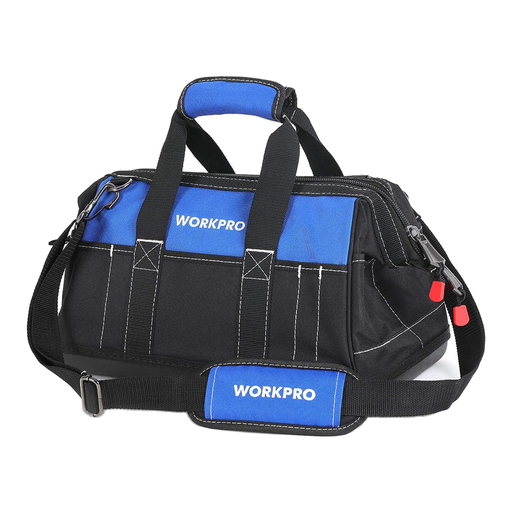
Ideal for: demanding professionals and DIY enthusiasts who need to transport heavy tools while keeping them organized and accessible, both on the job site and at home.
Its durability isn't just an empty promise: 600D polyester fabric and a rigid, waterproof base are proof. The organization is meticulously designed with 13 exterior and 8 interior pockets, preventing the chaos of a large, catch-all compartment.
Its wide mouth opening, held open by a metal frame, and its waterproof base protect tools while making accessing and organizing them incredibly easy, even for the bulkiest items.
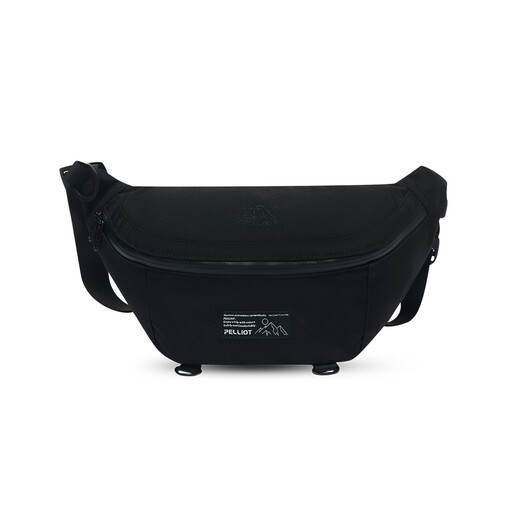
Ideal for: those looking for a single bag for multiple uses: city outings, sports, light travel, and more. Its capacity is sufficient for daily essentials, including a small tablet.
It avoids the trap of cheap finishes by focusing on details that inspire confidence, like YKK zippers and brand-name buckles. Its versatility isn't a gimmick: its adjustable strap allows for 4 distinct, practical carrying styles.
Its 4-in-1 design (chest bag, crossbody bag, handbag, waist pack) gives it maximum flexibility. The fabric is both abrasion-resistant and water-repellent.
We've curated a full range of products that meet our strict selection criteria and quality standards.
Most bags made from technical fabrics like polyester or nylon should not be machine-washed, as this can damage waterproof coatings and the bag's structure. Opt for spot cleaning with a damp cloth and mild soap. For stubborn stains, follow the manufacturer's instructions. Always let it air-dry, away from direct heat sources.
Denier is a unit that measures the mass and density of a fabric's fibers. The higher the denier count, the thicker the thread, and therefore the more durable the fabric. A 600D polyester fabric is an excellent benchmark for backpacks and tool bags, offering a perfect balance between durability and weight. A 720D fabric will be even tougher, ideal for very heavy-duty use.
It all depends on your needs. For carrying a laptop, A4 documents, and a change of clothes, a backpack is often still the best solution. However, for lighter commutes with just a tablet, a book, and your personal belongings, a well-designed crossbody bag or organizer bag will be a more comfortable, less bulky, and equally effective alternative.