For a fuss-free savoury brunch
If you’d like to keep a pack of dried pasta for the weekend, choose a shape that suits your recipe, then check the ingredients and allergens for the specific product you’ve picked.


For an easy-to-prepare savoury brunch, organic dried pasta lets you plan ahead without needing to keep it chilled. Choose a wholemeal version if its ingredients and texture suit your preferences, or fresh pasta if you can keep it chilled. In every case, check the certification on the pack, along with the ingredients and allergens: ‘organic’ doesn’t mean ‘gluten-free’.
If you’d like to keep a pack of dried pasta for the weekend, choose a shape that suits your recipe, then check the ingredients and allergens for the specific product you’ve picked.
If wholemeal pasta is your priority, compare the type of semolina used and the nutritional information on the pack, particularly the fibre per 100 g. Don’t assume that all organic pasta has the same ingredients.
If you’re considering fresh tagliatelle for a more elaborate weekend meal, plan to keep it chilled and check the ingredients and availability at your chosen shop.
To compare standard dried, wholemeal and fresh pasta, start by considering storage requirements and the recipe you have in mind. Then compare the labels of the products that suit you.
| Criteria | What to check | Who it’s for |
|---|---|---|
| Certification and ingredients | Look for the Euro-leaf logo and read the ingredients list and allergen information for the specific product. | If I’m choosing organic pasta for brunch, I want to be able to recognise the certification on the pack without overlooking its ingredients. Around 39% of consumers make this their top priority. |
| Wholemeal pasta | Check that it’s labelled ‘wholemeal’ and look at the nutritional information per 100 g. | For my savoury meal, I’m looking first for wholemeal wheat pasta and want to compare the fibre figures on the packs. This is the priority for around 23% of consumers. |
| Cooking time and shape | Compare the stated cooking time for your preferred texture and check the pack size. | When I want to keep meal preparation simple, I’m looking for a shape and cooking time that suit the menu. Convenience comes first for around 23% of consumers. |
| Fresh pasta | Check the ingredients, chilled storage requirements and local availability. | If I’m planning fresh pasta for brunch, I can organise the purchase and keep it chilled. This is the top consideration for around 15% of consumers. |
Panzani’s organic spaghetti, as described by the brand, is made from durum wheat and contains gluten. The product information also mentions that it may contain traces of soya and mustard.
If someone at your table needs to avoid an ingredient, check the information on the specific product. If you need to avoid gluten, look for a product explicitly labelled gluten-free.
Agence BIO describes the Euro-leaf as the logo confirming compliance with European organic farming regulations. A claim printed on the packaging is no substitute for reading the label.
Look for the logo, then check the stated origin of the agricultural raw materials and the code of the certifying body.
The organic fresh tagliatelle by Lustucru described by Carrefour needs to be kept chilled. So, it’s just as important to check that it’s available at your chosen shop as it is to plan your recipe.
Check availability before planning this dish and follow the storage instructions on the pack you buy.
Carrefour’s product information describes a 500 g pack of organic dried spaghetti.
The brand offers 500 g packs of organic dried spaghetti for an easy savoury meal.
This E.Leclerc own-label brand offers several shapes of organic pasta, including wholemeal options.
Auchan’s range includes organic spaghetti and organic wholemeal wheat coquillettes.
The organic fresh tagliatelle described by Carrefour needs to be kept chilled.
These products include two types of spaghetti to consider for a savoury brunch, as well as udon noodles for something a little different. For each one, check the applicable organic labelling, ingredients and allergens on the packaging before you choose.
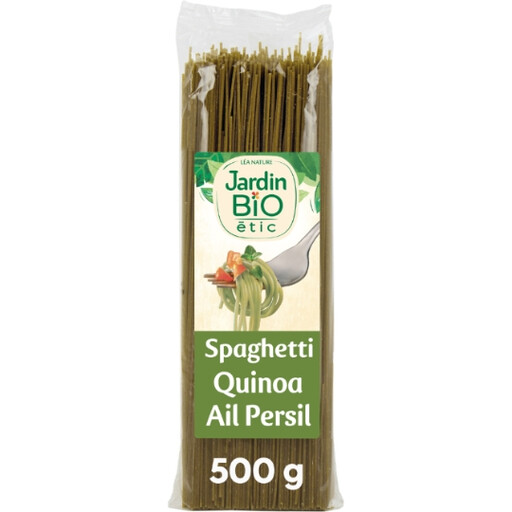 Image unavailable
Worth considering if you’re looking for spaghetti for a savoury recipe with quinoa, parsley and garlic. Check the organic labelling and allergen information for this product on the pack.
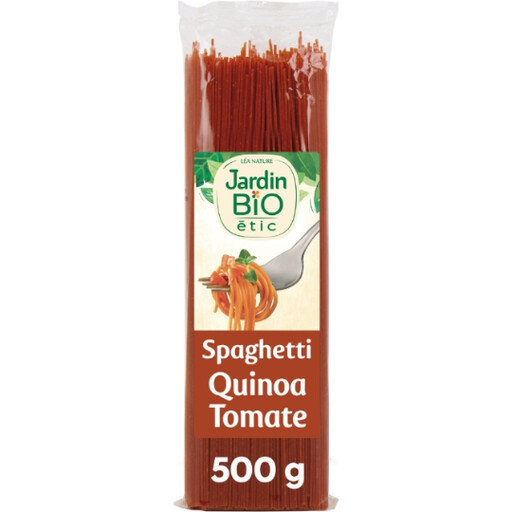 Image unavailable
Consider this if your recipe would work well with quinoa and tomato spaghetti. Check the packaging for the organic labelling, ingredients and allergens for this variety.
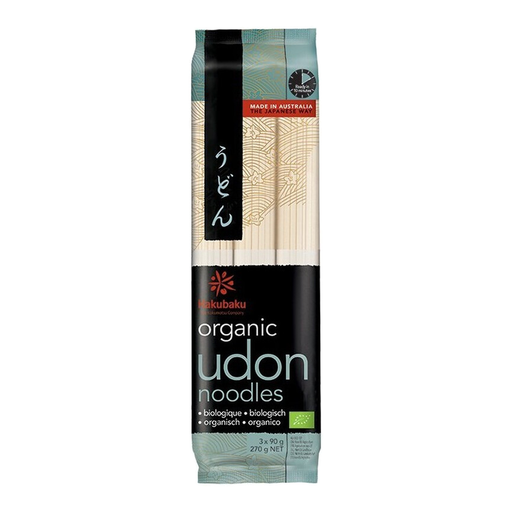 Image unavailable
Worth considering for a savoury dish if udon suits your recipe: these are noodles, not spaghetti. Check the organic labelling on the packaging intended for sale in France, along with the ingredients and allergens.
Look for the Euro-leaf logo and read the information alongside it. Agence BIO says that the logo confirms compliance with European organic farming regulations. Also check the origin of the agricultural raw materials and the code of the certifying body.
No, organic certification doesn’t mean that a product is gluten-free. Panzani’s organic spaghetti, as described by the brand, contains durum wheat and gluten. If this matters to someone at your table, check the label of each product.
Cooking time depends on the product and the texture you prefer. Panzani gives a cooking time of 10 minutes for its organic spaghetti. Auchan’s product information gives 8 minutes for a firm texture, 9 minutes for al dente and 10 minutes for a softer texture. Follow the instructions on the pack you buy.
No, the organic fresh tagliatelle by Lustucru described by Carrefour needs to be kept chilled. Before planning it for brunch, check its availability and read the storage instructions on the pack.