
Livraison le jour même ou le lendemain

Qualité garantie

Débloquez vos offres de bienvenue: Livraison GRATUITE | Jusqu'à -80 % | 30 jours d'essai gratuits à JoyPlus
Téléchargez l'application
An organic wall mirror can transform a dark hallway, add depth to a living room or bring character to a bedroom. With their irregular contours, these designs have a very different personality from a classic rectangular mirror. However, an attractive design alone does not guarantee a successful purchase.
Certain pitfalls come up time and again when choosing a designer mirror:
To avoid unpleasant surprises, compare the shape, dimensions, fixing system and materials rather than relying solely on staged photographs.
An organic wall mirror measuring 70 × 100 cm will fit easily in a hallway, living room or bedroom. A vertical format measuring 57 × 160 cm will create a more elongated look and is particularly well suited to a corridor or narrow wall.
Also check whether the mirror can be installed vertically or horizontally. This flexibility allows you to adapt it to the wall layout, the height of a piece of furniture or movement around the room. In a hallway, a vertical orientation makes it easier to take a quick look before heading out. In a living room, a horizontal installation will sit more naturally above a sideboard or sofa.
Glass remains the standard for everyday use, but not all models are made in the same way. A frameless mirror with finished edges offers a subtle look, while a model with a metal or polymer structure makes more of a decorative statement.
Self-adhesive or PVC mirrors may suit a lightweight wall decoration project. Before choosing one, however, check:
An acrylic or PVC surface should not be considered the equivalent of a glass mirror. It may be perfectly suitable for a decorative arrangement, but its appearance and durability may differ.
Before installing a large wall mirror, identify the type of surface: plasterboard, concrete, brick or wood. Wall plugs and screws must be suitable for both the wall and the mirror’s weight. If fixings are not supplied, it is your responsibility to choose the appropriate hardware.
For a heavy model, plan for two people to install it and check its stability once the mirror is in place. Glass is fragile: avoid abrasive products, knocks and spraying liquid directly onto the edges or back. These precautions are especially important in a busy corridor or in a home with young children.
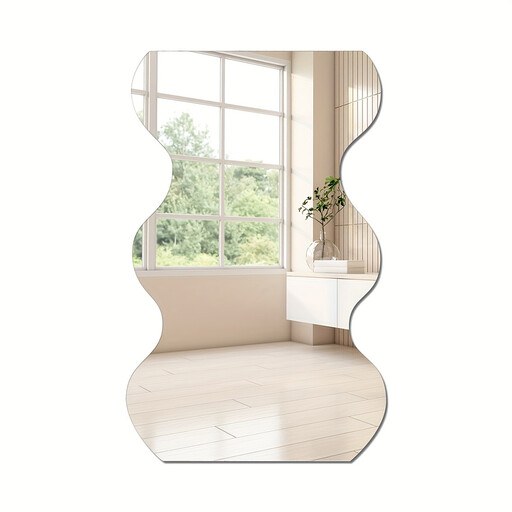
Why this choice suits this profile: This wave-shaped decoration is aimed at anyone who wants to try an irregular decorative mirror without starting with a large wall-mounted glass model. It can easily be incorporated into a wall arrangement, provided you check the fixing system and that it is suitable for the surface.
Its decorative format reduces the risk of choosing a mirror that is too imposing for a small wall. Even so, check that the adhesive will hold before permanently installing it.
An irregular wave-style shape and a design described as PVC and acrylic. An appealing option for contemporary wall decoration.
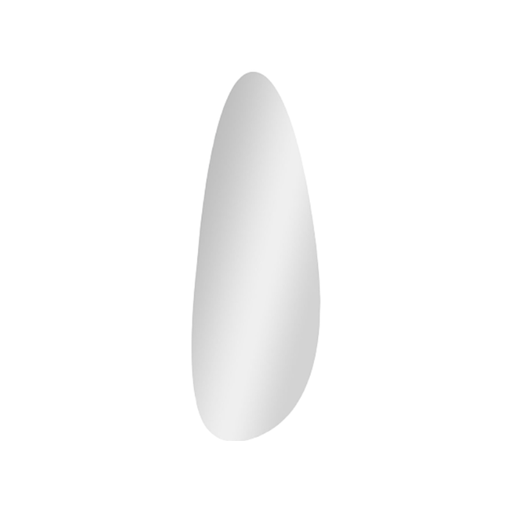
Why this choice suits this profile: Measuring 57 × 160 cm, this mirror makes a strong vertical statement in a hallway, living room or bedroom. Its free-form shape suits interiors where the mirror is also intended to stand out as a decorative feature.
The product details state a net weight of 6.1 kg and the need for suitable fixings. This helps you prepare the installation properly instead of underestimating the load the wall will need to support.
A glass reflective surface, a metal and PE structure, vertical or horizontal installation and a pre-assembled product, according to the available information.
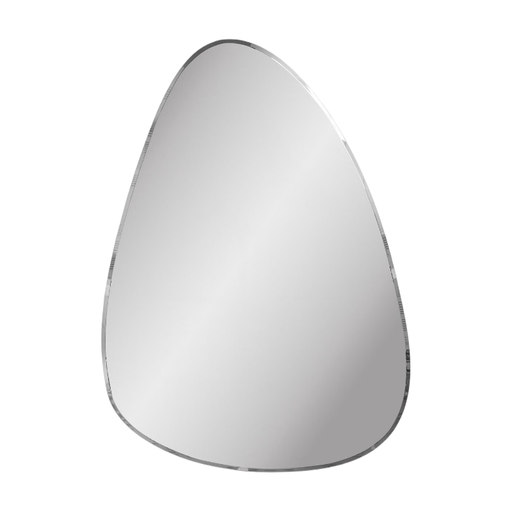
Why this choice suits this profile: Its 70 × 100 cm format is well suited to regular use in a hallway, living room or bedroom. As it can be installed in either orientation, it adapts easily to changes in your layout.
The product details mention secure wall mounting and recommend anchoring suitable for the type of wall. This avoids improvising when installing a large model.
An organic silhouette, faceted edges, a frameless design and vertical or horizontal mounting. The description mentions the glass and mounting hardware.
We have compiled a complete, real-time updated list of products that meet these demanding selection criteria and European safety regulations.
Use fixings designed for plasterboard and check the maximum permitted load. For a heavy mirror, look for a stud or reinforcement behind the board. Even when the product is supplied with fixings, they must still be compatible with your wall.
It can create a sense of depth and brightness by reflecting a window or light source. The effect depends on its position, dimensions, available light and the objects facing it. Naturally, it does not change the room’s actual dimensions.
Dust the surface with a soft, dry cloth, preferably microfibre. For a stubborn mark, lightly dampen the cloth with water or a glass-safe cleaning product. Never spray liquid directly onto the mirror and avoid abrasive cleaners, especially around the edges and frame.