Who are these options for?

Parents of children aged 12 months and over looking for a snack to take out

An individually wrapped bar can be handy to take with you. HiPP Biologique’s baby bar is recommended from 12 months, and the brand says children should eat it while seated and supervised. You’ll still need to judge whether your child can manage its texture.

Parents of children who are still learning to eat pieces of food

Moving on to solid textures is a gradual process, as Public Health France’s Manger Bouger campaign reminds us. Prepared baby cereal offers a different format from a bar to chew, but always follow the guidance for the specific product you choose.

Parents who pay close attention to certification and ingredients

The organic logo and the ingredients list answer two different questions. For a bar intended for a toddler, also check the age recommendation, allergens and instructions for eating it.

What should you check before choosing?

When choosing a snack for a toddler, start with their age and the textures they can manage. Then check the ingredients and organic certification of the specific product.

What to consider What to check Who this matters to
Age and texture Look for the stated age recommendation and check the texture. For the HiPP baby bar mentioned here, also follow the instruction to eat it while seated and supervised. If my child is still learning to eat pieces of food, I want to know whether they can manage this bar before considering it as a snack to take out; around 45% of consumers would prioritise age and texture in this way.
Ingredients and allergens Read the ingredients list, allergen statements and nutritional information for each recipe, paying particular attention to sugars and the different names used for them. When comparing two flavours, I mainly want to know what they contain and which allergens are listed; checking the ingredients would be the priority for around 36% of consumers.
Organic certification Check for the EU organic logo on the packaging of the product you choose. It doesn’t tell you the recommended age or the texture. I want to be able to identify organic certification on the product I’m buying; around 19% of consumers would put this check first.

Mistakes to avoid

  • Assuming “organic” means “suitable for a toddler”

    According to the French Agency for Organic Farming, the EU logo confirms that organic farming rules have been followed. On its own, it doesn’t tell you the recommended age or the texture. The Carrefour Bio strawberry and chocolate bars reviewed here don’t state an age recommendation for babies.

    First look for a stated age recommendation and a texture your child can manage, then check the certification and ingredients.

  • Confusing a snack to take out with one to eat on the move

    HiPP Biologique says its Oat, Strawberry and Raspberry bar should be eaten by a child while seated and supervised, even when it’s packed for an outing.

    Choose a time when your child can sit down and be supervised while eating.

  • Looking only at the logo on the front

    Ingredients vary: the Carrefour Bio bars reviewed include syrup or sugar, and some products may also contain traces of allergens. The French Agency for Food, Environmental and Occupational Health & Safety (ANSES) notes that sugars can appear under different names in ingredients lists.

    Read the ingredients list, allergen statements and nutritional information for the specific flavour you’re considering.

  • Choosing an adult bar just because it contains nuts

    Bjorg’s Almond and Coconut bar contains peanuts, sesame and almonds, among other ingredients. Its ingredients and presentation as an adult snack don’t mean it’s suitable for young children.

    For a toddler, start with the age recommendation on the product and check its texture and ingredients.

Brands and ranges to know

HiPP Biologique

HiPP Biologique presents its Oat, Strawberry and Raspberry bar as a fruit and cereal bar for babies from 12 months.

  • For this product, the brand describes a soft, melt-in-the-mouth texture and an individually wrapped format.
  • The age recommendation doesn’t replace checking how your child manages pieces of food; the brand says the bar should be eaten while seated and supervised.

Babybio

Babybio’s organic baby cereal range offers a product to prepare rather than a bar to chew.

  • Babybio offers baby cereal from 6 months and says the range described contains no added sugars.
  • Check the age recommendation, ingredients and preparation instructions for each product; this cereal isn’t ready to eat like a bar.

Carrefour Bio

The strawberry and chocolate bars reviewed are standard organic cereal bars, distinct from a bar with an age recommendation for babies.

  • The product pages for both bars let you check their ingredients and, depending on the recipe, any statements about possible traces of allergens.
  • The information reviewed for these two bars doesn’t give an age recommendation for babies. Organic certification alone isn’t enough to show that they’re suitable for a toddler.

Bjorg

The Almond and Coconut bar shows the difference between an organic bar for an adult snack and a product with an age recommendation for babies.

  • Bjorg lists peanuts, sesame seeds and almonds among the ingredients in this recipe.
  • These ingredients don’t mean the bar is suitable for a toddler; the recommended age and texture are separate considerations.

A prepared cereal option on Joybuy

This prepared baby cereal offers a different snack format if your child isn’t yet ready to manage pieces of food in a bar.
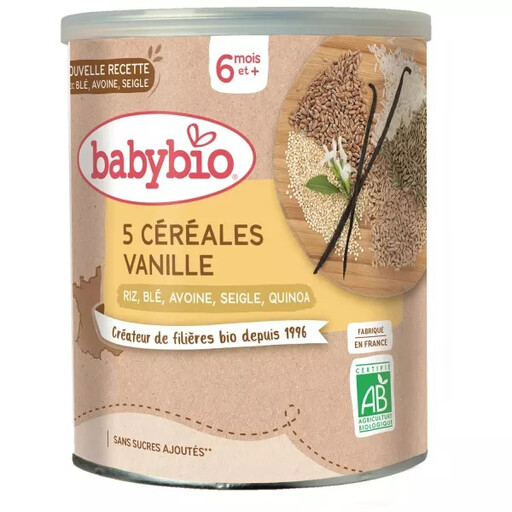
Baby Bio quinoa and vanilla cereal 6M, 220 g

Baby Bio quinoa and vanilla cereal 6M, 220 g

This is a cereal to prepare rather than a ready-to-eat bar, and may be worth considering if your child doesn’t yet eat this type of food. The product name indicates 6M and a 220 g pack. Before serving, check the packaging for the recommended age, ingredients, allergens and preparation instructions.

View on Joybuy

Frequently asked questions

Is the organic label enough to choose a bar for a toddler?

No. According to the French Agency for Organic Farming, the EU logo shows that organic farming rules have been followed, but it doesn’t tell you the recommended age, texture or allergens. Check these separately for the product you’re considering.

From what age can you offer the HiPP Oat, Strawberry and Raspberry bar?

HiPP Biologique recommends it from 12 months. However, this age recommendation alone doesn’t tell you whether a child can manage its texture. As Public Health France’s Manger Bouger campaign reminds us, moving on to pieces of food is a gradual process. Also follow the brand’s instruction to serve the bar while your child is seated and supervised.

What should you choose if your child can’t yet eat a bar?

Prepared baby cereal offers a different format. Babybio offers an organic range from 6 months, which can be served in a bottle or as a porridge, depending on the product. Check the age recommendation and instructions for the one you choose.

Where can you spot sugars in a cereal bar?

Read the ingredients list as well as the nutritional information. ANSES lists syrups and honey among the forms in which sugars can appear. Compare the ingredients for the specific flavour you want to buy.

Which packaging details should you compare between two recipes?

Compare the ingredients lists, listed allergens and nutritional information, while treating the age recommendation and instructions for eating the product as separate considerations. The French Directorate General for Competition Policy, Consumer Affairs and Fraud Control (DGCCRF) explains these labelling requirements for pre-packed foods. Each recipe or flavour deserves its own close look.