Parents preparing a bedtime bottle
For a baby, the priority is choosing milk suitable for their age and preparing the bottle correctly, rather than buying organic cooking cream.


Don’t choose organic thick cream to replace or add to your baby’s bedtime bottle. It’s a cooking ingredient, not infant formula. For a baby, choose milk suitable for their age and follow the preparation instructions. The organic logo alone doesn’t tell you whether a product is suitable for a bottle.
For a baby, the priority is choosing milk suitable for their age and preparing the bottle correctly, rather than buying organic cooking cream.
As your baby’s evening meal changes, remember to distinguish foods introduced gradually from the milk given in a bottle. The French National Health Insurance service advises that, for a healthy baby, weaning should begin between 4 months completed and 6 months of age.
For a sauce, soup or family dessert that’s separate from the bottle, compare creams based on their labelling and intended use. The Euro-leaf helps identify products that meet the requirements for organic farming, according to the French Agency for Organic Farming (Agence Bio).
For a bedtime bottle, start by checking the type of milk and the age guidance on the packaging. If you’re also looking for an organic product, check this on a milk that’s suitable for your child. Don’t confuse it with cooking cream.
| Criterion | What to check | Relevant to |
|---|---|---|
| What goes in the bottle | Choose milk suitable for your child’s age and follow the preparation instructions. The French National Health Insurance service describes powdered infant milk mixed with water, as well as ready-to-use liquid milk. | When I prepare my baby’s bedtime bottle, I want to avoid replacing milk with cooking cream. This would be the priority for around 50% of consumers. |
| Weaning | Check your child’s age and stage of weaning before choosing foods for a meal separate from the bottle. For a healthy baby, the French National Health Insurance service advises starting weaning between 4 months completed and 6 months of age. | As my child starts trying other foods, I want to plan their evening meal without confusing this stage with preparing their bottle. Around 30% of consumers would make this their main concern. |
| Organic cream for cooking | For a recipe that’s separate from the bottle, look for the Euro-leaf and compare the ingredients and fat content shown on the label. | For a family recipe, I’m looking for organic cream, not an ingredient to pour into a bottle. This would come first for around 20% of consumers. |
According to the French Agency for Organic Farming (Agence Bio), the Euro-leaf shows that a product complies with European organic farming rules. It doesn’t make cooking cream suitable as infant formula.
First check the product category and age guidance, then look at its organic labelling if that matters to you.
The French National Health Insurance service describes preparing a bottle with powdered infant milk and water, or with ready-to-use liquid milk. Elle & Vire’s organic thick creams are cooking ingredients.
Keep cream for a separate cooking use. If you’re considering changing your baby’s milk because of feeding difficulties or reflux, speak to the healthcare professional who looks after your child.
Gradually introducing other foods doesn’t make cream or a dairy dessert equivalent to infant milk. For children under one, the French National Health Insurance service recommends at least 500 ml of follow-on milk a day.
Choose foods for your child’s meal according to their age and stage of weaning, without using cream to replace their milk.
Elle & Vire describes its organic thick creams as cooking ingredients, particularly for sauces, soups and desserts.
These two powdered milks are options for a child aged at least 10 months, subject to checking the age range and guidance on each pack. They are not thick creams. If organic certification matters to you, check the labelling of the product you choose too.
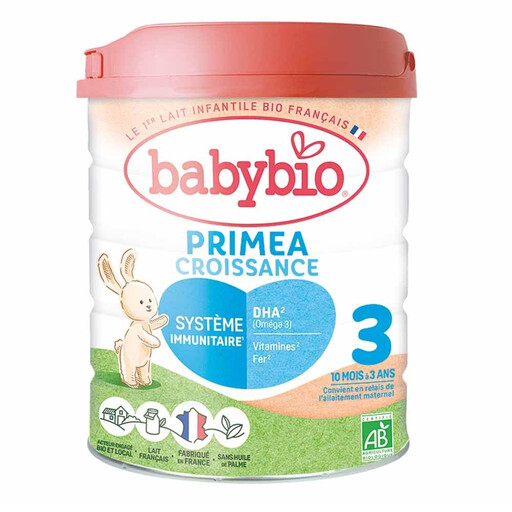 Image unavailable
Worth considering for a bottle if your child is old enough and this milk is suitable for their needs. It isn’t cream to add to a bottle.
Powdered milk; 800 g pack. Follow the preparation instructions and check the labelling if you’re looking for an organic product.
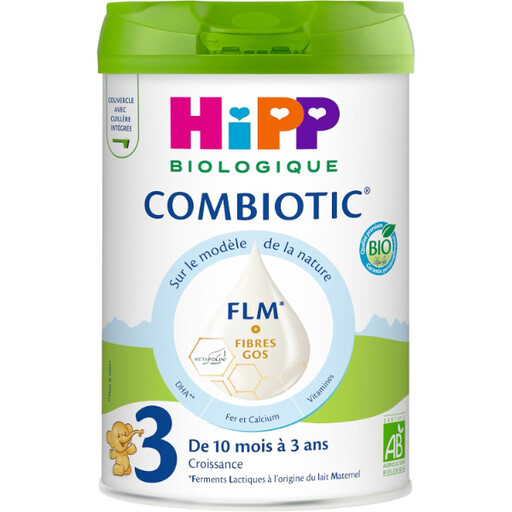 Image unavailable
Worth considering for a bottle when your child’s age falls within the stated range. It doesn’t replace the need to choose milk that’s suitable for their needs.
Powdered milk; 800 g pack. Check the preparation instructions and labelling if you’re looking for an organic product.
No. Organic thick cream is a cooking ingredient, not infant milk to pour into a bottle. The French National Health Insurance service describes bottles prepared with powdered infant milk and water, or with ready-to-use liquid milk.
For a healthy baby, weaning can begin after they have completed 4 months, and should start by the time they reach 6 months, according to the French National Health Insurance service. Gradually introducing other foods is no reason to add cream to a bottle.
Look for the Euro-leaf on the label. According to the French Agency for Organic Farming (Agence Bio), this logo indicates that the product complies with European organic farming rules. It doesn’t mean the cream is suitable for a baby’s bottle.
No. Neither is infant milk to choose for topping up a bottle. Elle & Vire states that its full-fat organic thick cream contains 30% fat, compared with 12% in its light version. This difference matters when choosing a cooking ingredient.
Don’t add cream to change your baby’s bottle. If your baby has reflux, a known allergy or feeding difficulties, ask the healthcare professional who looks after your child for advice before changing their milk.