Anyone who wants to check that it’s organic
You’re looking for a clear mark on the packaging, rather than a vague reference to nature. According to Agence Bio, the Euro-leaf logo certifies compliance with European organic farming regulations.


To choose a small quantity of organic sweets, first check for the organic logo on the packaging, then look at the net weight and the actual packaging: a small pack does not necessarily contain individually wrapped sweets. Compare the nutritional values per 100 g and check the Nutri-Score if it is shown; according to the DGCCRF, displaying it is voluntary in France.
You’re looking for a clear mark on the packaging, rather than a vague reference to nature. According to Agence Bio, the Euro-leaf logo certifies compliance with European organic farming regulations.
You’d prefer a small quantity, while keeping in mind that pack weight and the number of sweets—or whether they’re individually wrapped—are not the same thing.
You want to check details such as sugar and energy per 100 g. The Nutri-Score can be a useful extra if it appears on the product, but if it’s missing, you should still compare the nutritional values.
When shopping for organic products and a solo treat, start by identifying what matters most to you. Then check the other criteria before you buy.
| Criteria | What to check | Who it’s for |
|---|---|---|
| Proof that it’s organic | Look for the Euro-leaf logo on the packaging. According to Agence Bio, this logo certifies compliance with European organic farming rules. | If organic certification is my main reason for buying, I want to recognise a regulated logo rather than rely on the product name. Around 33% of consumers put this proof of organic status first. |
| Nutritional information | Compare the sugar and energy values per 100 g across similar products; check the Nutri-Score if it is displayed. | When choosing between two confectionery products, I want to be able to read their nutritional values, even if one doesn’t show a Nutri-Score. This comparison comes first for around 27% of consumers. |
| Quantity and packaging | Check the net weight, the number of pieces if stated, and whether the sweets are individually wrapped. | When I’m only buying for myself, I prefer to know exactly how much is in the pack. A small pack is the top priority for around 20% of consumers. |
| Ingredients and intended use | Read the ingredients, any allergen information, the product description and any warnings. | If particular ingredients or the stated use influence my choice, I check that it’s the type of confectionery I’m looking for. Around 20% of consumers prioritise finding a product that meets these needs. |
The organic logo tells you about how a product is made, not its nutritional values. According to the DGCCRF, nutritional declarations are mandatory for most prepacked foods in France, while the Nutri-Score is voluntary.
Check the Euro-leaf logo and the nutrition table separately, then compare the sugar content per 100 g.
A net weight of 35 g or 50 g tells you the total quantity, but not how many sweets are inside or how they’re packaged.
If you want individually wrapped sweets, check the information about the number of pieces and the actual packaging.
A small organic box may contain lozenges intended for a specific use. The 50 g Ladrôme product listed by E.Leclerc is categorised as throat lozenges and gums, and carries a warning that it is not recommended for children under 6.
Read the product description and warnings before choosing it as a sweet treat.
An online listing doesn’t confirm that the product will be available in your local shop or for your chosen delivery option.
Check local availability when you’re planning your shop.
Carrefour France lists a 35 g box of organic sweets, a size worth considering if you’re looking to buy a small quantity.
E.Leclerc lists a 50 g Ladrôme organic product, categorised as throat lozenges and gums.
Auchan France lists Besacier organic honey and eucalyptus sweets in a 315 g jar.
Haribo’s Fraizibus product is included here as a point of comparison for nutritional values, not as an identified organic sweet.
This 40 g milk chocolate and hazelnut bar is a small option for a solo treat. Choose it only if chocolate is what you’re looking for: it isn’t a pack of traditional sweets.
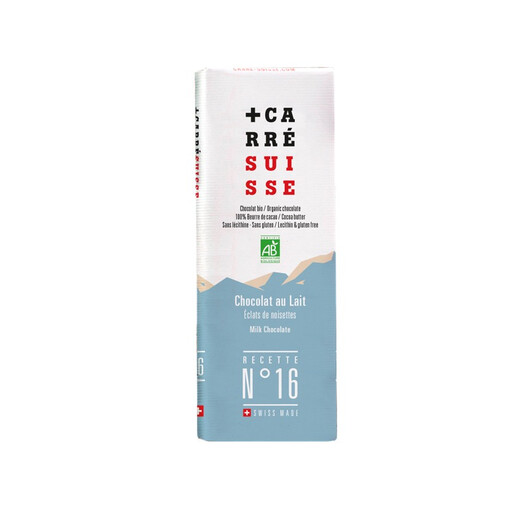 Image unavailable
If you fancy a chocolate bar while shopping for organic products, this 40 g size lets you choose a small quantity. It’s not a substitute for traditional sweets: check the packaging for the organic logo, allergen information and nutritional values. If the Nutri-Score matters to you, check whether it’s displayed.
No. According to the DGCCRF, the Nutri-Score is a voluntary system; a nutritional declaration is mandatory for most prepacked foods. When comparing confectionery, check details such as sugar and energy per 100 g, even if there’s no Nutri-Score.
Look for the Euro-leaf logo on the packaging. According to Agence Bio, this logo certifies compliance with European organic farming regulations; it doesn’t tell you about the nutritional values on its own.
No. The net weight tells you the total quantity in the pack, not the number of pieces or how they’re wrapped. If you’re looking for individually wrapped sweets, check these details on the packaging.
Check the product description and warnings first. The 50 g Ladrôme product listed by E.Leclerc is categorised as throat lozenges and gums and is not recommended for children under 6.