Those who check for organic certification
You’re looking for a recognisable certification and don’t want to judge a product by its recipe name alone: the ingredients list and nutritional information matter too.


For toast during your morning coffee break, first choose a spread whose organic certification and ingredients meet your needs, then compare the sugar and fat content per 100 g. A cocoa and hazelnut recipe made with milk is a classic choice; if you want to avoid milk or try something different, check the exact product and its allergens rather than relying on the word ‘organic’ alone.
You’re looking for a recognisable certification and don’t want to judge a product by its recipe name alone: the ingredients list and nutritional information matter too.
You want this type of spread for your morning coffee break and would like to compare, in particular, the hazelnut content shown on products that specify it.
You’re looking for a recipe that’s explicitly milk-free, or you want to compare the sugar content per 100 g before choosing between a classic cocoa and hazelnut spread and a different recipe.
When choosing an organic spread for your morning toast, first check the certification on the specific product, then look at the recipe, nutritional information and storage instructions for the jar.
| Criteria | What to check | Who is it for ? |
|---|---|---|
| Organic certification | Look for the EU organic logo or the AB logo, and read the ingredients list for the specific product. According to Agence BIO, at least 95 % of the agricultural ingredients in a processed organic product must come from organic farming. | If organic status is my priority for morning toast, I want to be able to identify it on the jar, not just in its name. Around 36 % of consumers put this check first. |
| Sugars and ingredients | Compare sugars, fat and energy on the same per-100 g basis. The DGCCRF explains that nutritional information is given on this basis to make comparisons easier. | When choosing between two spreads for my toast, I want to know their nutritional values before deciding. Around 36 % of consumers put this comparison first. |
| Milk and allergens | Check for milk, hazelnuts or peanuts, as well as any ‘may contain’ warnings, on the exact jar you’re considering; ‘milk-free’ does not mean ‘nut-free’. | If I need to avoid milk or take an allergen into account, I need to know exactly what the recipe contains. This is the top priority for around 14 % of consumers. |
| Size and storage | Check the jar’s weight and the storage instructions after opening, as these vary by product. Also check whether the spread needs stirring before use. | If I don’t spread toast very often, I want a size that suits my routine and storage instructions I can follow. Around 14 % of consumers prioritise this practical aspect. |
Organic certification relates to how agricultural products are grown, not to a specific sugar content. Two organic recipes can have different nutritional values.
Compare the sugar and fat content per 100 g on the labels of the jars you’re considering.
Nutri-Score is not compulsory in France. According to the DGCCRF, nutritional information is mandatory for most pre-packed foods and shows the values per 100 g.
If a Nutri-Score is shown, use it as an additional guide and check the ingredients and nutrition table too.
A milk-free recipe may still contain hazelnuts. Other spreads may also contain soya or carry warnings about possible traces of other nuts.
If you have an allergy, read the allergen declaration and any ‘may contain’ warnings on the jar you’re buying.
Storage times and conditions depend on the recipe; the instructions for one product don’t automatically apply to another.
Choose a size that suits how often you’ll use it and follow the instructions on your jar.
A jar that’s too large for your needs could lead to waste if you don’t finish it within the stated time.
Carrefour describes its 300 g organic chocolate and hazelnut spread as containing 20 % hazelnuts.
The range includes Nocciolata L’Intense, an organic cocoa and hazelnut spread that Rigoni di Asiago describes as milk-free.
The brand offers a 400 g organic hazelnut and cocoa spread, with 16 % hazelnuts and 7 % low-fat cocoa, according to its product information.
Ethiquable says its organic hazelnut spread also features cocoa sourced through fair trade.
A cocoa and hazelnut spread described by Carrefour as organic uses red bean purée, making it different from the classic recipes mentioned above.
These options include spreads for your morning toast: cocoa and hazelnut recipes, different ingredients and a cocoa and peanut alternative. To choose an organic option, check for the organic logo on the specific jar.
 Image unavailable
Worth considering if you’d like a different recipe for your morning toast. This 200 g jar contains hazelnuts, so check the allergens and organic logo on the packaging.
 Image unavailable
A cocoa and hazelnut recipe to consider for your morning toast. This product contains milk, hazelnuts and soya; don’t confuse it with milk-free Nocciolata L’Intense. Also check the organic certification on the jar.
 Image unavailable
Another cocoa and hazelnut recipe to compare with a classic spread for your toast. This 200 g jar contains nuts, so read the allergen information and storage instructions after opening, and check the organic labelling.
 Image unavailable
This 400 g size is worth comparing if you spread toast regularly. The recipe contains milk and hazelnuts; check the organic logo and follow the storage instructions on the jar you buy.
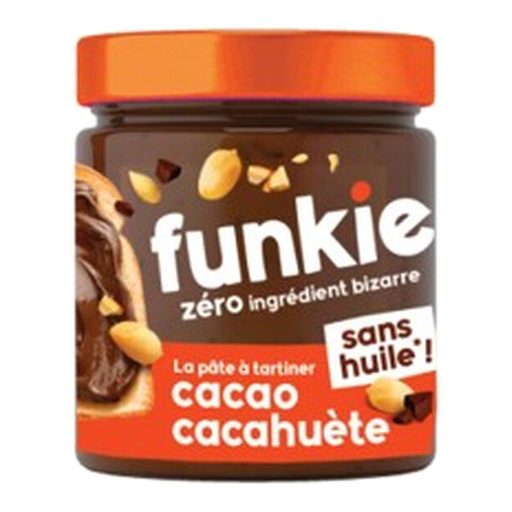 Image unavailable
An option to consider if you’d prefer cocoa with peanuts rather than hazelnuts on your toast. It contains peanuts, so check the allergens and organic certification on the 200 g jar.
Look for the EU organic logo or the AB logo on the specific product, then read its ingredients list. According to Agence BIO, a processed organic product must contain at least 95 % agricultural ingredients from organic farming.
No, displaying it is not compulsory in France. The DGCCRF explains that nutritional information is mandatory for most pre-packed foods, however, and lets you compare values per 100 g, with or without a Nutri-Score.
Not necessarily: some organic recipes contain milk. Rigoni di Asiago describes Nocciolata L’Intense as milk-free, but this doesn’t apply to every Nocciolata spread; check the name and allergens on the jar you choose.
Follow the instructions on your jar, as they vary by recipe. For its 400 g organic hazelnut and cocoa spread, Lucien Georgelin advises storing it away from heat and moisture and eating it within 18 days of opening; don’t apply this guidance to another product.
No. Organic certification applies to how agricultural ingredients are produced, not to a maximum sugar content. To choose between two spreads, compare the ‘of which sugars’ line in their nutrition tables per 100 g.