People preparing a jar to share
Whether they’re serving it with bread, pancakes or biscuits during the game, they’ll want a size that suits the group and a recipe everyone can enjoy.


For a games night, first choose a spread with a verifiable organic label and ingredients suitable for everyone sharing the jar. Then compare the recipes and sizes: a hazelnut and cocoa spread may contain milk or soya, while a recipe with no hazelnuts in its ingredients list may still warn that it could contain traces of nuts.
Whether they’re serving it with bread, pancakes or biscuits during the game, they’ll want a size that suits the group and a recipe everyone can enjoy.
They check the organic label, then read the ingredients and nutritional information per 100 g. Organic certification alone doesn’t tell you how much sugar or fat a product contains.
Before putting a shared jar on the table, they need to check the ingredients and any ‘may contain’ warnings. Product information for Carrefour Bio, Nocciolata, Jardin Bio Étic and Auchan Bio shows that warnings about hazelnuts, milk, soya and other nuts vary between products.
Start by checking the organic label and allergens on the exact jar you’re considering. Then choose a recipe and size that suit sharing. The nutritional information lets you compare products on a like-for-like basis, per 100 g.
| What to consider | What to check | Who is it for? |
|---|---|---|
| Organic certification | Check for the organic designation and the EU organic logo on the jar. According to the French Ministry of the Economy, a processed product marketed as organic must contain at least 95% organically farmed ingredients. | I want to confirm that the jar meets my organic criteria before comparing recipes; around 45% of consumers would make this their priority. |
| Ingredients and allergens | Read the ingredients list and any ‘may contain’ warnings for the product you’re considering. A recipe with no hazelnuts in the ingredients list may still warn that it could contain traces of nuts. | If several people will be sharing the same jar, I need to take their dietary requirements into account; around 33% of consumers would put recipe suitability first. |
| Size for sharing | Compare the net weight with the number of guests and check the storage instructions for after opening. | For a small group, I don’t want to choose a large jar that we’ll barely use; around 22% of consumers would prioritise the size for sharing. |
Organic certification alone doesn’t determine how much sugar or fat a spread contains.
Once you’ve checked the organic label, compare the nutritional information per 100 g. If there’s no Nutri-Score on the pack, don’t let its absence replace checking these values: according to the European Commission, front-of-pack nutritional information remains voluntary under current EU rules.
The hazelnut and cocoa recipes reviewed list hazelnuts and milk; other ingredients and ‘may contain’ warnings vary between products. A dark cocoa recipe may also carry a warning about nuts.
Ask your guests about any dietary restrictions before you buy, check the label on the exact jar and keep it handy during the evening.
A small jar may not be enough for several guests, while a large one means more spread left to store after the evening.
Choose a size to suit the number of people who can actually eat the recipe, and follow the storage instructions on the jar.
These brands offer some options to compare, along with their recipes and labels. The details below apply to the specific products mentioned, not to every product in each range.
Carrefour offers an organic hazelnut spread in 350 g and 700 g jars.
Auchan’s 400 g cocoa and hazelnut spread displays both the EU organic and AB logos.
Auchan’s 400 g organic cocoa and hazelnut spread lists 18.5% hazelnuts.
Its 350 g dark cocoa spread offers an alternative to the hazelnut and cocoa spreads featured here.
E.Leclerc describes Bio Village as a range of products that meet the requirements of the EU organic label.
These Joybuy products include hazelnut and cocoa spreads, praline spread and a crunchy oat and hazelnut spread. For your games night, check the organic label, allergens and suitability of the size for your guests on each jar.
 Image unavailable
This jar is a good option if you’re looking for a 250 g cocoa and hazelnut spread to serve at the table. If anyone needs to avoid hazelnuts, milk or soya, choose another recipe after checking its label. Also check the organic label on the jar you receive.
 Image unavailable
The 400 g size is worth considering if several people will be sharing a hazelnut and cocoa spread. It contains hazelnuts and milk and may contain other nuts; check the organic label and allergen information on the jar you receive.
 Image unavailable
This 200 g jar of praline spread offers a different option from larger jars of hazelnut and cocoa spread. It contains hazelnuts, so check the organic label and all allergen warnings on the jar before sharing.
 Image unavailable
This 200 g jar is suited to groups looking for a smaller portion of hazelnut and cocoa spread. The recipe warns that it contains nuts; check the organic label and allergens on the packaging, and compare nutritional values per 100 g.
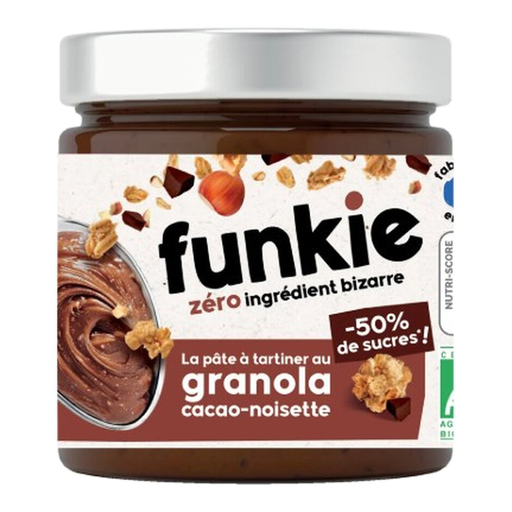 Image unavailable
This 200 g crunchy spread offers an oat and hazelnut recipe rather than a smooth cocoa and hazelnut spread. It contains gluten and nuts; check the organic label, allergens and nutritional information per 100 g on the jar.
Check for the organic designation and the EU organic logo on the packaging. The French Ministry of the Economy states that at least 95% of the ingredients in a processed product marketed as organic must come from organic farming; simply describing a product as ‘natural’ is no substitute for these labels.
No. According to the European Commission, front-of-pack nutritional information remains voluntary under current EU rules. If there’s no Nutri-Score, read the nutritional information and compare values per 100 g, particularly sugar and fat.
No. Organic certification alone doesn’t determine how much sugar a product contains. To compare two jars, check the ‘of which sugars’ line in their nutritional information per 100 g; don’t judge their nutritional profile by the organic logo alone.
No. It doesn’t tell you whether the product contains hazelnuts, milk or soya, or whether it may contain traces of these ingredients. Before serving it, read the ingredients list and allergen warnings on the jar in question.