What should you check before buying several jars?
Work out how much your household will use, then compare recipes and labels before stocking up. The groups below are organised by the factor they prioritise when making this decision.
| Factor |
What to check |
Who is it for? |
| Size and storage |
Net weight of the jar, best-before date and storage instructions. |
If my household often finishes one jar and opens another, I look for a size that suits how much we use, so we don’t keep the same opened jar for too long. Around 42% of shoppers put managing pack size and stock levels first. |
| Certification and ingredients |
Clear organic labelling; sugars, fats, saturated fat and salt per 100 g. |
I want to buy organic, but I also want to compare what the recipes actually contain before choosing several jars. Ingredients are the main priority for around 33% of shoppers. |
| Allergens |
Ingredients list and warnings for each variant, especially for nuts, milk and soya. |
If someone in my household needs to avoid an ingredient, I have to check every product before stocking up. Around 25% of shoppers put suitability for these dietary requirements first. |
For the relevant pre-packed foods, the DGCCRF notes that nutritional labelling is mandatory, while displaying the Nutri-Score is optional. So, even if the logo isn’t there, you can still compare the values given per 100 g. The Ministry of Agriculture also explains that organic farming is governed by European regulations: make sure the product is clearly identified as organic, rather than relying on the word ‘natural’ alone.
Brands to consider
These examples show different sizes of spreads that are identified as organic on their product listings. The details below apply to the specific products mentioned, not to every product in each brand’s range.
Carrefour Bio
Carrefour’s product listing features a 700 g jar of organic hazelnut spread, a size to consider if your household enjoys it regularly.
- Described as palm oil-free, with 13% hazelnuts; the listing gives 524 kcal and 28 g of fat per 100 g.
- Contains hazelnuts and milk; possible traces of soya and other nuts are noted.
Jardin Bio étic
The organic chocolate and hazelnut spread featured by Carrefour comes in a 750 g jar.
- The product listing states that 56% of the ingredients of agricultural origin meet fair trade standards.
- This recipe contains hazelnuts and milk, and warns that it may contain traces of other nuts.
Auchan Bio
Auchan’s listed organic cocoa and hazelnut spread comes in a 400 g jar, making it a more manageable amount to try before buying several.
- The product listing features the EU organic logo, the AB mark and a palm oil-free recipe.
- It states that the spread contains 55 g of sugars per 100 g; the recipe contains hazelnuts and milk, and may contain other nuts.
Nocciolata
Auchan’s organic cocoa and hazelnut spread comes in a 400 g jar, which is different from the 250 g variant featured below.
- The 400 g jar’s product listing states that it contains 18.5% hazelnut paste and carries a ‘gluten-free’ label.
- This recipe contains hazelnuts, milk and soya; the listing states that it contains 51 g of sugars per 100 g.
BIO® (Aldi)
Aldi offers a 350 g jar of organic spread, a smaller size to consider if your household prefers to open less at a time.
- The product is identified as organic and described as palm oil-free on Aldi’s website.
- Before buying several jars, check the label for this product to compare its ingredients, allergens and nutritional values.
Organic spreads available on Joybuy
These organic spreads come in jars ranging from 200 to 400 g. Choose a recipe and decide how much you’d like to open at a time. If you’re buying several jars, also check the best-before date and the storage instructions for each product.
 Image unavailable
LUCIEN GEORGELIN organic hazelnut and cocoa spread 400 g
The 400 g jar is a good way to try an organic hazelnut and cocoa recipe without opening a large container. Check the allergens and storage instructions for this variant before ordering several jars.
View on Joybuy
 Image unavailable
RIGONI DI ASIAGO Nocciolata organic cocoa and hazelnut spread 250 g
The 250 g jar means you open less at a time if you only enjoy spread occasionally. Don’t confuse this variant with the 400 g Nocciolata jar mentioned in the brands section; check its ingredients and allergens before buying several.
View on Joybuy
 Image unavailable
FUNKIE Praline Smooth organic spread 200 g
This 200 g jar of organic praline spread is a good fit if your household prefers to open smaller amounts. If you’re considering buying several jars, check the recipe’s allergens and follow its storage instructions once opened.
View on Joybuy
 Image unavailable
FUNKIE Smooth organic hazelnut and cocoa spread 200 g
The 200 g jar helps you limit how much hazelnut and cocoa spread you have open at once. To compare this variant with other recipes, check the values per 100 g on its packaging and read the allergen warnings.
View on Joybuy
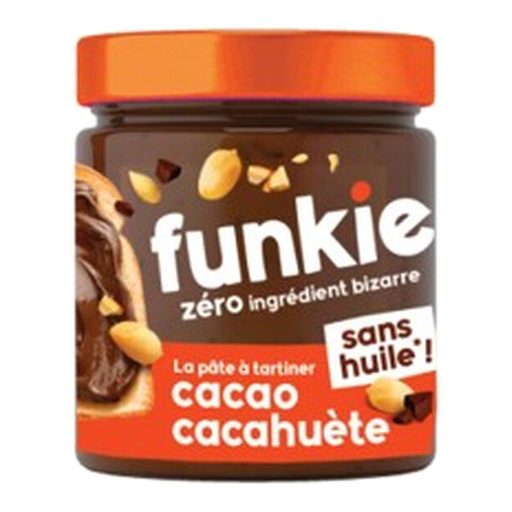 Image unavailable
FUNKIE Smooth organic cocoa and peanut spread 200 g
This 200 g organic cocoa and peanut recipe is for anyone looking for this combination rather than a cocoa and hazelnut spread. The peanuts are an important consideration for your household, so check the label and storage instructions before stocking up.
View on Joybuy
Frequently asked questions
Is Nutri-Score mandatory on organic spread in France?
No. The DGCCRF states that displaying the Nutri-Score is optional. For the relevant pre-packed foods, nutritional labelling lets you compare recipes on a like-for-like basis, including their sugars and fats per 100 g.
How can you tell if a spread is organic?
Look for clear identification as an organic product on the packaging or product listing, as well as any certification marks shown, such as the EU organic logo. The Ministry of Agriculture explains that organic farming is governed by European regulations; the word ‘natural’ alone doesn’t prove that a product is certified.
Does organic spread with no palm oil necessarily contain less sugar?
No: these labels describe different characteristics. The Auchan Bio product listing gives 55 g of sugars per 100 g, compared with 51 g per 100 g on Auchan’s listing for the 400 g jar of Nocciolata. Both recipes are described as organic and palm oil-free. Always compare the values for the specific variants you’re considering.
Which allergens should you check before buying several jars?
Read the ingredients list and warnings for each variant, particularly for hazelnuts, milk, soya and other nuts. Carrefour Bio’s product listing notes possible traces of soya and other nuts, while Auchan’s Nocciolata listing states that the recipe contains soya.
How many jars should you keep in stock?
Choose an amount that suits your household’s consumption, then check the best-before date and storage instructions for each product. Once a jar is open, follow the instructions on its packaging rather than applying guidance from another recipe.


